شجرة مريم
1656 AD
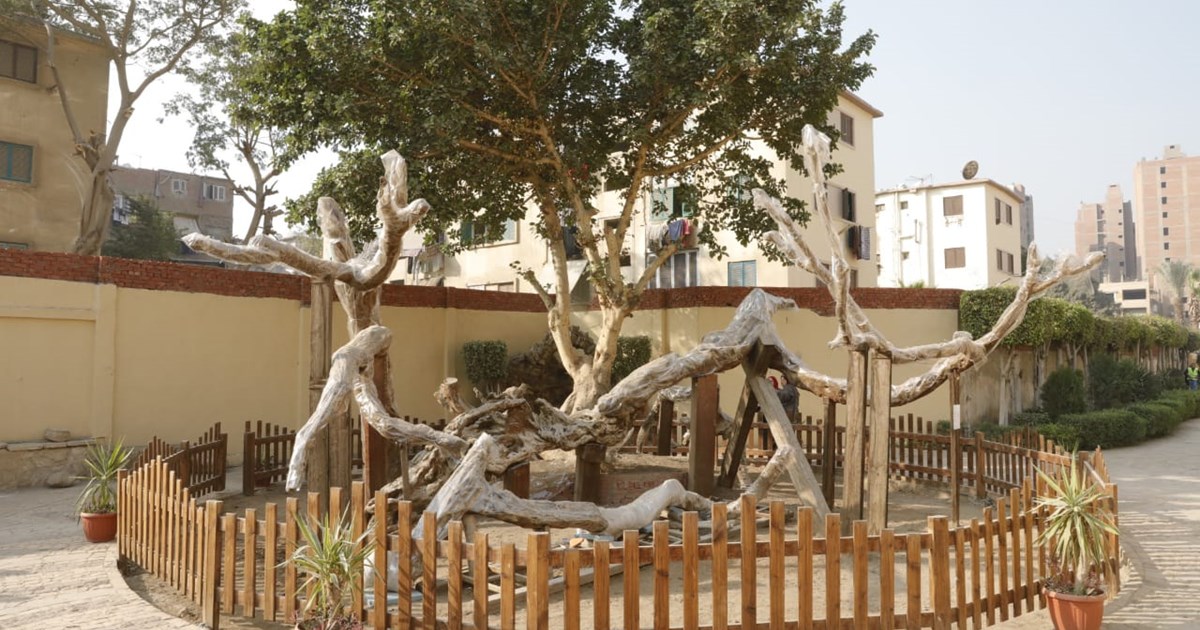
The holy family sought refuge under a tree in Matariyya (the ancient city of Heliopolis), today known as “Mary’s Tree.” It became a popular religious site visited by many people from all over the world throughout the ages. The original tree eventually grew weak and fell in 1656 AD. A group of Franciscan priests gathered its branches and replanted them. The tree drew the attention of medieval historians such as al-Maqrizi and Imam al-Suyuti, both of whom paid it a visit. Orientalist travelers such as Stanley Lin also visited the site, as did the French Empress Eugene during the inauguration of the Suez Canal in 1869, during the reign of Khedive Ismail. Some French soldiers passed by the tree in 1800, during the battle of Ain Shams between the French and Ottoman armies. The soldiers carved their names with their swords into the tree’s branches.
نظرة عامة
The holy family sought refuge under a tree in Matariyya (the ancient city of Heliopolis), today known as “Mary’s Tree.” It became a popular religious site visited by many people from all over the world throughout the ages. The original tree eventually grew weak and fell in 1656 AD. A group of Franciscan priests gathered its branches and replanted them.
The tree drew the attention of medieval historians such as al-Maqrizi and Imam al-Suyuti, both of whom paid it a visit. Orientalist travelers such as Stanley Lin also visited the site, as did the French Empress Eugene during the inauguration of the Suez Canal in 1869, during the reign of Khedive Ismail.
Some French soldiers passed by the tree in 1800, during the battle of Ain Shams between the French and Ottoman armies. The soldiers carved their names with their swords into the tree’s branches.
Egypt celebrates, on the first of June each year, the commemoration of the Holy Family's journey into its lands, marking an exceptional historical and spiritual journey that is considered one of the oldest religious travels in the world.The journe.