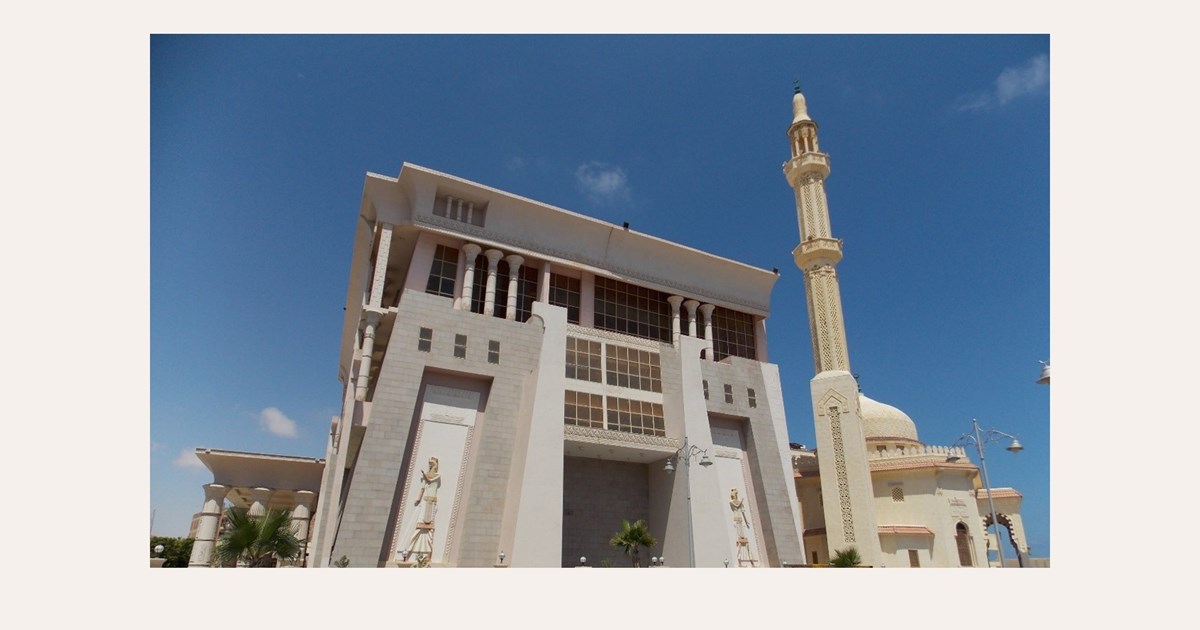
متحف مرسى مطروح
This museum was established inside the Misr Public Library in Matrouh, in cooperation with the Governorate, to highlight the city’s rich and eventful history across different eras, as revealed through the results of archaeological excavations in the region. The history of Matrouh dates back to the time of the Pharaohs. It is believed that the northeastern part of the governorate may have belonged to the Seventh Nome of Lower Egypt. In addition, much of the city was part of the Egyptian nome known as “Lubia.” During the Roman era, the city was known as “Paraetonium” and “Amunia”—the latter derived from the name of the god Amun. The museum covers a total area of 728 m² and is divided into two floors. It houses a wide collection of artifacts that illustrate the story of the Pharaohs and their strategies to secure Egypt’s western borders and deserts through the construction of forts and castles, since the city served as Egypt’s western gateway. Exhibits also highlight the desert goddesses, the role of Marsa Matrouh in fishing and trade, its connections with neighboring regions, and its contributions to astronomy, science, and philosophy.
نظرة عامة
This museum was established inside the Misr Public Library in Matrouh, in cooperation with the Governorate, to highlight the city’s rich and eventful history across different eras, as revealed through the results of archaeological excavations in the region.
The history of Matrouh dates back to the time of the Pharaohs. It is believed that the northeastern part of the governorate may have belonged to the Seventh Nome of Lower Egypt. In addition, much of the city was part of the Egyptian nome known as “Lubia.”
During the Roman era, the city was known as “Paraetonium” and “Amunia”—the latter derived from the name of the god Amun.
The museum covers a total area of 728 m² and is divided into two floors. It houses a wide collection of artifacts that illustrate the story of the Pharaohs and their strategies to secure Egypt’s western borders and deserts through the construction of forts and castles, since the city served as Egypt’s western gateway. Exhibits also highlight the desert goddesses, the role of Marsa Matrouh in fishing and trade, its connections with neighboring regions, and its contributions to astronomy, science, and philosophy.
The museum is closed for daily break from 3:00 PM to 5:00 PM
08:00 am – 03:00 pm (ticket window closes at 02:00 pm) Evening Hours: 05:00 am – 10:00 pm (ticket window closes at 09:00 pm)
1. Egyptians seniors aged 60 and over. 2- Egyptians special needs. 3- Orphaned children. 4- Public schools trips primary and preparatory school. 5- children below 6 years.
a ceramic amphora discovered in
A conical ceramic amphora with a long, slightly swollen neck. Two handles extend from the upper body to the top of the neck. The base tapers to a pointed end. The surface shows traces of marine encrustation
A square-shaped block featuring a raised relief of an equal-armed cross adorned with four letters on its arms. The surface is covered with a layer of rust
Statue of the deity Bastet Missing the lower part and right ear, with visible rust layer and surface erosion. material : Bronze Dimensions: W. 4.5cm; L. 7.2 cm provenance : Heracleion