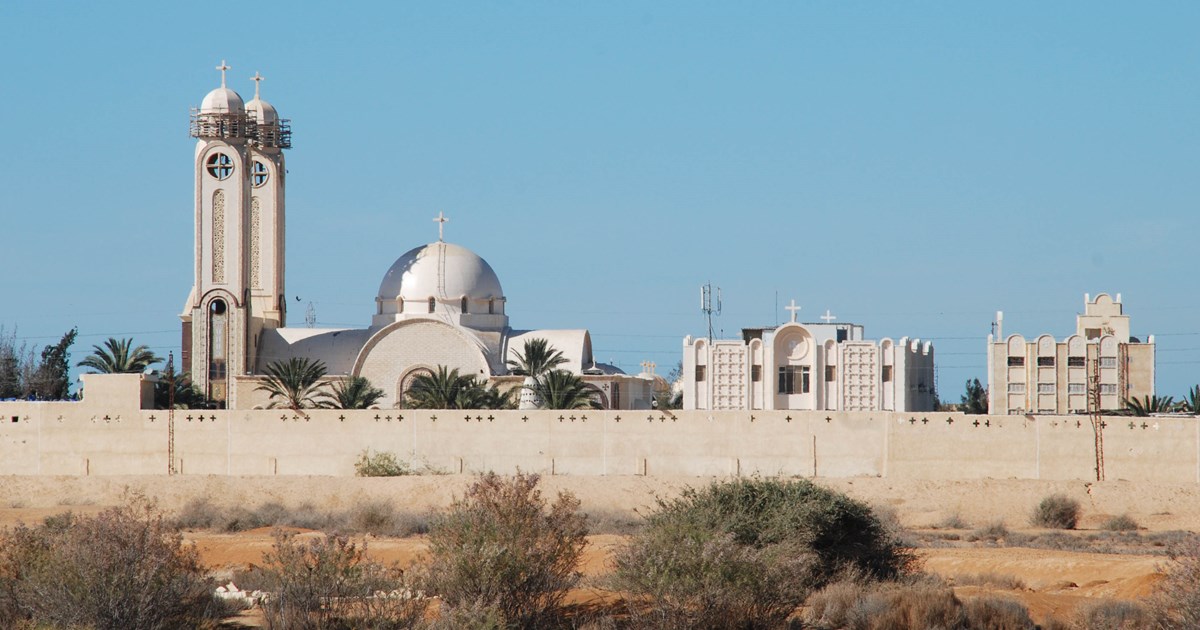
Abu Mena
Added to UNESCO’s World Heritage List in 1979, Abu Mena is the site of the ruins of a church, monasteries, houses, workshops, and various public buildings that were built on the tomb of Saint Menas of Alexandria. It is said that, after his martyrdom in the late 3rd or early 4th century AD, the camel transporting his body through the desert south of Alexandria spontaneously refused to proceed any further. This was interpreted as a sign from God, and Saint Menas was buried on this spot. This became the site of a miraculous healing spring, and word spread. Already by the late 4th century AD, Abu Mena had already become a very popular center for pilgrimage.
Overview
Inscribed
Added to UNESCO’s World Heritage List in 1979, Abu Mena is the site of the ruins of a church, monasteries, houses, workshops, and various public buildings that were built on the tomb of Saint Menas of Alexandria. It is said that, after his martyrdom in the late 3rd or early 4th century AD, the camel transporting his body through the desert south of Alexandria spontaneously refused to proceed any further. This was interpreted as a sign from God, and Saint Menas was buried on this spot. This became the site of a miraculous healing spring, and word spread. Already by the late 4th century AD, Abu Mena had already become a very popular center for pilgrimage.
Meet Egypt’s World Heritage sites that are declared by UNESCO! On this day we will celebrate our heritage. Make sure to visit all these incredible landmarks in Egypt.