Historische Epochen
Ägyptens Zeitachse von der Vorgeschichte über die pharaonischen Dynastien und die griechisch-römische Epoche bis zu den islamischen Dynastien und der Neuzeit.
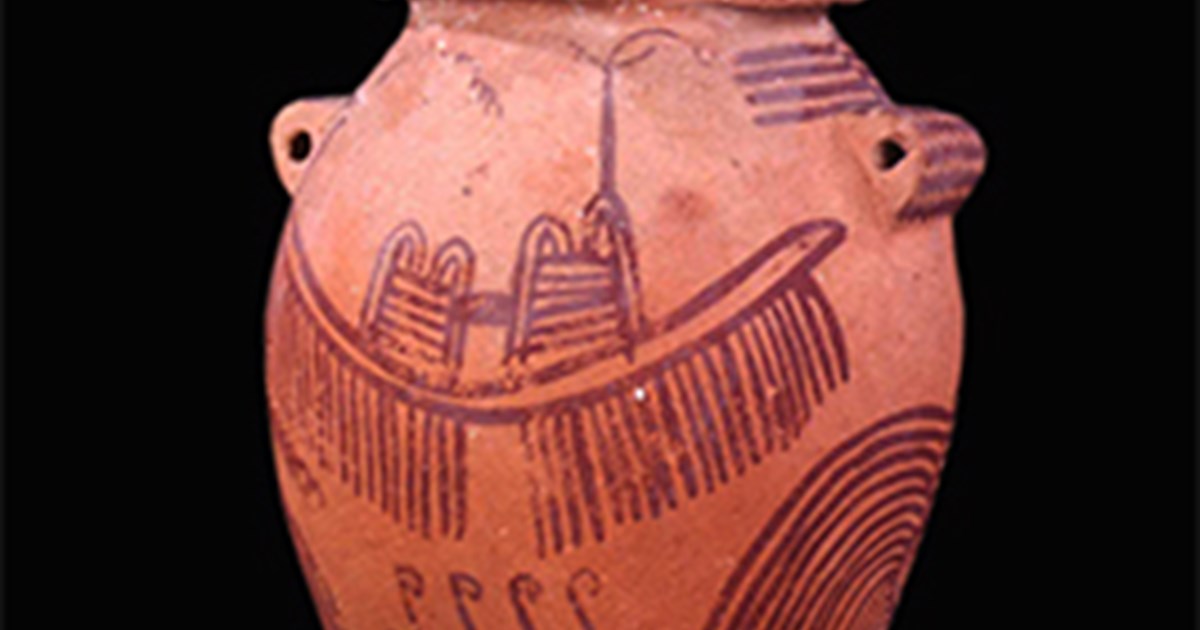
Prädynastische Zeit
3100 BC
This period covers all of ancient Egyptian prehistory, from the Paleolithic (Old Stone Age), down to the end of the Neolithic (New Stone Age). Strictly speaking, “prehistory” refers to the phase of a culture before it had writing. In Egypt’s case, writing appears at around the same time as the end of its Stone Age, around 3100 BC. This is also when Egypt as a unified political entity came into being, making it the world’s oldest nation state. Before the formation of the first Egyptian state, during the Neolithic Period, an increasing homogenization of the different cultures that had emerged along the Nile Valley can be seen. Cultures are named after their sites of origin. Some of the most important of these are the Maadi Cultural Complex (c.4000–3100 BC) in Lower Egypt, near Cairo; Badarian culture (c.5500–4000 BC) near modern Asyut in Middle Egypt; and, most importantly Naqada I (c.4000–3500 BC) in Upper Egypt, near Luxor. Naqada I culture, like its contemporaries, initially displays little in the way of social stratification, but this changes towards the end of this period. This trend became more pronounced during Naqada II (c.3500–3200 BC), which began to spread along the Nile Valley. Among the most important Naqada II sites, aside from Naqada itself, were Hierakonpolis (Kom al‑Ahmar), near Edfu, and Abydos, both in Upper Egypt. During Naqada III (c.3500–3100 BC), society continued to grow more complex, and differentiated itself from contemporary Nubian culture, eventually separating itself from it politically. The transition from Naqada III to the Early Dynastic Period was a smooth one. For this reason, Naqada III is sometimes also called “Dynasty 0”. The powerful chiefs of this final period appear to have already been in control of most, if not all, of Egypt. Upper and Lower Egypt were geographically different, and the two had remained distinct until late in prehistory, and the ancient Egyptians never forgot this fact. Thus, when Egypt eventually became united as one political entity under a single ruler, the ancient Egyptians, throughout their entire history, referred to their king as the “Lord of the Two Lands”.
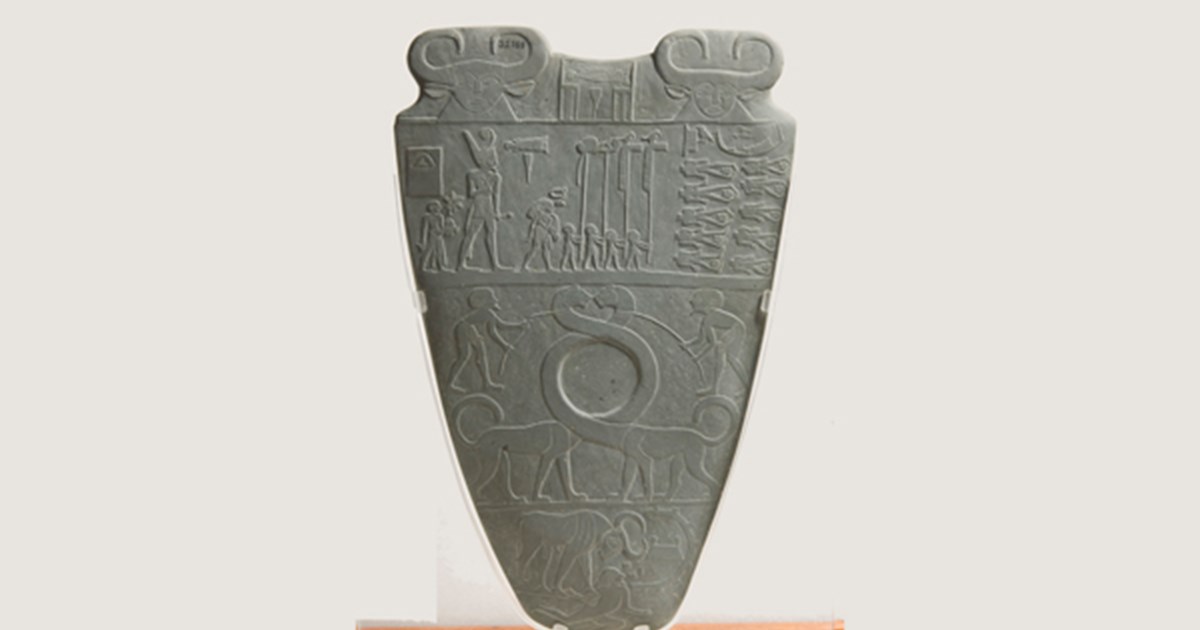
Frühdynastische Zeit
3100 BC
Ancient Egyptian history before the Graeco‑Roman Period is called the Dynastic Period, which is divided into 30 dynasties. The Early Dynastic Period begins with the unification of Egypt into a single political entity around 3100 BC, and consists of the very first two dynasties. The unification of Upper and Lower Egypt was in reality a very gradual process, but one of its final stages appears to have taken place during the reign of King Narmer. One of the most important treasures in the Egyptian Museum, Cairo, the Narmer Palette, is a record of his historic event. With the unification of Egypt, a new capital was founded: Memphis. Then known as Ineb‑Hedj “The White Wall”, this new city, situated between—and thus uniting—Upper and Lower Egypt, would remain one the country’s most important and populous cities throughout ancient Egyptian history. The area of Abydos (near modern Sohag) retained its prominence from the preceding Naqada III period. The kings of the First Dynasty were buried here, and their tombs demonstrate a tremendous leap forward in monumentality. Egypt was becoming more centralized, and the king’s power was growing. Most of the Second Dynasty rulers were buried in Memphis, but the last two, Kings Peribsen and Khasekhemwy, had their final resting places constructed in Abydos. Tantalizing clues suggest a power struggle between them. This may have been echoed in the stories revolving around the gods Horus and Seth, but this is far from certain. Royal power grew demonstrably during the reign of Khasekhemwy. Like his predecessors, he paired his tomb with a funerary enclosure closer to the Nile Valley. This truly massive structure, today known as the Shunet al‑Zebib, far surpassed any of those of his predecessors, however, and remains one of the world’s oldest surviving brick structures.
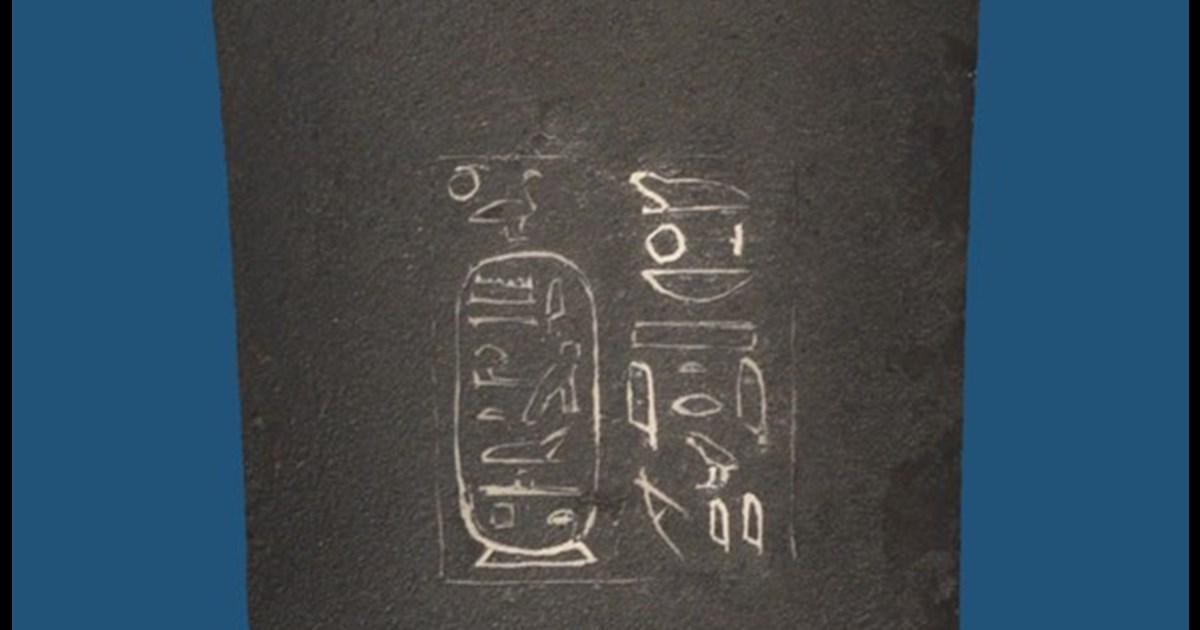
Erste Zwischenzeit
1650 BC
The weakness of the rulers of the Sixth Dynasty resulted in the loss of order and control over the country, and an increase in the power of provincial governors. These local administrators eventually became completely independent from Memphis and, seeking to extend their respective territories, came to establish their own forces. This resulted in civil wars and the deterioration of political and economic conditions. It is believed that it was during this period of turmoil that the royal pyramid complexes were robbed. The written sources from the following period, the Middle Kingdom (c.2055–1650 BC), describe the First Intermediate Period as a time of famine and chaos. The absence of the king and central government supposedly led to poverty, the loss of moral values, and instability. Archaeological evidence, however, paints a very different picture. New forms and shapes of pottery were invented, new, architectural forms specific to individual provinces found expression, and local popular culture flourished. Life seems to have simply continued. If anything, the economy of the provinces and of the average person in these areas, free from the demands of the central administration, appears to have improved. Local rulers became paternal figures who took care of their people, boasting about how they fed the hungry and gave water to the thirsty. The notion of the ruler as benefactor would have deep repercussions on the conception of kingship in the following period. Another one of the most important developments of this period is the so-called “democratization of the afterlife”. This is when the Coffin Texts first appeared. As their name suggests, these were usually written on the insides of coffins. Their purpose, to ensure that the deceased successfully reached the afterlife, is the same as the Pyramid Texts, from which they evolved. Unlike them, however, the Coffin Texts were not exclusive to royalty. Private, non‑royal, individuals now had a chance to an afterlife, independently of their king. Whether this was the case earlier too is hotly debated, as is whether people had already access to funerary texts, but it is clear that it was never this overt. Eventually, the Ninth and Tenth Dynasties, which were based in Herakleopolis (modern Ihnasya al‑Medina), came to rule Egypt, but they held a tenuous grasp over their territories, especially the south. A new dynasty arose in Thebes (modern Luxor) in Upper Egypt that was powerful enough to challenge them. The First Intermediate Period ended with the reunification of Egypt by King Nebhepetre Mentuhotep of the victorious Theban Eleventh Dynasty, ushering into the prosperous Middle Kingdom period.
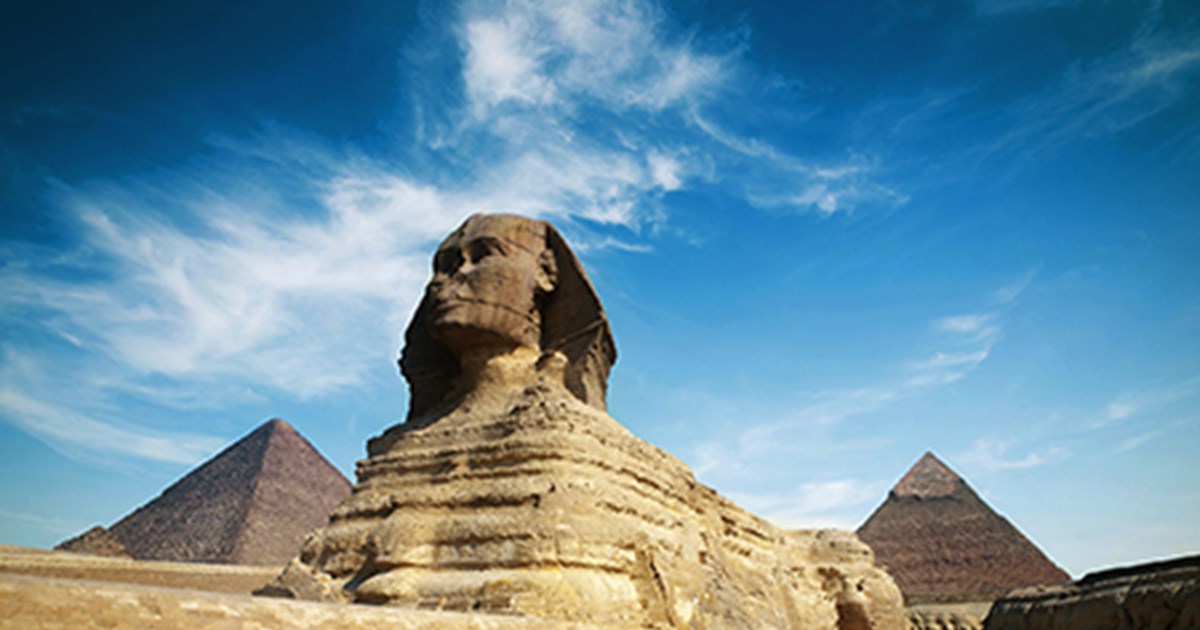
Altes Reich
2589 BC
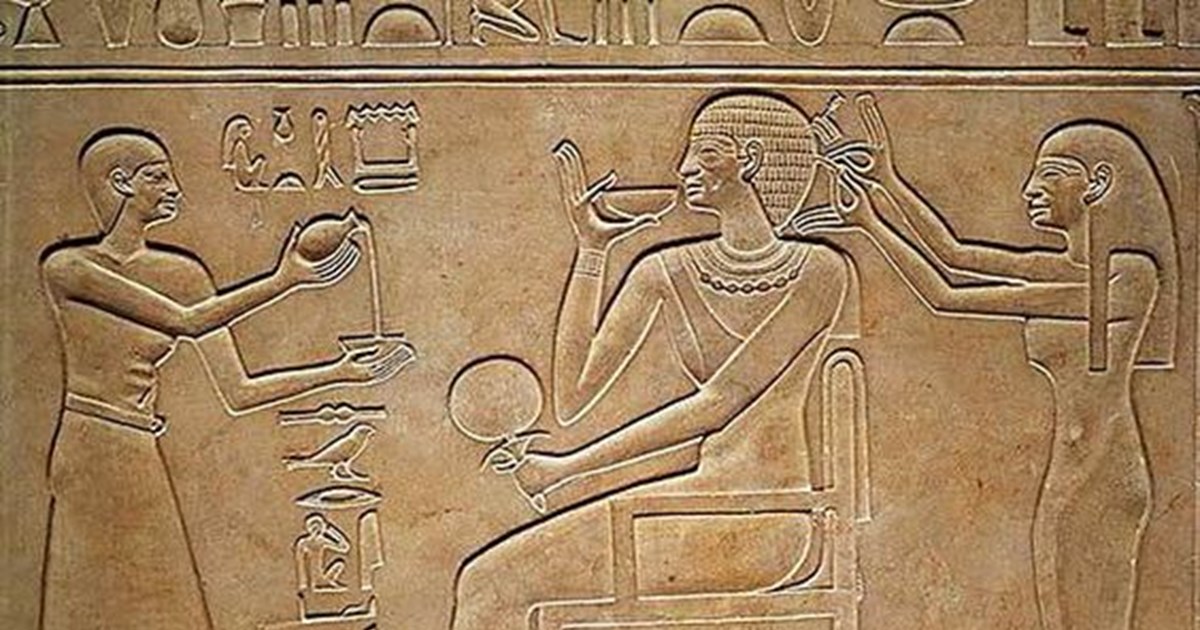
The Third to Sixth Dynasties make up the Old Kingdom. The king’s power continued to grow during this period. The early-Third Dynasty King Djoser built an even grander tomb, this time back in Saqqara. He intended to built a mastaba tomb like the kings of the First and Second Dynasties. This was gradually expanded, and five successive mastabas were built on top of one another, resulting in Egypt’s first pyramid and oldest fully stone structure, the Step Pyramid. The attempted step pyramids of the other kings of the Third Dynasty were never completed, presumably due to a succession of short reigns. Little is known of the first ruler of the Fourth Dynasty, Huni. The reign of the second king, Snefru (c.2613–2589 BC), was immensely prosperous and successful. Three massive pyramids were built during his reign alone. The first, in Meidum, was begun as a Step Pyramid, and later completed as a true pyramid. The second, the so-called Bent Pyramid in Dahshur, was the first pyramid to have been intended as a true pyramid, but structural flaws meant that this could not be achieved. With his third pyramid, the Red Pyramid, also in Dahshur, Egypt’s first true pyramid was completed, paving the way for the building of the perfect pyramid. This was achieved in the immediately succeeding reign of King Khufu (c.2589–2566 BC), who built the largest and most ambitious pyramid and pyramid complex. The Great Pyramid, with its original height of 146.5 meters, was the tallest structure in the world for 3,800 years. Khufu’s brother and successor, Djedefre (c.2566–2558 BC), did not finish his pyramid. He was succeeded by Khufu’s son, Khafre (c.2558–2532 BC), who constructed the Great Sphinx, and a pyramid very nearly as large as his father’s. The two temples associated with his pyramid were larger and more elaborate than those of his predecessors. The pyramid of Khafre’s son, Menkaure (c.2532–2503 BC), is considered to mark the beginning of a downward trend in royal power. Although his pyramid is indeed substantially smaller, at least a quarter of its height was encased in granite, a much harder stone that is obtained from Aswan, Egypt’s southern border. Furthermore, the temples adjacent to his temple are proportionally larger than those of his predecessors, suggesting a shift in the king’s priorities, from his tomb to his cult that would be practiced in these temples. This trend grew more pronounced in the Fifth (c.2494–2487 BC) and Sixth (c.2345–2181 BC) Dynasties. The last king of the Fifth Dynasty, Unas, had the interior of his pyramid in Saqqara decorated with the Pyramid Texts, the precursors to the more famous so-called Book of the Dead. The purpose of these texts was to help the king successfully reach the afterlife and achieve godhood. By the Sixth Dynasty, it is clear that the king’s power had decreased. This, in combination with a range of other factors, meant that, by the end of the long reign of its final king, Pepy II (c.2278–2184 BC), the central government was no longer in firm control of the entirety of Egypt.
Mittleres Reich
30 BC–395 AD
The Middle Kingdom was a time of great prosperity. It consists of the Eleventh to Thirteenth Dynasties. Although the Eleventh Dynasty had its origins in the First Intermediate Period, it is a later king in this same royal family who reunified Egypt, thus initiating the Middle Kingdom. This king was Nebhepetre Mentuhotep (c.2055–2004 BC). The Eleventh Dynasty came from Thebes (modern Luxor) which, although hitherto an unimportant city, would become one of the most prominent throughout the rest of ancient Egyptian history. One of the main gods of Thebes, Amun, had similarly had a minor role in ancient Egyptian religion, but he quickly rose to prominence in step with his city, eventually gaining the adjective “King of the Gods”. The oldest evidence for his main place of worship, Karnak Temple, dates to the Middle Kingdom, and it would become the largest and wealthiest ancient Egyptian religious establishment by the end of the New Kingdom. Due to his Theban origins, Nebhepetre Mentuhotep was buried across the Nile from Thebes, on the west bank, in Deir al-Bahari. His monument was, in addition to being a tomb, also the temple for his mortuary cult. Partially cut into the cliff face and partially a free-standing structure, with its terrace set on a raised platform that is accessed by a central rising ramp, it is clear that this structure served as a partial inspiration for its more famous neighbor, the temple of Hatshepsut, which lies immediately to its left. Very little is known about Mentuhotep III and Mentuhotep IV, who were the last rulers of the Eleventh Dynasty. The first king of the Twelfth Dynasty (c.1985–1795 BC) was Amenemhat I (c.1985–1955 BC), who may have been the vizier of Mentuhotep IV. The immensely successful kings of this dynasty consolidated the power of the central government over the whole of Egypt, and it was during this time that the might of the powerful provincial rulers was curbed. They undertook construction projects across Egypt, strengthened its borders, sent mining expeditions, and encouraged trade. A series of forts, such as those at Buhen, Semna, and Askut not only served as defensive forts, guarding Egypt’s border, but regulated Nubian traders coming through, and served as the base for mining and military operations. The reigns of Kings Senusret III (c.1874–1855 BC) and Amenemhat III (c.1855–1808 BC) were particularly prosperous. Massive agricultural projects were undertaken during this time as well, particularly in the Fayum region in Middle Egypt. Canals were dug, a part of the lake drained, and the resulting lands reclaimed for agriculture. The kings of the Twelfth Dynasty were buried in this area, in monumental pyramids near the new capital that was founded by Amenemhat I, Itj‑Tawy, the precise location of which is still unknown. The Middle Kingdom was a cultural highpoint in ancient Egyptian history, but most worthy of mention of all are its contributions to ancient Egyptian language and literature. May new genres were invented, and many new literary compositions were written, many of which would remain popular for over a thousand years. The language used to write these texts, with its grammatical rules, is called Middle Egyptian, which would serve as the language of official texts carved down to the Ptolemaic (332–30 BC) and Roman Periods (30 BC–395 AD).
Zweite Zwischenzeit
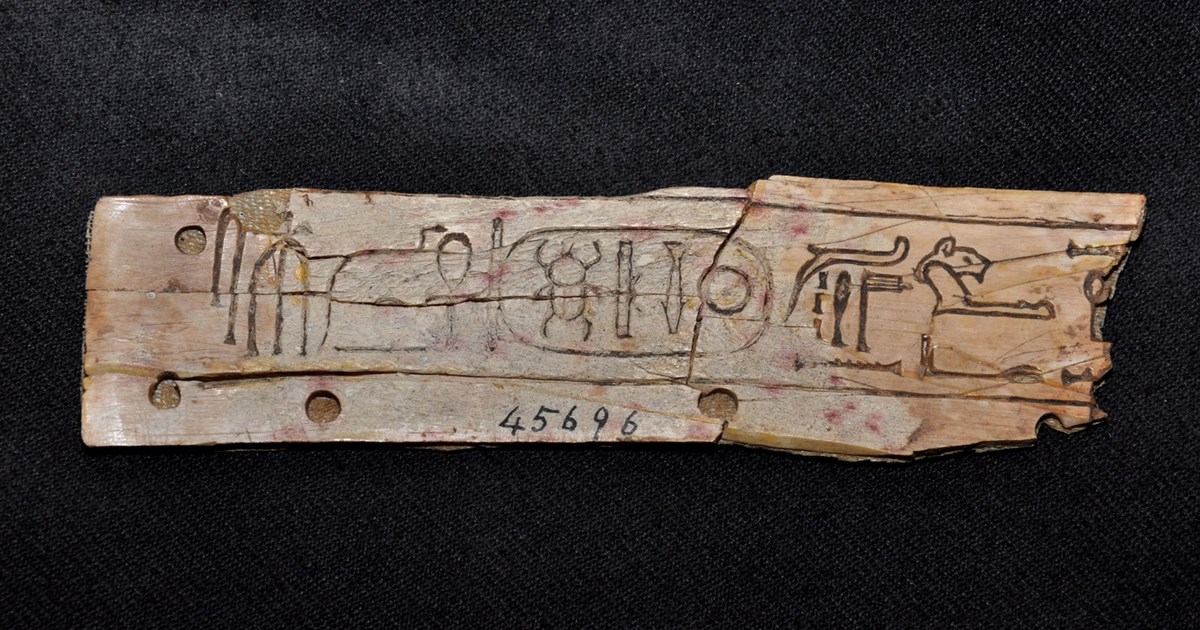
Already during the Twelfth Dynasty in the Middle Kingdom, large numbers of migrants from the Levant (the area of Palestine, Lebanon, and Syria) had started to come into Egypt. Most settled in the north-eastern Delta. A contemporary text names one of their leaders Heqa khasut “the ruler of foreign lands”. This word is more familiar to us today in its Hellenized (Greek) form, Hyksos. It is unknown how they came to power, but the weaker Thirteenth Dynasty was unable to prevent this from happening, and they moved their capital from Itj-Tawy in the north to Thebes (modern Luxor) in Upper Egypt, away from the sphere of influence of the Hyksos. Thus began the Second Intermediate Period. The Hyksos Fifteenth Dynasty, based in Avaris (modern Tell al-Dab’a) in the north-eastern Delta, controlled most of the country in the north, down to al-Qusiya (ancient Qis, Greek Kusai or Cusae) in Middle Egypt, including even Memphis. The Nubian Kerma culture, on the rise, controlled the south. Between them and the Hyksos, a line of local kings in Upper Egypt, centered around Thebes, remained. An obscure Fourteenth Dynasty, based in Khois (modern Sakha, near Kafr al-Sheikh) in the central Delta, appears to have co-existed with the Hyksos, at least at first, before being absorbed by them. Another, short-lived, dynasty, also appears to have been based in Abydos. Ancient Egyptian culture thrived under the Hyksos, as did their own, native, West Semitic culture of the Bronze Age Levant. Many aspects of this culture are apparent in Avaris, such as the style of pottery and weaponry, house layout, and burial customs. Their tombs, for example, were located within living areas, rather than in a cemetery outside of the city. It is not known what marked the transition from the Thirteenth Dynasty, which had moved from Itj-Tawy to Thebes, to the Sixteenth, which itself then transitioned to the Seventeenth. Both of these dynasties were quite militaristic, however, and their power grew over time. The later Seventeenth Dynasty kings were wealthy, experienced, and powerful enough to wage war against the Hyksos. Kings Seqenenre Taa and Kamose, most likely his son, made great progress. The former appears to have died as a result of his campaigning. Ahmose, captured formerly Hyksos territories, managed to sack Avaris, and expulsed the Hyksos. He then made conquests in southern Palestine, and south in Nubia. These events mark the beginning of the Eighteenth Dynasty and beginning of the New Kingdom, Egypt’s age of empire. The Second Intermediate Period had long-lasting effects on Egyptian history. New technologies were introduced into Egypt, such as Near Eastern musical instruments and board games, an improved potter’s wheel, new crops, and new military technology, most importantly composite bows and the horse and chariot. The Hyksos’ control of most of Egypt left an indelible mark on the psyche of the ancient Egyptians: Foreign conquest was a very real threat, and border fortresses alone were insufficient to safeguard Egypt’s borders. The kings of the New Kingdom would pursue an aggressive expansionist policy.
Neues Reich
1295 BC
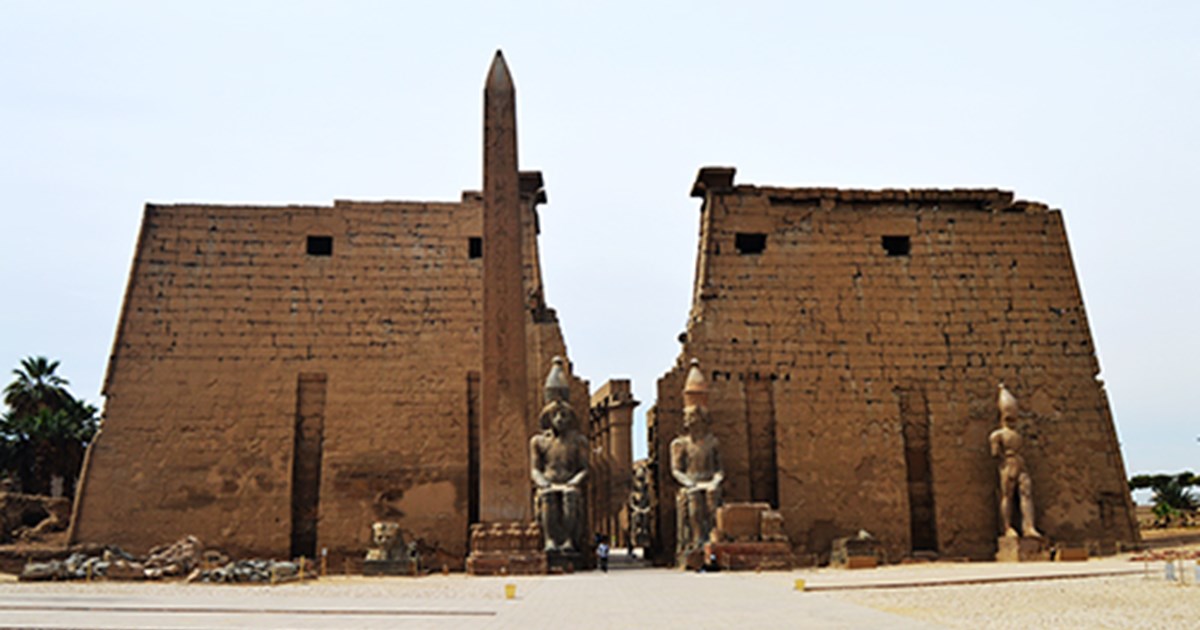
During the New Kingdom, Egypt became a great empire of the ancient Near East. Its southern borders reached the Fourth Cataract in Nubia, and to modern-day Syria in the north. The economy flourished to an astounding degree, and most of the most famous and impressive surviving ancient Egyptian monuments date to this period. The Eighteenth Dynasty (c.1550–1295 BC) began with Ahmose II, who expelled the Hyksos, a West Semitic people who ruled most of Egypt during the preceding period. Most of the kings of the early New Kingdom pursued an aggressive foreign policy in response. The acquired wealth was used to undertake many construction projects everywhere in Egypt, particularly in Karnak Temple in Luxor, the temple of the most important god of Thebes, Amun. Most of the kings of this dynasty were buried in the now-famous Valley of the Kings. Art, architecture, and the nation’s economy reached new heights during the reign of Hatshepsut. Her husband, Thutmose II had unfortunately not reigned for long, and his son by another wife, Thutmose III, was still too young to rule. Then-Great Royal Wife Hatshepsut, possibly in order to secure the royal line, proclaimed herself king, and reigned alongside her stepson. She developed a royal ideology of kingship and its link with Amun to legitimize her reign. This ideology defined kingship for the remainder of the New Kingdom, and left a deep mark on the Theban geographical, religious, and political landscape. Thutmose III proved to be a most capable ruler. During his reign, Egypt’s borders reached their furthest extent. His monuments span the length of the Nile Valley, including Nubia, and he left as big a mark on Karnak Temple as Hatshepsut did. Peace was eventually achieved during the reign of his son, Amenhotep II. Peace and international trade bore their fruit during the reign of Amenhotep III in particular. Few kings can match the quality, scale, and quantity of his construction projects. He built many monuments across Egypt and Nubia, including half of Luxor Temple as it survives today. His son, Amenhotep IV, changed his name to Akhenaten, and proclaimed that there was only one god: Aten, which was also the ancient Egyptian word for the sun-disk in the sky. His reign saw other revolutionary changes in royal ideology, art, architecture, and language. He neglected Egypt’s foreign affairs, however, and by the end of his reign, Egypt’s territories in the Levant (the area of Palestine, Lebanon, and Syria) were lost. A turbulent period followed, with Horemheb, previously a general, eventually ascending the throne. He completed the return to normalcy, and appointed his vizier and general, Paramessu, as his successor. His ascension to the throne, as Ramesses I, marks the beginning of the Nineteenth Dynasty (c.1295–1186 BC). His son Sety I succeeded him, and ushered into an era of prosperity. He also undertook many campaigns, most importantly against the Hittites, who had arisen as a new power had arisen in the Ancient Near East. He reconquered much of Egypt’s lost territories in the Levant. His son, Ramesses II, known as the Great, was one of the most successful monarchs in ancient Egyptian history. Over the course of his long reign, he fought, and achieved peace with the Hittites, and left a bigger mark on Egypt’s monumental landscape than any other king. His son, Merenptah, fended off a large attack by the so-called Sea People, after which the Nineteenth Dynasty went into decline. With King Sethnakht, the founder of the Twentieth Dynasty (c.1186–1069 BC), order returned to the country. His son, Ramesses III, was the last great warrior-Pharaoh of the New Kingdom, after whose reign the country steadily declined further and further, until it split in two, with the next Dynasty only effectively ruling Lower Egypt.
Dritte Zwischenzeit
1069 BC
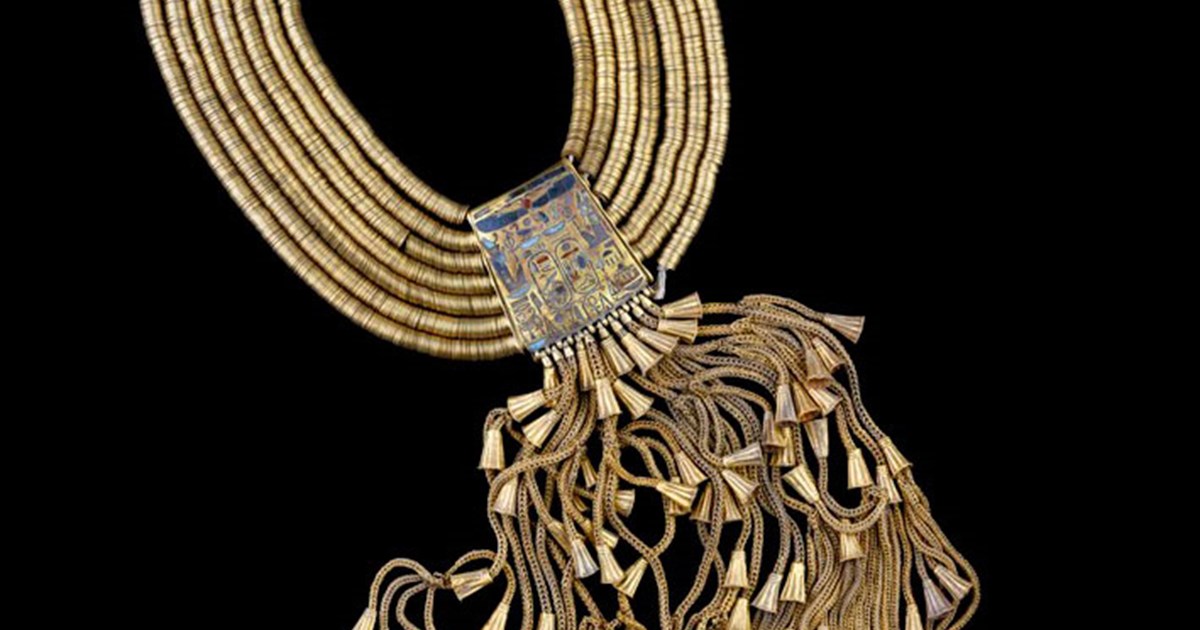
The Third Intermediate Period was, on the whole, a period of decentralization and weakness. By the end of his reign, Ramesses XI (c.1099–1069 BC), the last king of the New Kingdom, was no longer in effective rule of the whole of Egypt. After his death, a branch of the Ramesside family ruled from Tanis (modern San al-Hagar) in the north-eastern Delta. Although the reign of this line of kings, the Twenty-First (c.1069–945 BC), was acknowledged throughout the country, Upper Egypt was in reality governing itself, headed by the powerful high-priest of the god Amun in Luxor, who simultaneously held the highest military office as well. Historians describe this period as a theocracy, since it was the god Amun who held the highest authority. Sheshonq I, the founder of the Twenty-Second Dynasty (c.945–715 BC), came from a powerful Libyan family from Bubastis (modern Tell Basta) in the eastern Delta, which he made his capital. He managed to bring the country under his control, successfully campaigned in the Levant (the area of Palestine, Lebanon, and Syria), and undertook monumental construction projects. This short-term success could not reverse the overall trend of decentralization in Egypt and, after his death, the central government’s control over the country continued to slip. By the time of the Twenty-third Dynasty, many areas were not only completely independent, but their respective rulers actually considered themselves kings, wearing royal regalia and bearing royal titles. During this time, the Nubian Kushite Kingdom, centered around Napata near the fourth cataract, was on the rise, until they began to invade Egypt. The Nubian, Twenty-fifth, Dynasty eventually conquered even Memphis under King Piye (c.747–716 BC), to whom all other contemporary Egyptians kings submitted themselves. This ushered into an era of great prosperity, art flourished, and many great monuments were built. Simultaneously in the Near East, the Neo-Assyrian Empire had become a world power. It had expanded as far as Palestine, and a clash with Egypt became inevitable. Although he Kushite kings successfully defended Egypt, the Assyrians were ultimately victorious. The Kushites managed to reconquer Egypt as far as the Delta, but the Assyrians, headed by the great king Assurbanipal, retaliated, and sacked Thebes.
Spätzeit
610 BC
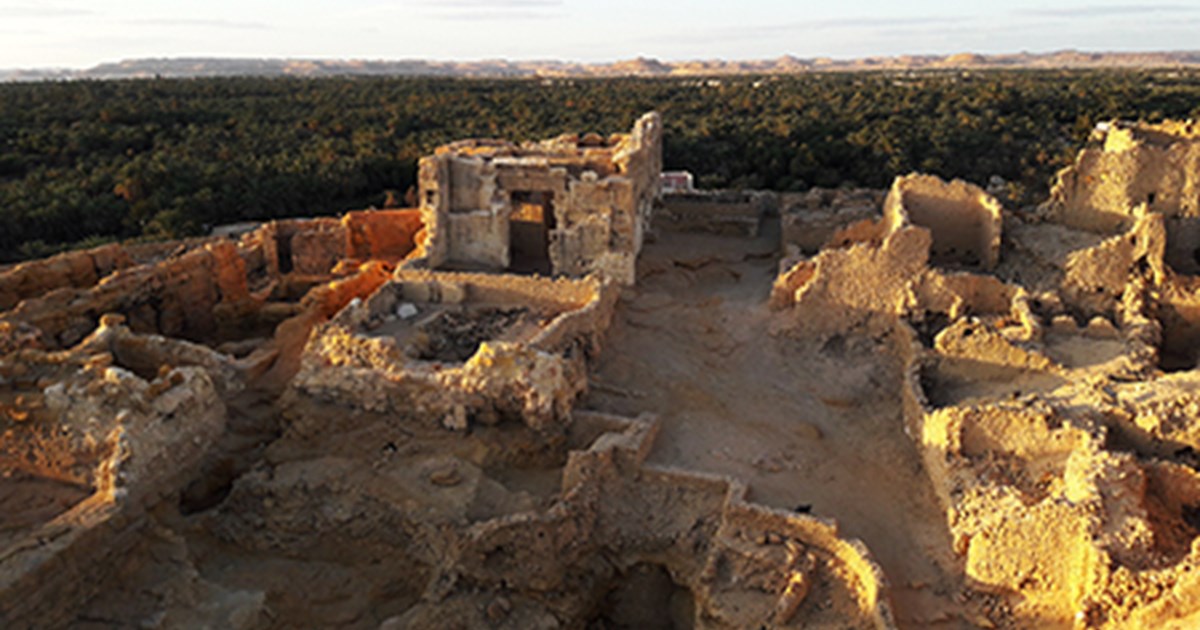
When the Kushite kings conquered Egypt, one of the line of rulers that had emerged in Egypt was the Twenty-fourth Dynasty, based in Sais in the western Delta. The Nubians killed their king, Bakenrenef (Bocchoris to the Greeks). After the Assyrians conquered Egypt and the Kushite king Tanutamani retreated to Nubia, King Assurbanipal installed the Saite kings to rule Egypt on his behalf. Once the Assyrians’ grip on Egypt loosened, the Saite king Psamtik I (664–610 BC), began to consolidate his power throughout the country. Thus began the Twenty-sixth Dynasty and Late Period, when Egypt was once again a major world power. Trade flourished, and trading ports on and near the Mediterranean enriched the coffers of the nation. Greek merchants and artisans played a particularly important role in this regard. With a strong economy, monumental construction projects resumed all along the Nile Valley. Some of the most beautiful ancient Egyptian art was produced in this period. The kings of the Twenty-sixth Dynasty looked to Egypt’s already very ancient past, the Old Kingdom (c.2686–2181 BC) in particular, for inspiration. The result were objects that were influenced by old traditions, and that were yet very new. The reign of King Ahmose III (better known as Amasis; 570–526 BC) was particularly prosperous. The situation abroad, however, was growing difficult. The defeated Neo-Assyrian Empire was replaced by the rapidly expanding Neo-Babylonian. Egypt had become militarily very powerful, both on land and at sea. Campaigns in both Nubia and especially the Levant (the area of Palestine, Lebanon, and Syria) were undertaken. Alliances were made to oppose the Babylonians and their powerful king, Nebuchadnezzar II (605–562 BC), whose attack on the Egypt was successfully repulsed. The Neo-Babylonian Empire was defeated by the rising Achaemenid Persian Empire under the leadership of King Cyrus the Great (559–530 BC). The Saite kings contended with this new threat, but Psamtik III (526–525 BC) was defeated by the Persian king Cambyses. The Twenty-seventh Dynasty consists of the Persian rulers. Although this was a prosperous period, the Egyptians wanted independence, and revolted when they could. In this, King Amunirdis (Amyrtaios to the Greeks; 404–399 BC) of Sais was successful. He ruled the whole country, founding the Twenty-eighth Dynasty. He was the only ruler in this line, however, as his throne was usurped by Nepherites I (399–393 BC), who founded the Twenty-ninth Dynasty. This new line successfully defended Egypt against the Persians, but the throne was usurped from them as well, this time by their general Nekhtnebef. With Nekhtnebef (Nectanebo I to the Greeks; 380–362 BC) began the final, Thirtieth, Dynasty (380–343 BC), one of the most prosperous periods of ancient Egyptian history. The capital was the Delta city of Sebennytos (modern Samannud). Monumental construction projects were undertaken in the whole country, from the Delta in the north to Philae in the south, and art continued to flourish. Although the Dynasty successfully defended Egypt against the Persians, Nekhtherhebit (Nectanebo II to the Greeks; 360–343 BC) was ultimately defeated. The second Persian occupation, sometimes called the Thirty-first Dynasty, was less tolerant than the first, but it would last only ten years.
Ptolemäerzeit
332 BC
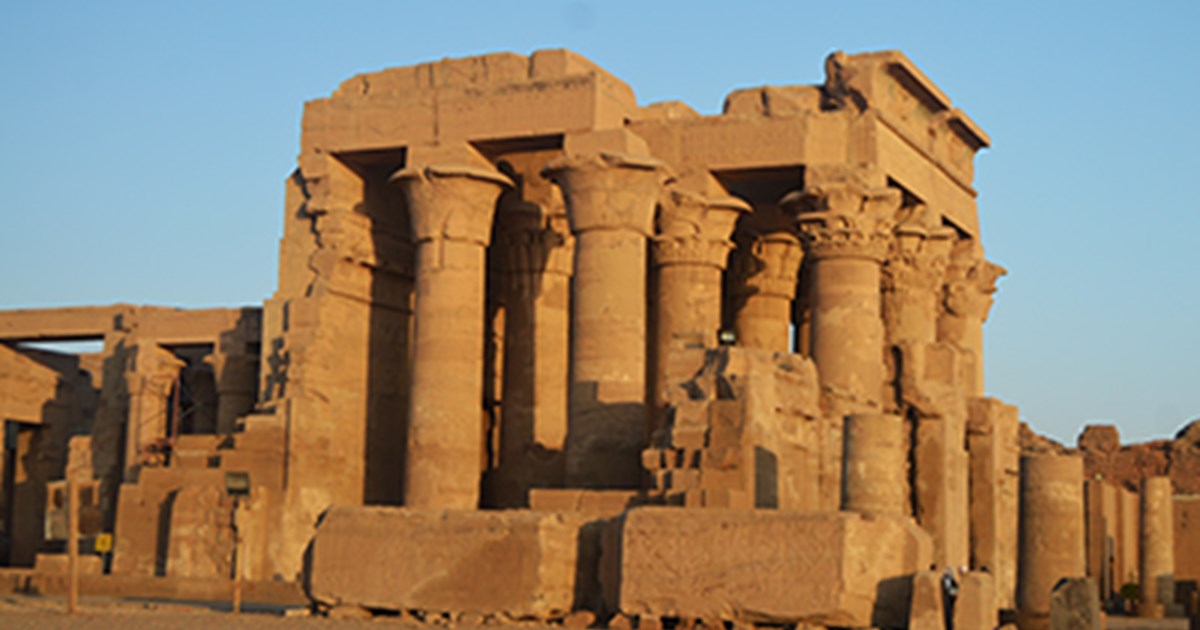
After Alexander the Great defeated the Persian king Darius III in 332 BC, Egypt became part of the Macedonian Empire. Upon the death of Alexander in 323 BC, his provinces were divided among his generals and Ptolemy I (Soter) ruled Egypt, which became an independent kingdom known as the "Ptolemaic Kingdom". Ptolemy I completed the construction of Egypt’s new capital-Alexandria. Also, he began to build the Lighthouse of Alexandria and brought together all the Egyptian and Greek priests to establish a new doctrine to unify the Egyptian and the Greek together. In the reign of his successor Ptolemy II, art and science flourished and the building of the ancient Library of Alexandria, (the largest in the ancient world) led to the influx of Greek scholars and thinkers to Egypt, increased multiculturalism and incorporated the civilization of the New Greek into the Ancient Egyptian one. Various Greek settlements were established in Egypt during the Ptolemaic period to be major central areas for the Greek citizens who came to Egypt with their culture and traditions such as the Ptolemaic in Upper Egypt, Philadelphia in Fayoum and Naucratis, (established during the Late Period), which was the first Greek settlement and a center for trade between Egyptians and Greeks in Delta. As for the ancient capital Memphis, the Greek settlers founded their settlement around the main temple of Ptah in the early Ptolemaic period. The Ptolemaic rule in Egypt ended in a tragic end when the Romans defeated them in the battle of Actium in 31 BC, which led to the suicide of Queen Cleopatra VII and the murder of her son, Ptolemy Caesarion XV.
Römische Zeit
285 AD
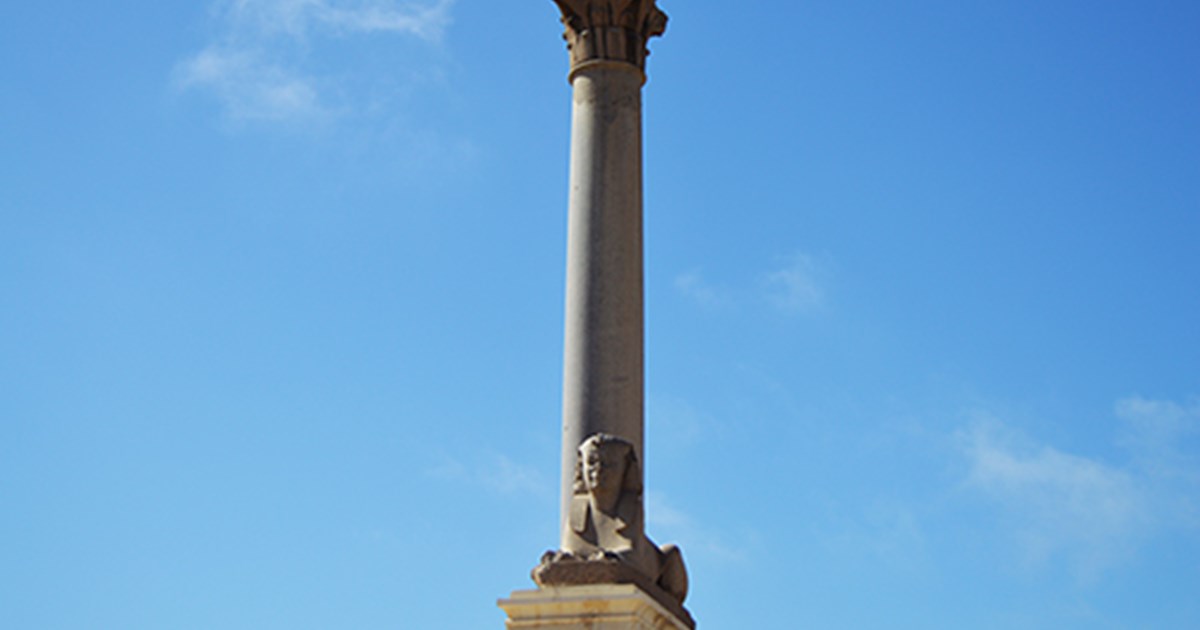
After the commander Octavian (August) defeated Antony and Queen Cleopatra VII in 31 BC. in the Battle of Actium, Egypt lost its independence and became a Roman province ruled by the Roman Emperor, who was officially designated as Pharaoh and the country was divided into three regions, each of which was governed by a local governor, but all were under the authority of the emperor. Rome exploited Egypt's resources economically. Some emperors paid much care for Egypt in particular, such as the Roman Emperor Hadrian who visited Egypt and founded a new Roman settlement called Antinopolis. The Romans also developed new technologies for the development of agriculture, where they built new water canals and dams, as well as increased grain cultivation and expanded wine production. All these agricultural reforms were principally aiming to remain the Province as "the breadbasket in the ancient world", no more. Life in Egypt was influenced by the multiculturalism that was common during the Roman Kingdom; also a unique artistic style emerged as a result of blending of the Egyptian, Greek and Roman artistic influences. The Egyptian intellectual influence was appeared in the prevalence of Isis worship throughout the Roman Empire. In 285 AD, the Roman Empire split into the Eastern and Western Empires. The Roman Empire ended with the fall of Rome by the Berber attacks, while the Eastern Empire remained known as the Byzantine Empire in 330 AD.
Byzantinische Epoche
284 AD
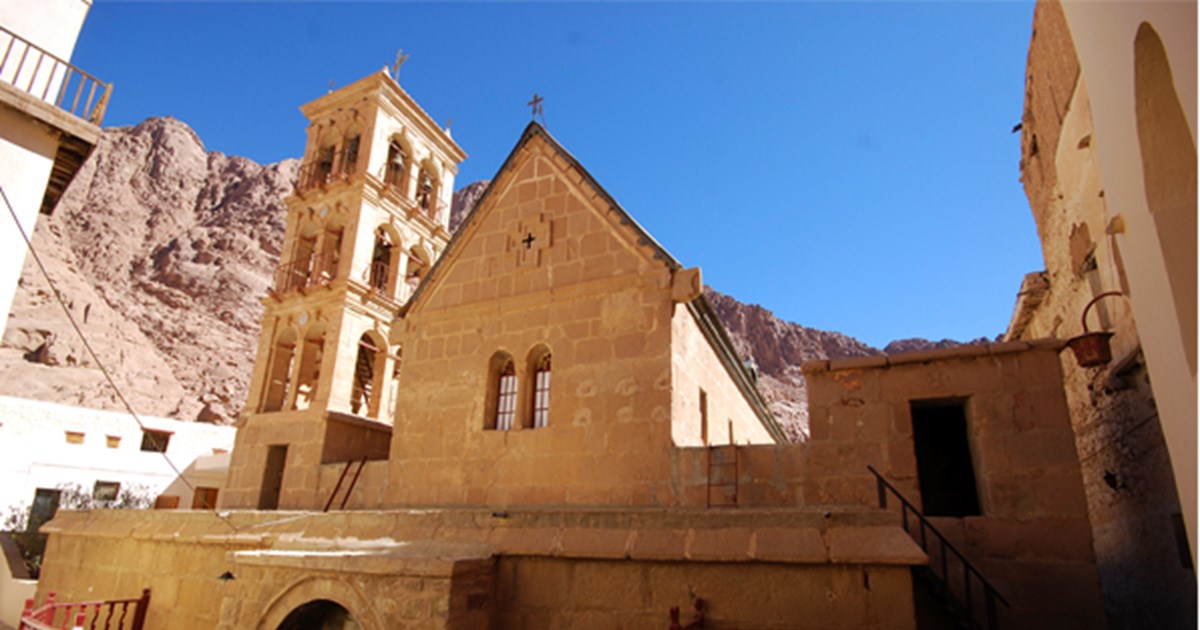
In the late Roman period, Egypt is known as the Byzantine Egypt or the Coptic period since the reign of the Roman Emperor Diocletian in 284 AD until the Arabs conquest of Egypt in 641 AD. The reign of Emperor Diocletian witnessed the most aggressive persecutions in the Roman history, especially against the Egyptian Christians. The Copts chose the year of Diocletian's ascension to the throne as the beginning of their calendar, which was called the calendar of martyrs. The Egyptian Christians suffered persecution until the Edict of Milan's issuance in 313 AD in which Christianity was granted equal rights to other religions by Emperor Constantine I, who ruled the Western Roman Empire. In 324 AD Constantine I defeated Licinius, the ruler of the Eastern Roman Empire, and Constantine I became the only Emperor of the Roman Empire who transferred the headquarters to the new Capital Constantinople after its foundation in 330 AD.
Raschidun-Kalifat
641 AD
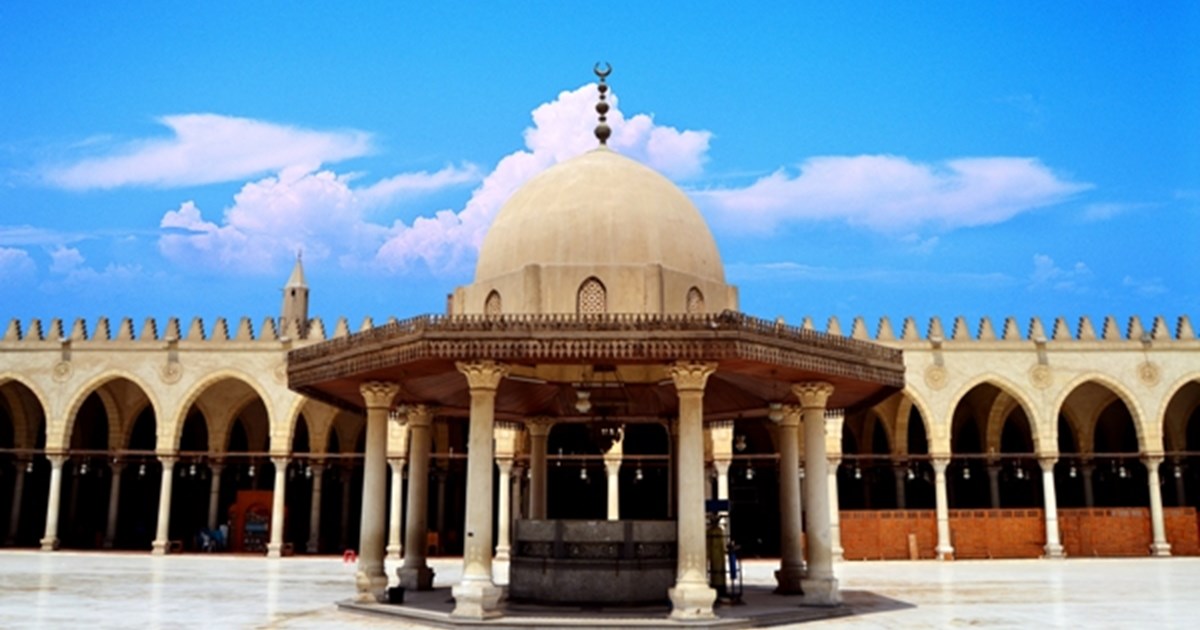
The Rashidun Caliphate is so called after the first four leaders of the Islamic World, called caliphs—which literally means “successors”—following the death of the Prophet Muhammad. This was one of the most glorious of Islamic periods. Constant warfare between the Byzantine and Sassanian Empires had weakened them, and Muslim territories were expanded. Egypt was conquered (20 AH/641 AD) during the reign of Caliph ‘Umar ibn al-Khattab (13–23 AH/634–644 AD), taken over from the Byzantine Empire, which had itself only recently reconquered it from the Sassanian Persian Empire. The general leading the army that conquered Egypt was ‘Amr ibn al-‘As, who desired to continue having Alexandria as its capital. Caliph ‘Umar ibn al-Khattab refused, arguing for a capital that was closer to the the seat of the Caliphate, Medina. ‘Amr ibn al-‘As was appointed the governor of Egypt, and a new capital was founded: al-Fustat. Although the city by the name of Cairo would not be founded for another three hundred years, Egypt’s modern capital has its roots here.
Umayyaden-Zeit
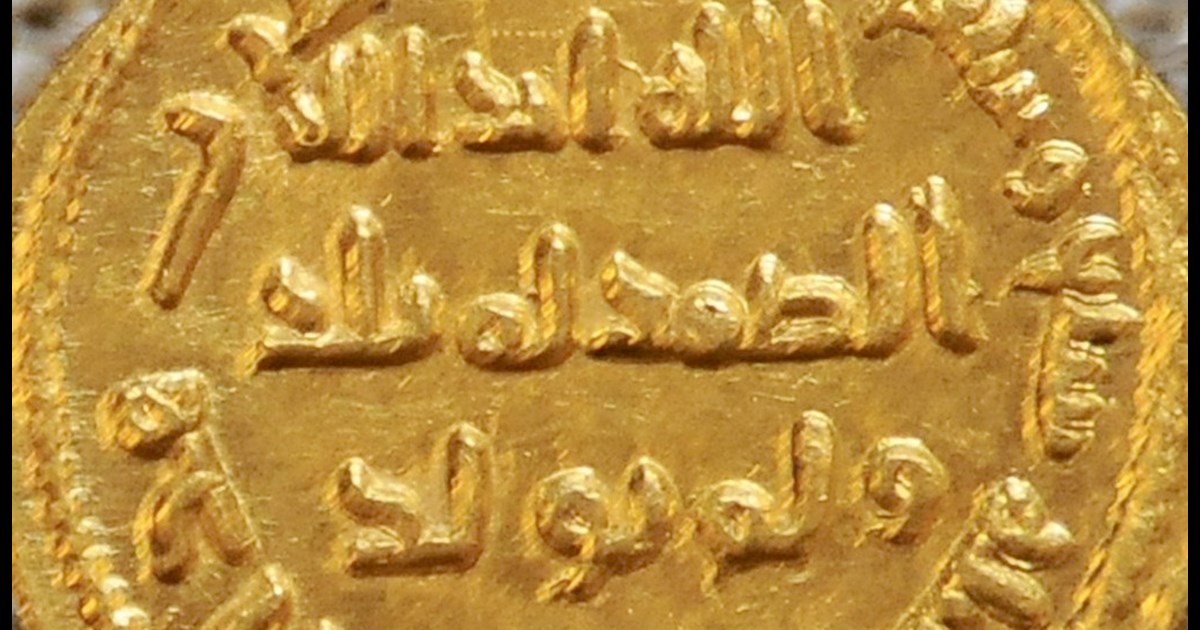
The Ummayad Caliphate was founded by Mu’awiyya ibn Abi Sufyan. Umayyad rule continued for almost a century. The empire expanded widely, reaching Europe and the edges of Asia. The decline of the caliphate, however, took place during the reign of Hisham Ibn ‘Abd al-Malik. Damascus was the centre of rule, and Egypt was one of its subordinate territories. Amr ibn al-‘as was appointed the governor of Egypt for the second time by Mu’awiya ibn Abi Sufyan (38-43 AH), and he is considered the first ruler of Egypt during this period.
Abbasiden-Zeit
750 AD
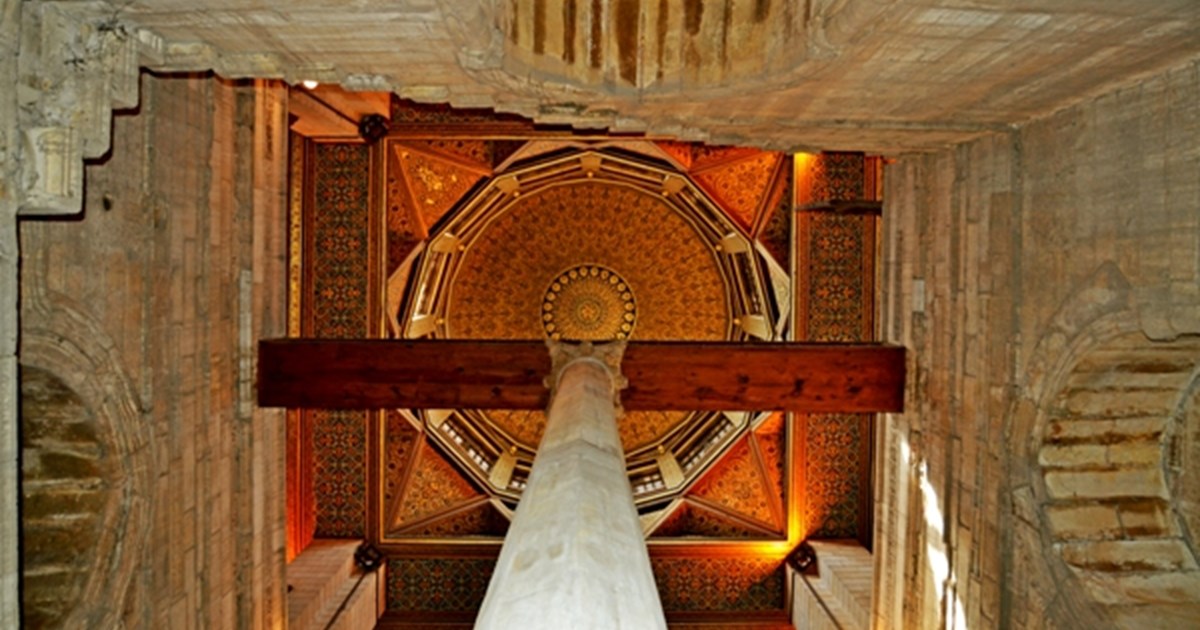
‘AbdAllah al-Saffah ibn Muhammad (Abu al-‘Abbas al-Saffah) was the founder of the Abbasid state. He came to power following the Abbasid defeat of the Umayyads in 132 AH/ 750 AD. They ruled for eight centuries, to the extent that it was the Abbasids who represented political legitimacy for the Muslims. The Abbasid Empire was one of the largest, with Kufa in Iraq initially serving as the capital. Later, the caliph Abu Ja’far al-Mansur founded the city of Baghdad and moved the capital there
Tuluniden-Dynastie
884 AD
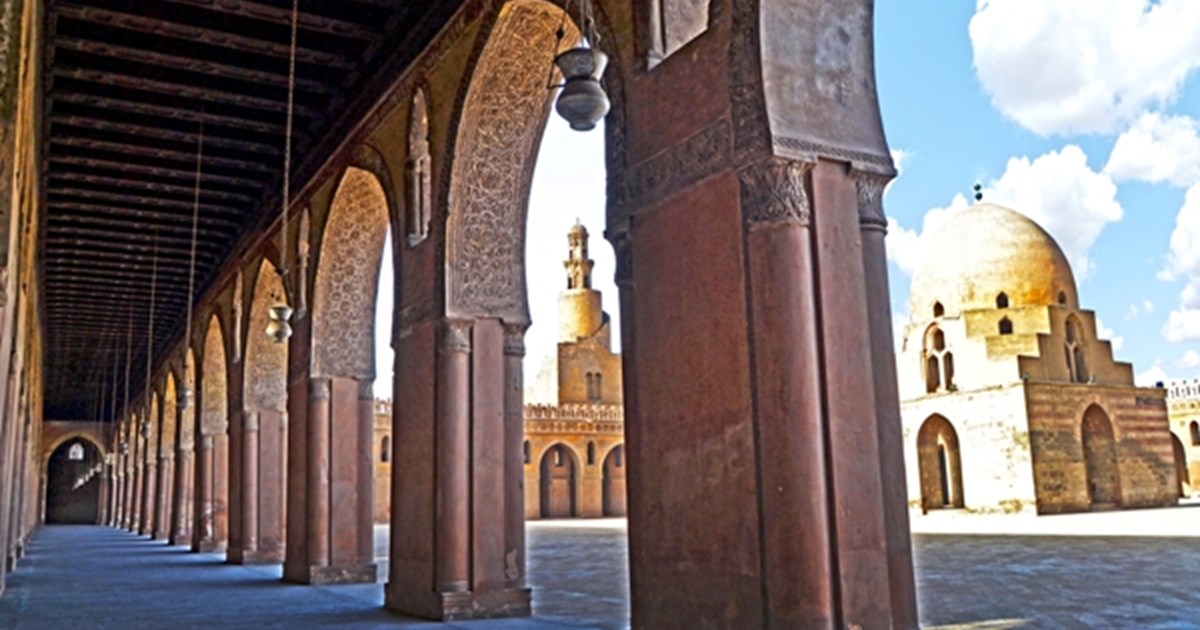
The Tulunids established the first independent state in Egypt during the Abbasid period, during which Egypt was able to keep all of its wealth. Ahmad ibn Tulun, the founder of the dynasty, initiated many economic and cultural reforms. He started by establishing a new administrative center, called al-qata’I, where he built his mosque, currently known as the Ibn Tulun mosque. The Tulunids ruled for about thirty-five years, after which came the Ikhshids.
Ichschididen-Zeit
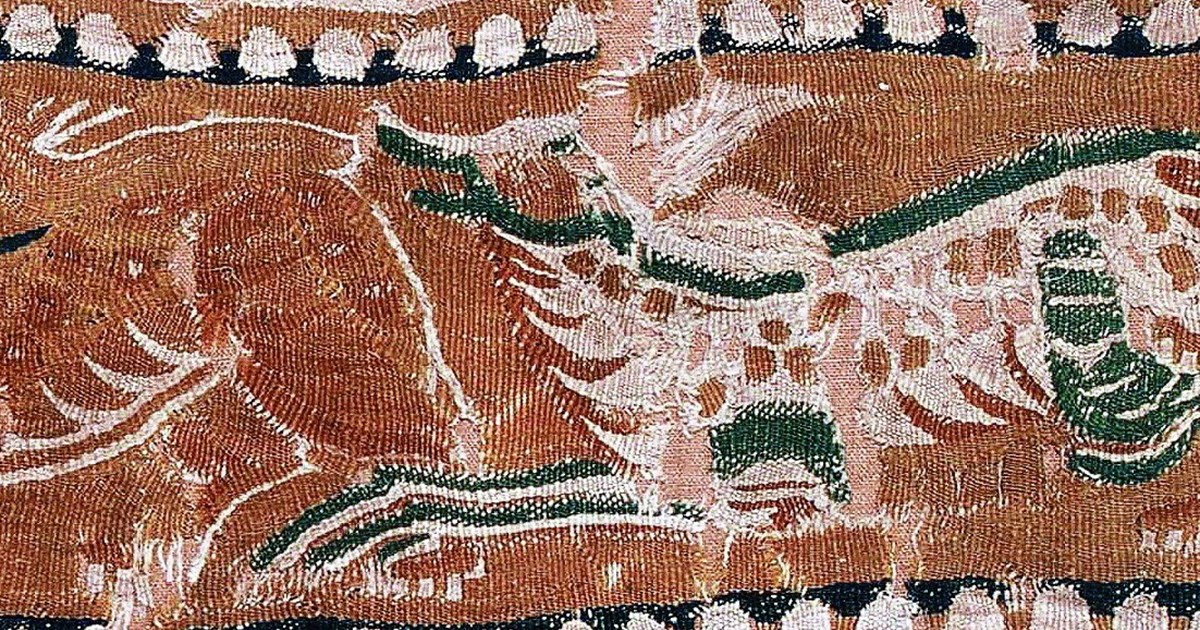
Muhammad ibn Tughj al-Ikhshid founded the Ikhshidid dynasty. The Abbasid Caliph al-Radi Billah granted him land and gave him the title “Ikhshid,” meaning “king” in the language of the Fergana Region, from which the kings of this dynasty originate. The Ikhshid rule continued in Egypt for about thirty-five years, and eventually, Muhammad ibn Tughj gained his independence from the Abbasid state. Egypt flourished culturally and economically due to Egypt’s political independence.
Fatimiden-Dynastie
969 AD
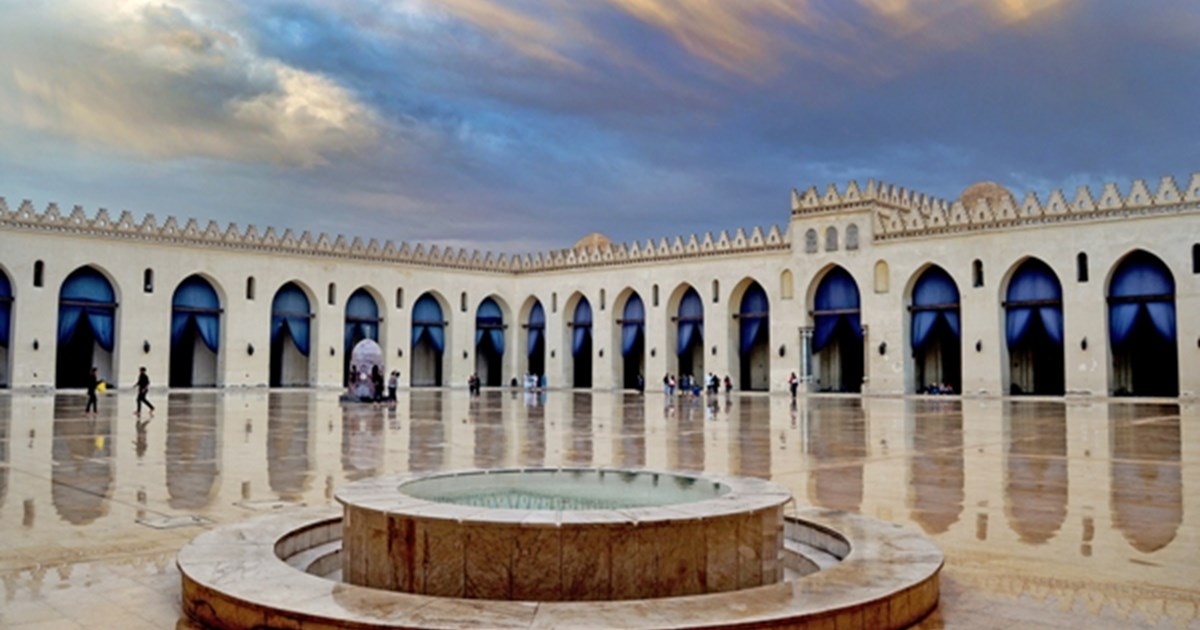
The Fatimid state was Egypt’s golden period in which Islamic art was consummate. Egyptian artists left behind many relics and monuments that attest to their great skill and meticulousness in various art forms. The Fatimids invaded Egypt in 358 AH/ 969 AD and subsequently founded a new city, Cairo, north of Al Fustat, making it their capital. Al-Azhar was the first mosque they established in Cairo.
Ayyubiden-Dynastie
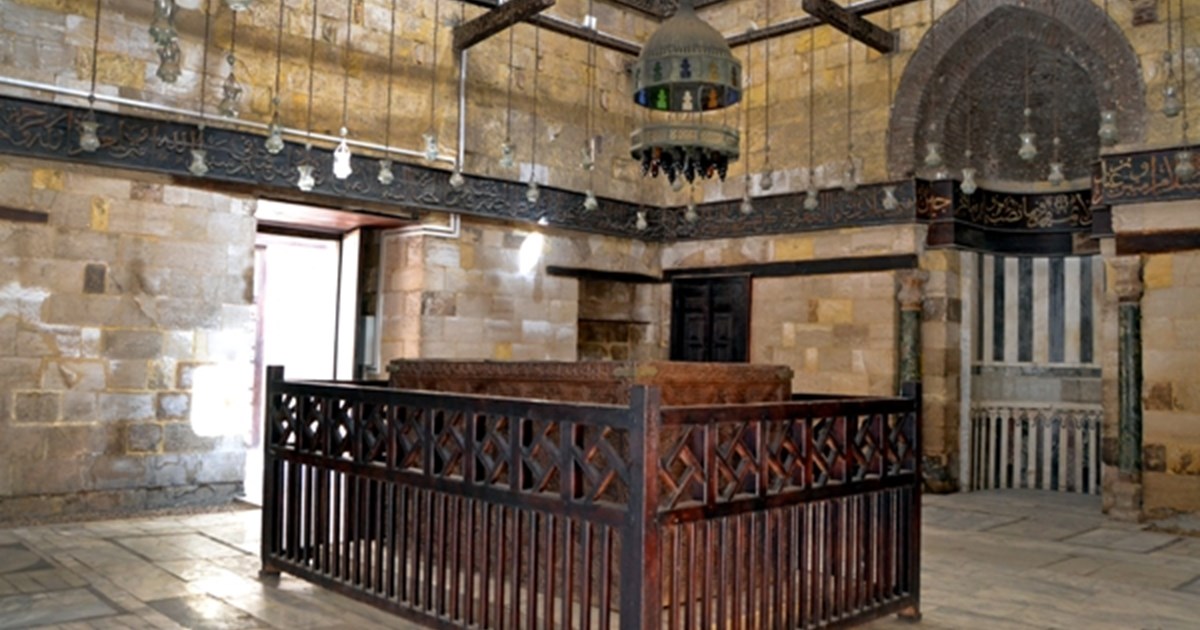
The Ayyubid dynasty was founded by Salah Ad-Din Al-Ayyubi, who defeated and expelled the Fatimids in 567 AH/ 1174 A.D , and Egypt returned under the Abbasid Caliphate once more. Salah Ad-Din worked on spreading the Sunni doctrine instead of Shiism that was common in the Fatimid period. The Ayyubid dynasty was a military state as it appeared during the turbulent time of crusader attacks on Egypt and the Levant (Ash-sham). In light of this political context, Salah al-Din decided to build a citadel in Cairo, the construction of which began in 527 AH/ 1176 A.D. Its completion, however, did not take place during his lifetime, but later in 1208 A.D. In addition to this, Egypt’s rule extended to the Levant (Ash-sham) , the Hijaz, Yemen, Nubia, and parts of North Africa. Ayyubid Reign stayed in Egypt for 81 years and ended on the hands of the Mamelukes.
Bahri-Mamluken
1356 AD
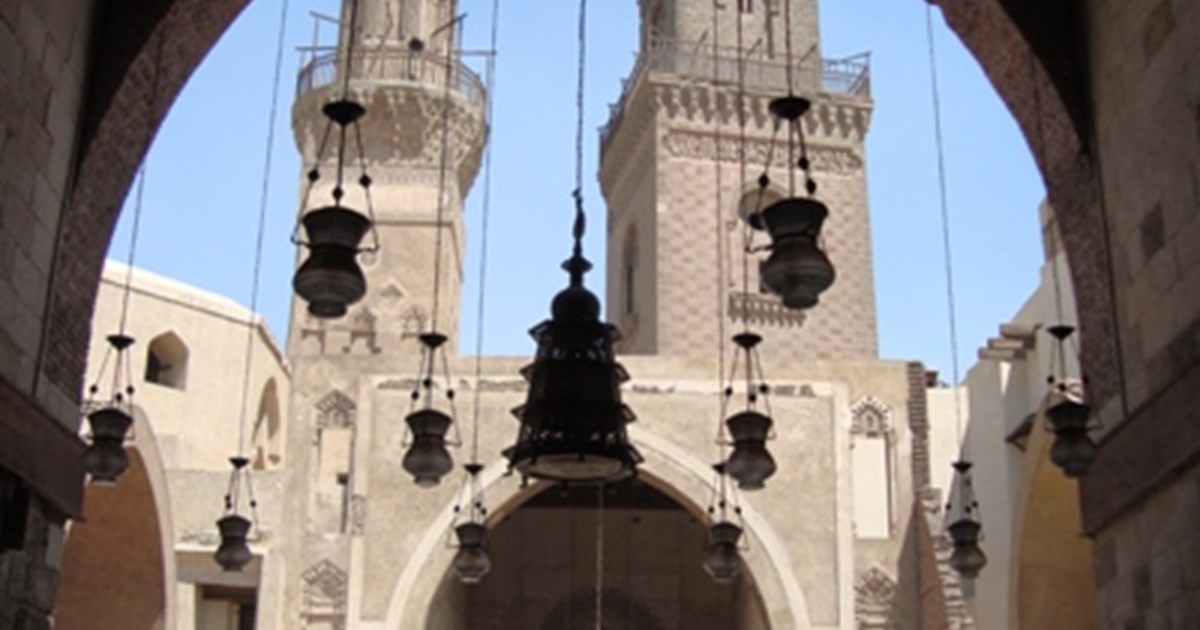
The history of the Bahri Mamluks began with Sultan al-Saleh Najm al-Din Ayyub during his reign the use of the Mamelukes increased in the military, these troops built their own citadel in Rhoda Island in 638 A.H. They were called “Bahari” (deriving from “sea”) Mamelukes because they came to Egypt by sea routes. They were also known as “al-Salihiyiin”, linking them to the title of their ruler, Najm al-Din Ayyub. There were two-man families that encompassed the Mamluks. The first is that of al-Dhahir Baybars al-Bindiqari, who ruled Egypt for 17 years, and is considered the real founder of the dynasty who re-arranged government administration, restored Abbasid rule, and moved the capital to Cairo in 658 A.H. The second is the family of al-Manusr al-Qalawun, whose reign is considered one of the most prosperous periods in Egypt’s history. Many of the rulers who succeeded al-Mansur were young, and so were controlled by their regents. This continued until the reign of Sayf al-Din Barquq, the founder of the Circassian Mamelukes
Tscherkessische Mamluken (Burdschi)
1382 AD
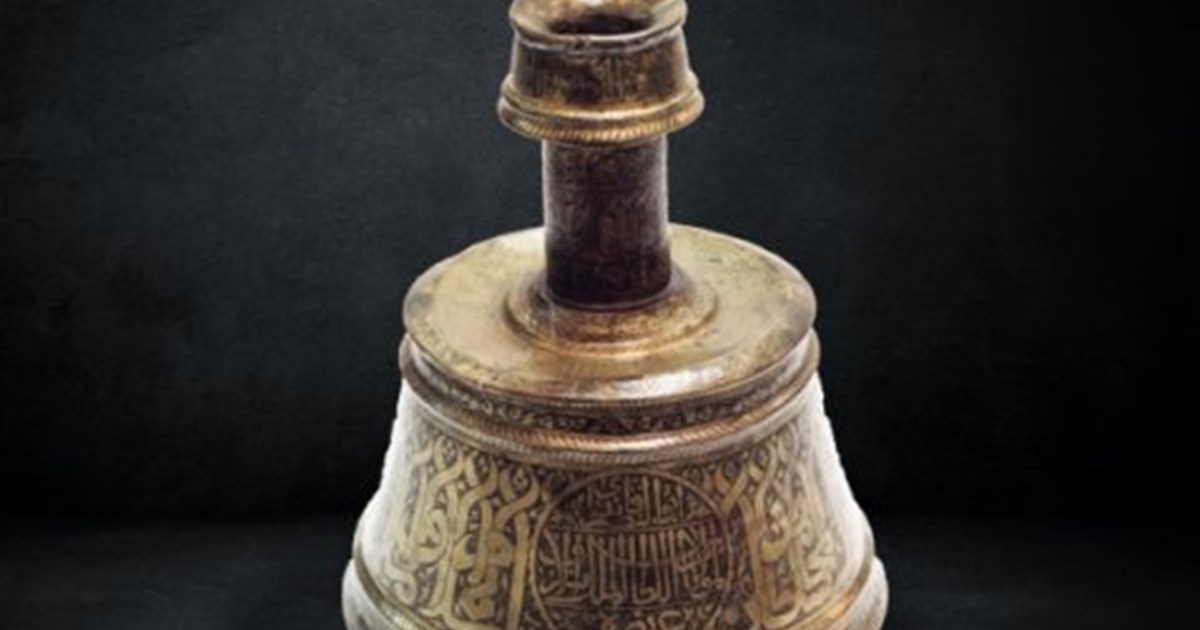
The Circassian Mamluks founded their state in 784 AH/ 1382 AD by Sayf al-Din Barquq. Their roots return to the reign of al-Mansur Qalawun, who excessively used Circassian Mamluks in his military. This regiment was loyal to him and his decedents. Upon becoming military general, one of these Circassian Mamluks, Barquq, became the most important and powerful men of the state. His ascension to the throne marks the beginning of the Circassian Mamluk dynasty. They were also called the Burji (deriving from “tower) Mamluks, since they occupied the citadel and its towers. Egypt witnessed an architectural and artistic progress during the Mamluks time although it was an unstable period. The Circassian Mamluks ruled Egypt for about 135 years, with 23 alternating sultans. The defeat of Sultan Tuman Bey heralded the beginning of the Ottoman period.
Osmanische Zeit
1517 AD
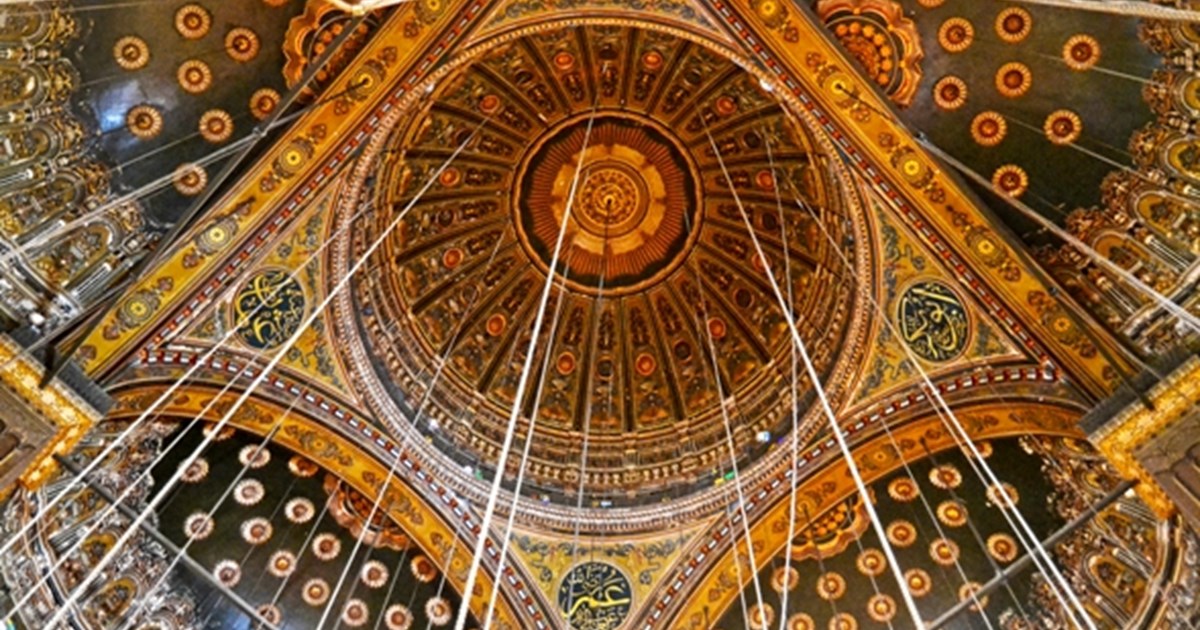
The Ottoman reign in Egypt began when Sultan Selim I defeated the Mamluks Sultan Toman Bay at the Al-Raydanya in 1517 AD. Egypt became an Ottoman dependent state, and the Ottoman capital was founded in Constantinople. Ottoman rule continued in Egypt until the French invasion of Egypt (1798-1801 AD).The Ottoman reign for Egypt stayed till the coming of the French Campaign in Egypt in 1798 A.D till 1801 A.D, and then the Ottoman reign back again till 1805 A.D. There were no significant political developments in Egypt during this period, other than the constant rivalry between Ottoman and Mamluk rulers.
Muhammad-Ali-Dynastie
1848 AD
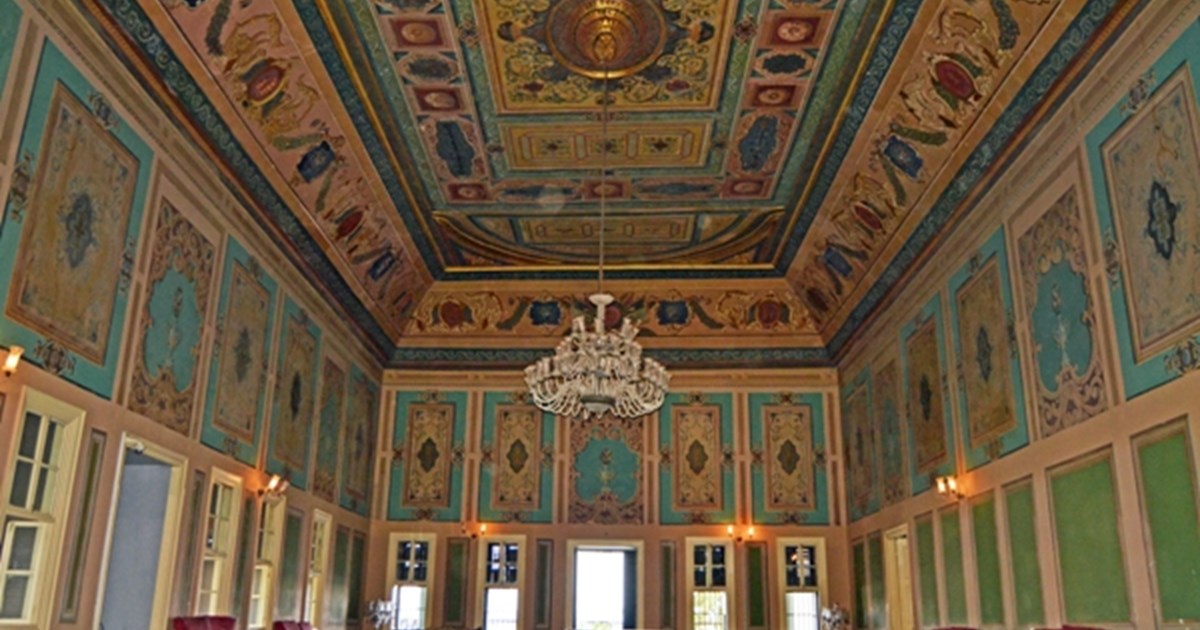
The dynasty was founded by Muhammad Ali Pasha and lasts for more than 150 years. Science, art, and culture were developed and flourished during this period; thus Egypt became one of the greatest kingdoms in the east. Muhammad Ali was planning for “modernizing” the country. The plan included new education, agricultural, and industrial systems, and establishing a powerful military base. Then the architectural progress began in Khedive Ismail era, who wanted to change Cairo to Paris of the east. He largely worked on developing the constructional features, so he deserves the title “second founder of modern Egypt,” after Muhammad Ali. At his reign the seat of government was moved from the Citadel to Abdeen Palace. Khedive Abbas Helmi II continued establishing the modern country where the Egyptian university was built (Currently called the Cairo University)—. Then Egypt became a kingdom during the the reign of King Fo'ad I, who founded many scientific organizations. He was succeeded by King Farouq. The revolution of 1952 brought about the end of the royal family’s reign over Egypt in 1953.