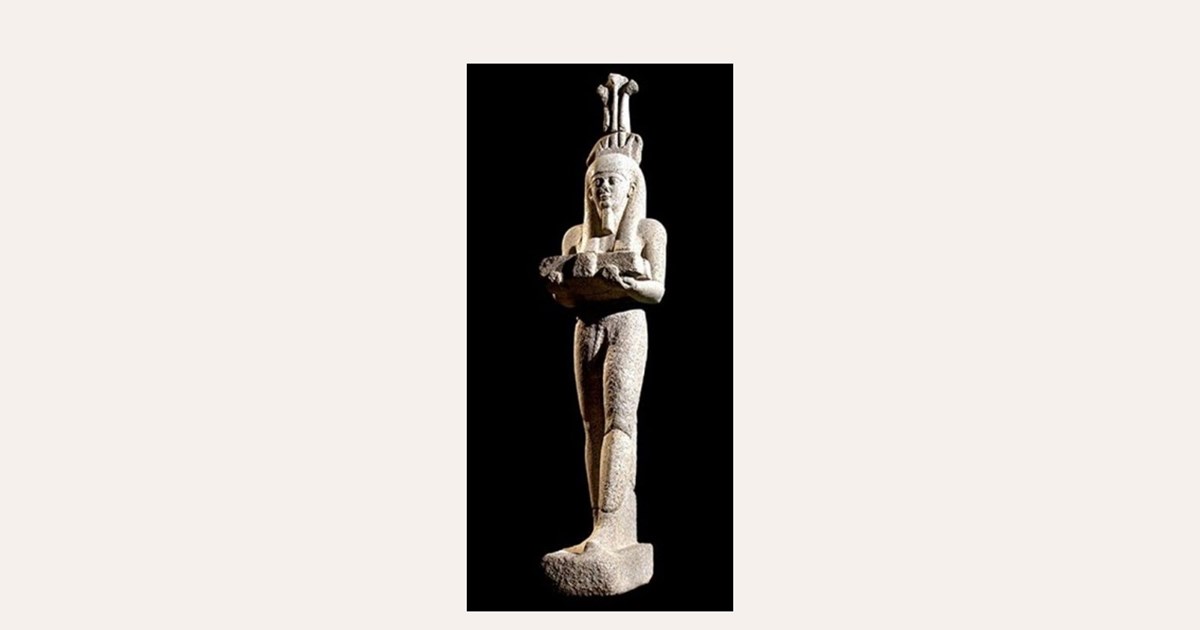
Statue of the god Hapi
Ptolemaic Period
The god Hapi is one of the most important religious symbols in ancient Egypt, representing the flooding of the Nile River, the source of life and fertility. The statue features symbolic physical features such as a full belly and sagging breasts, features that signify abundance and fertility (two traits associated with the Nile flooding). The god Hapi was worshipped as a fertilizing force. He was a god who was clearly genderless, combining symbols of masculinity and femininity (universal nature). The presence of a statue of this size indicates the greatness of this god in Egyptian beliefs, especially in the later period, when the importance of rituals associated with the flood increased. Date: Ptolemaic Period Material: Pink Granite Dimensions: Height: 340 cm Width: 105 cm Depth: 60 cm Source: Artifacts recovered from the Abu Qir site, 2001
Overview
The god Hapi is one of the most important religious symbols in ancient Egypt, representing the flooding of the Nile River, the source of life and fertility. The statue features symbolic physical features such as a full belly and sagging breasts, features that signify abundance and fertility (two traits associated with the Nile flooding).
The god Hapi was worshipped as a fertilizing force. He was a god who was clearly genderless, combining symbols of masculinity and femininity (universal nature). The presence of a statue of this size indicates the greatness of this god in Egyptian beliefs, especially in the later period, when the importance of rituals associated with the flood increased.
Date: Ptolemaic Period
Material: Pink Granite
Dimensions: Height: 340 cm Width: 105 cm Depth: 60 cm
Source: Artifacts recovered from the Abu Qir site, 2001
A Sunken Treasure of History Abu Qir Bay is a marine bay located about 22 km east of Alexandria’s territorial borders. This area gained historical significance in 1859 when Prince Omar Touson, with the help of local fishermen and divers, identifie.