Mosque of al-Fakahani
1148 AD
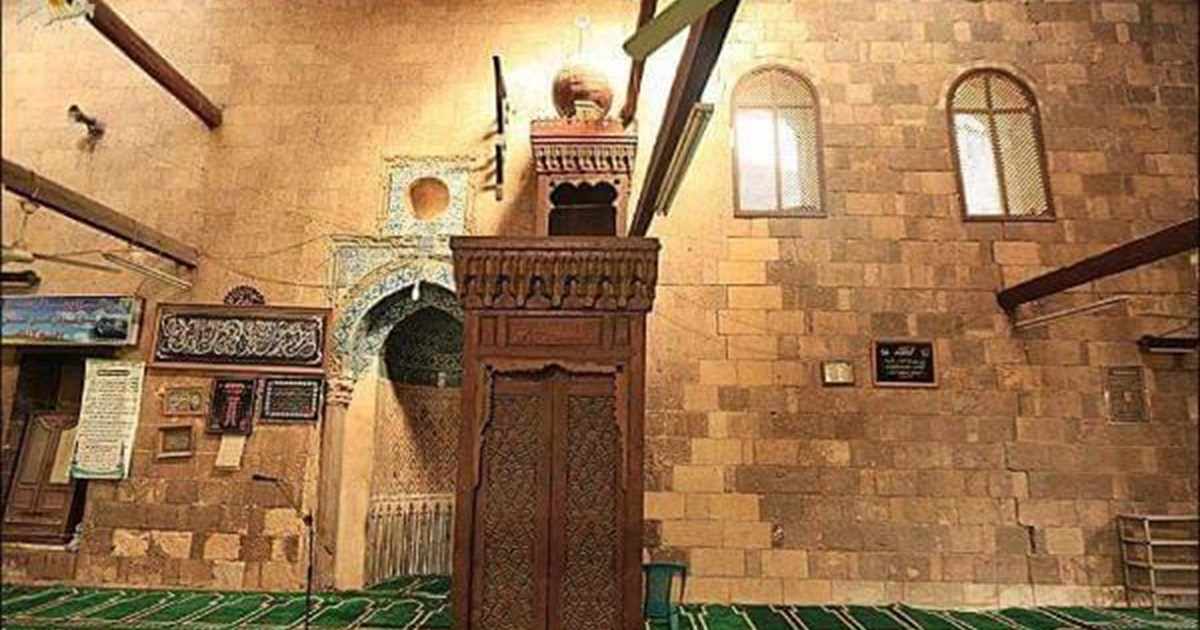
Fatimid Caliph al-Zafir bi-Amr Allah built this mosque in 543 AH / 1148 AD, and was called al-Afkhar or al-Zafir Mosque. After a while, it was called al-Fakahani due to career of the Muhammad al-Anwar who restored the mosque in later period. Al-Fakahani’s beautiful wooden doors are all that remain of the original Fatimid building. The mosque was rebuilt in 1148 Ah\ 1735 AD by Prince Ahmad Katkhuda Mustahfizan al-Kharbutli, one of the Ottoman Period’s princes. With a series of shops underneath it, the mosque has become one of the suspended mosques. The income of these shops endowed for paying of salaries to whom were worked in the mosque. The mosque has four facades, the western is the main one and contains the main entrance. It consists of an open court surrounded by four riwaqs (arcades). With its conical top, the minaret is characteristic of Ottoman architecture. Besides a sabil (public drinking fountain) surmounted by a kuttab (Quranic school) adjoining the northern side of the mosque.
Overview
Al-Mu'izz Street
Fatimid Caliph al-Zafir bi-Amr Allah built this mosque in 543 AH / 1148 AD, and was called al-Afkhar or al-Zafir Mosque. After a while, it was called al-Fakahani due to career of the Muhammad al-Anwar who restored the mosque in later period.
Al-Fakahani’s beautiful wooden doors are all that remain of the original Fatimid building. The mosque was rebuilt in 1148 Ah\ 1735 AD by Prince Ahmad Katkhuda Mustahfizan al-Kharbutli, one of the Ottoman Period’s princes.
With a series of shops underneath it, the mosque has become one of the suspended mosques. The income of these shops endowed for paying of salaries to whom were worked in the mosque. The mosque has four facades, the western is the main one and contains the main entrance. It consists of an open court surrounded by four riwaqs (arcades). With its conical top, the minaret is characteristic of Ottoman architecture. Besides a sabil (public drinking fountain) surmounted by a kuttab (Quranic school) adjoining the northern side of the mosque.
Al-Muizz Street is named after the Fatimid Caliph, al-Muizz li-Din Allah (341–365 AH / 953–975 AD), who first founded this street. He is also the founder of the Fatimid caliphates in Egypt since he ruled Egypt in (358-365AH\ 969-975AD). Toda.