Monuments
24 entries
Temple of Amenhotep II
📍 Luxor
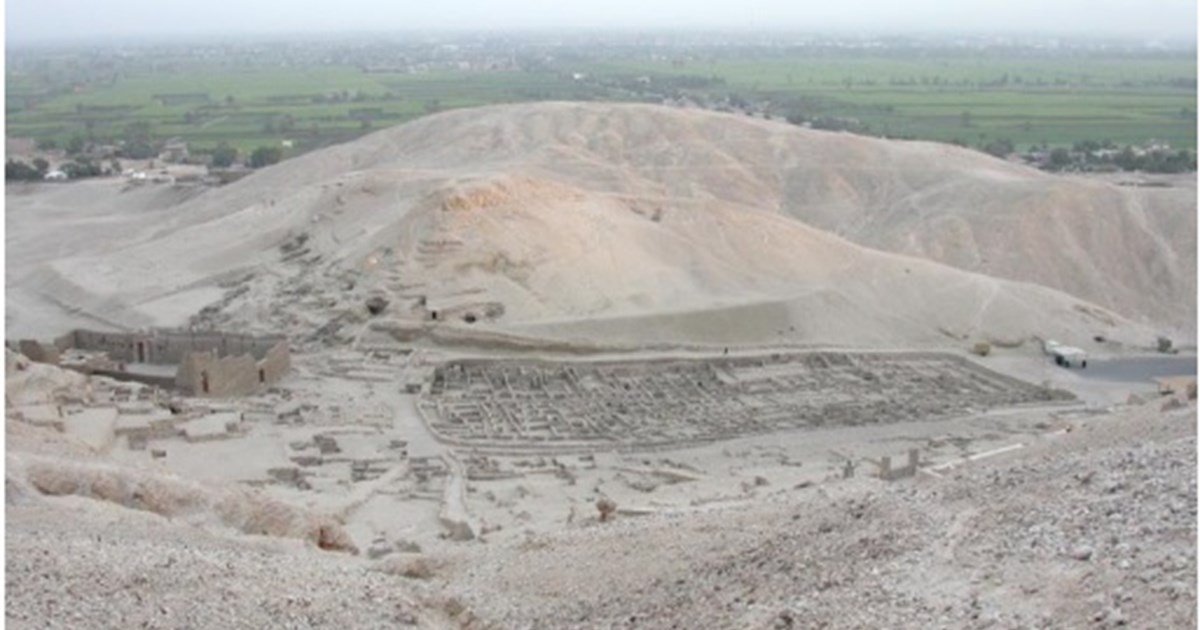
The Temple of Millions of Years of Amenhotep II is located on the west bank of the Nile at ancient Thebes, near Luxor. It lies within the archaeological zone extending between the cultivated land and the desert edge, where the funerary temples of the New Kingdom rulers were established. This temple belongs to the category of royal funerary temples known as “Temples of Millions of Years.” These institutions were closely associated with the cult of Amun, in which the king was assimilated into a divine Osirian–solar form, ensuring his eternal existence and the دوام of kingship. The temple also reflects royal ideology by linking the king to his earthly predecessor and to the god Ra as his divine father. Architecturally, the temple follows the standard layout of Egyptian temples, consisting of: A monumental pylon gateway An open courtyard for public rituals A hypostyle hall used for ceremonial functions A sanctuary, the most sacred space of the temple The temple did not serve as a royal tomb, but rather as a cult place where rituals related to the posthumous worship of the king were performed within the framework of the Amun priesthood. The temple is part of a broader funerary and religious landscape on the west bank of Thebes, located near temples of other 18th Dynasty rulers, including that of Thutmose IV, and within the area of Sheikh Abd el-Qurna, which also includes the funerary temple of Ramesses II (the Ramesseum). Although the temple is only partially preserved, its remains provide valuable evidence for understanding the early development of New Kingdom funerary temples and the relationship between architecture and royal religious ideology.
Dier El Ballas
1901 AD
📍 Qena
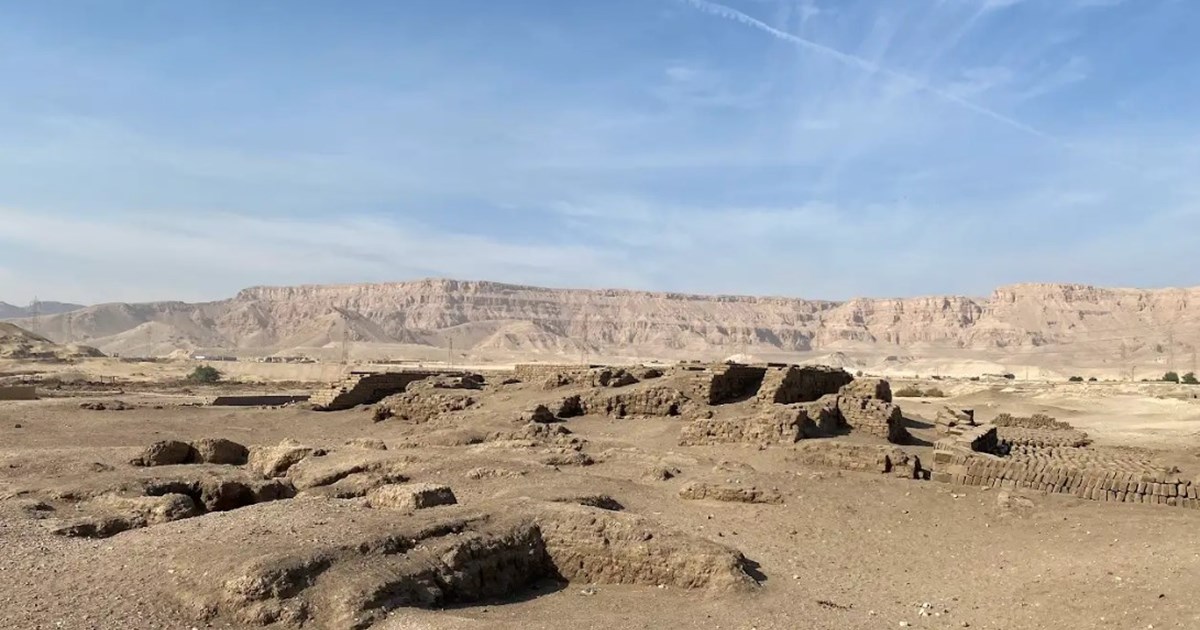
Probably one of the most important sites in Egyptian History and also one of the least well-known, Deir el-Ballas was the forward capital of the Theban kings during their drive to expel the Hyksos invaders in the north and reunite the land founding the glorious New Kingdom three thousand, five hundred years ago. Our fieldwork at Deir el-Ballas is critically important as the site is in danger of destruction by the neighboring modern community. The site was first excavated by George Andrew Reisner working for the Hearst Expedition of the University of California, Berkeley in the years 1900-1901 AD, but never published and was long forgotten. In order to clarify the records of the original expedition and enable the eventual publication of the site, four seasons of survey and clearance were undertaken in 1980, 1983, 1984, and 1986 by Peter Lacovara under the sponsorship of the American Research Center and the Museum of Fine Arts, Boston. At the request of our colleagues at the Ministry of Tourism and Antiquities, we went back to the site which was in danger from the expansion of the modern town. We began new fieldwork in 2017. The goals of the new work of the Ancient Egyptian Heritage and Archeology Fund at Deir e-Ballas are twofold, to publish Reisners’ original finds along with our new research at the site to both elucidate Reisner’s excavations and to protect and preserve the ancient monuments. Since it is also one of the few settlement sites to be extensively cleared, Deir el-Ballas also provides important insights into the daily life of the ancient Egyptians. In many ways a precursor to Tell el-Amarna, the capital of Akhenaten and Nefertiti, Deir el-Ballas seems to have set the pattern for these royal cities of the New Kingdom. At the center of the site is a monumental structure known as the North Palace that must have served as the campaign palace for the Kings Seqenenre, Kamose, and Ahmose. Like the later royal cities, there is a series of houses, including large villas for the royal court, a workmen’s settlement with associated cult chapels, storage magazines, and cemeteries. At the southern end of the site is a massive watchtower known as the “South Palace,” which gives a commanding view of the Nile and the territory around it. It would seem to be from here that the Theban fleet was marshaled and sailed north to victory. The fieldwork we are conducting will concentrate on ways to protect and restore this important Palace-City of the Theban kings. Our long-term goal is to coordinate our efforts with the Qena Antiquities Inspectorate and the Ministry of State for Antiquities to develop a strategy for the protection, conservation, and management of the site. The areas we will focus on in the upcoming seasons include work on the ‘South Palace’ to complete the recording of it through detailed photographs and plans and begin stabilization and restoration work on those areas recently damaged by vandalism and collapse by restoring the fallen brickwork, primarily on the eastern façade.
khonsu temple
📍 Karnak
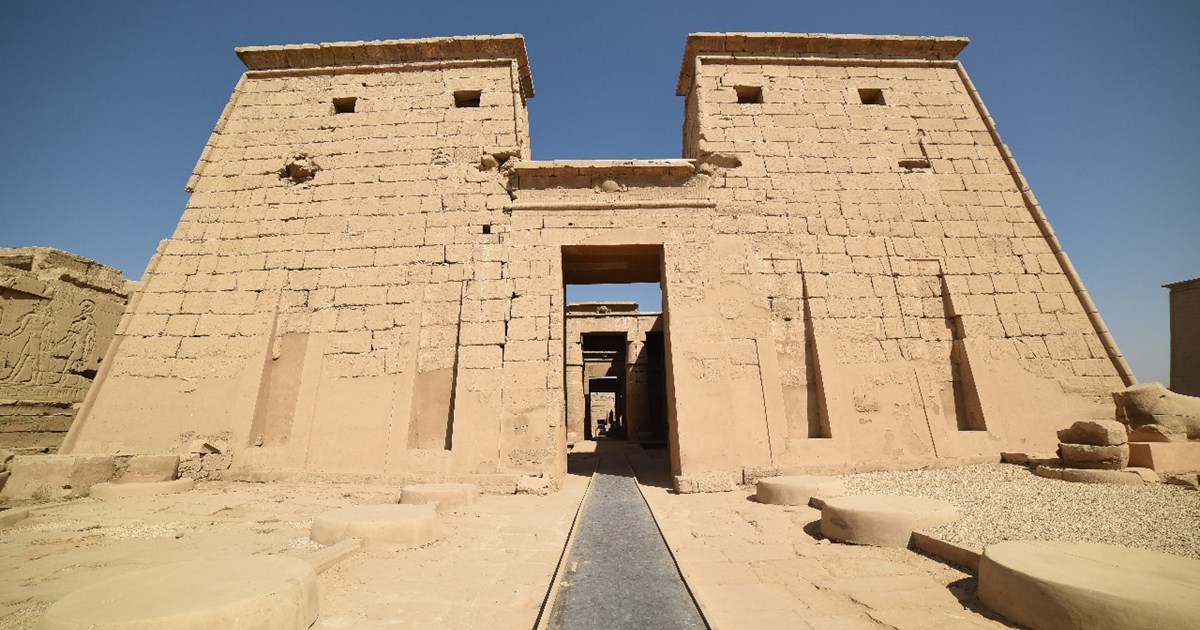
The Temple of Khonsu, nestled in the southwestern corner of the Karnak temple complex in Luxor, dedicated to the moon god Khonsu, a significant deity in ancient Egyptian mythology. Construction began under the reign of King Rameses III on the ruins of an earlier temple from the 18th Dynasty. Over time, the temple was enhanced, particularly during the reign of King Nectanebo II and the Ptolemaic period. This temple exemplifies the classic design of ancient Egyptian religious structures. Measuring approximately 73 meters in length and 29 meters in width, it comprises a series of architecturally distinct sections. Visitors would first encounter the outer gateway, or pylon, which opens onto a processional avenue flanked by sphinx-like statues. Although time has reduced these statues to their bases, they remain a testament to the craftsmanship of King Nectanebo I during the 30th Dynasty. Beyond the pylon lies the first courtyard, a square hall bordered on three sides by rows of round columns with capitals shaped like closed papyrus buds. From this courtyard, a passage leads to the Hypostyle Hall, a structure featuring eight columns arranged in two rows. The columns’ capitals alternate between closed and open papyrus buds, adding visual interest to the hall. This section, dating back to the reign of King Seti I, is thought to include remnants of the earlier temple. The Hypostyle Hall transitions into a rectangular chamber that once housed the Sanctuary, now largely destroyed. Remarkably, a sandstone statue of Khonsu, believed to date to the reign of King Tutankhamun, was discovered here. Beyond this chamber is the Sacred Boat Shrine, a smaller room supported by four columns. At its center lies the base for Amun’s sacred boat, from the era of King Rameses III. Significant modifications to the temple were undertaken by later rulers. King Nectanebo II rebuilt the gateways of the Hypostyle Hall, while the Ptolemaic rulers extensively renovated and expanded the structure, incorporating stones from the older temple into their designs. Khonsu, as part of the Theban Triad alongside Amun-Ra and Mut, held a revered place in Egyptian belief. Representations of Khonsu often depict him as a child with a distinctive side braid or as a robed figure holding a scepter, crowned by the full moon resting on a crescent. His association with the moon imbued him with a reputation as a healer and protector, capable of expelling evil spirits—a trait that ensured his enduring popularity.
The Ramesseum; The Temple of Ramses II
1213 BC
📍 Luxor
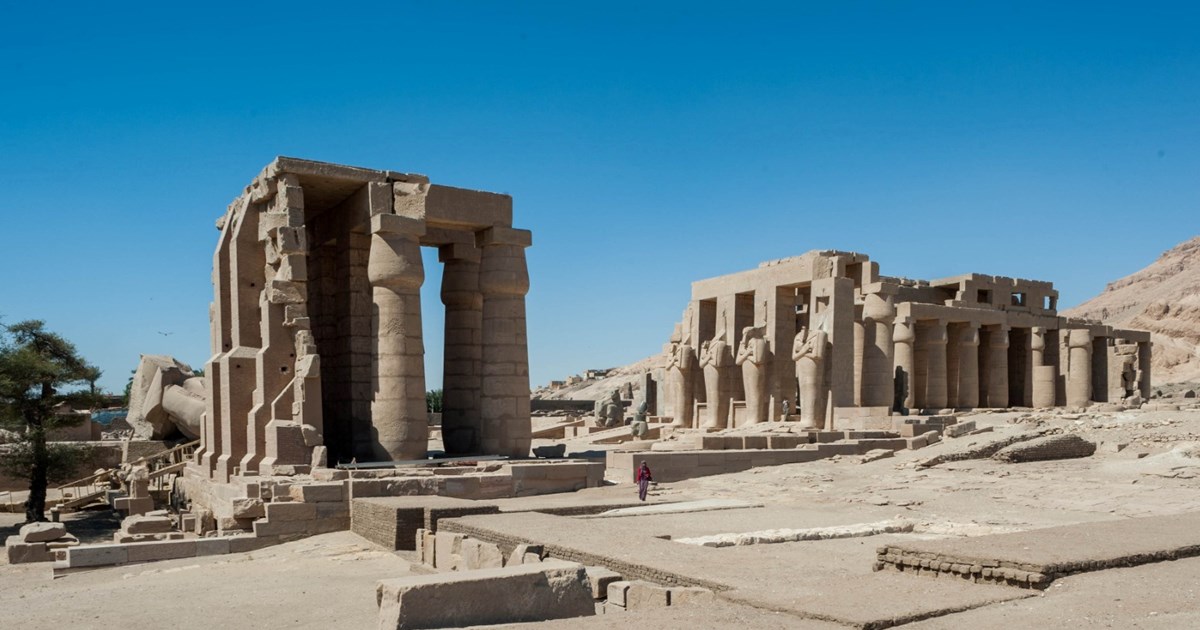
King Ramses II (c.1279-1213 BC), the most famous king of ancient Egypt (who fought a battle against the Hittites), built the Ramesseum Temple, a funerary temple built of sandstone, the temple served as a model for future temples built by different kings. It consists of the first pylon, which is a large building facing four flagpoles, while the inner one competly inscriped with the famous Battle of Kadesh. This pylon follows the first courtyard, which is currently demolished, and has two rows of columns on its southern side, while on the northern side there was a row of Osirian columns. As for the second pylon, to the left there are the remains of a huge black granite statue of Ramses II. The second courtyard is higher than the first one, but it is also demolished and has rows of columns and Osirian columns. After that comes the Hall of Columns with six rows of columns. The temple is surrounded by many chapels dedicated to various deities, in addition to other buildings such as bakeries, kitchens, warehouses. The entire complex is essential to understand the importance of Ramses II in Egyptian history and to admire one of the most important moments in Pharaonic architecture and art. The walls of the Ramesseum were decorated with prominent banks depicting the king fighting his enemies in the Battle of Kadesh, in addition to depicting religious and funerary ceremonies and rituals. It was also designed with its majestic columns and its huge statues, including the statue of Ramses II, which is more than 17 meters high and weighs about 1000 tons. This complex was not known until the 18th century, that Frederick Ludwig Norden described the ruins. Later, the scientists who accompanied the expedition of Napoleon's army between 1798 and 1801 would also document the site. In 1829, it was visited by Champollion, who gave it the contemporary name of Ramesseum.
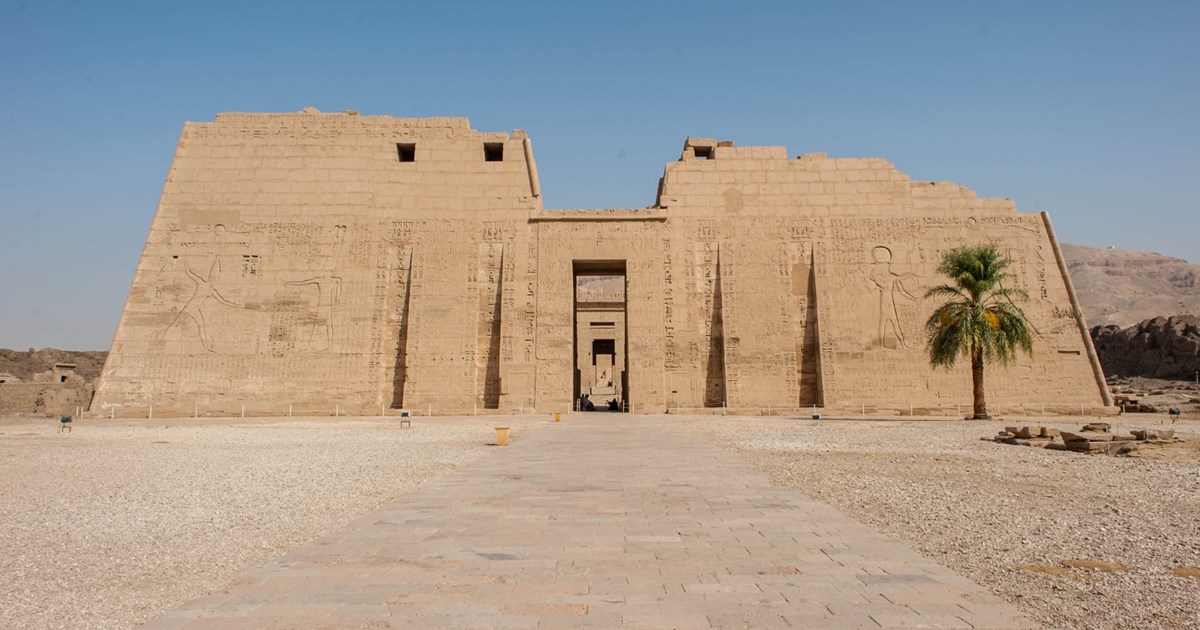
The Temple of Medinet Habu
1153 BC
📍 Luxor
Ramses III built his mortuary temple, also known as the Temple of Medinet Habu, which is considered an architectural masterpiece due to its beauty and good state of preservation. It was dedicated to performing his funeral rituals, as well as to performing the rituals of worshiping the god Amun. This temple was built according to the usual traditions of temple construction in this era and is largely inspired by the Ramesseum. King Ramses III (c.1184-1153 BC) is the most famous king of the Twentieth Dynasty, who fought many wars against the Libyans and the Sea Peoples, which led to years of prosperity in Egypt, but in the end, he fell victim to a conspiracy by the royal harem in the late days of his reign. The temple is surrounded by a huge wall built of mud bricks with two guard rooms, and in the middle of the wall is a great gate surrounded by two towers with terraces and is known as the Gate of Ramses III or the High Gate, It is on the eastern side and there was a similar one on the western side but it was demolished. The eastern gate leads to the first pylon, then the first courtyard, then the second pylon and the second courtyard, then three halls of columns and a group of chapels, then the Holy of Holies and behind it a group of rooms. The temple also includes the remains of a royal palace, storehouses, temple administration buildings, and royal stables. It also contains many columns, some of which are round with papyrus-shaped capitals, and others represent Ramses III in the form of Osirians. There is also in the area surrounding the temple a temple built by Queen Hatshepsut and King Thutmose III on the site of a temple built in the Twelfth Dynasty, which was built on the tombs of the ancestors of the god Amun, as well as the tombs of the divine wives of the god Amun-Ra, which date back to the Twenty-fifth and Twenty-sixth Dynasties. There was a canal connected to the Nile, preceded by a dock. This canal allowed access to the temple by boats. The temple is surrounded by a huge wall built of mud bricks with two guard rooms. The area surrounding the temple was used by the inhabitants to protect themselves from attacks by Libyans from the west and to protect the temple. This is due to the political situation during the reign of Ramses III. The decorations of the temple show Ramses III in military scenes such as the Libyan campaigns and battles against the Sea Peoples, as well as scenes of hunting and exploratory trips, in addition to religious scenes such as the king worshipping the deities, as well as various celebrations.
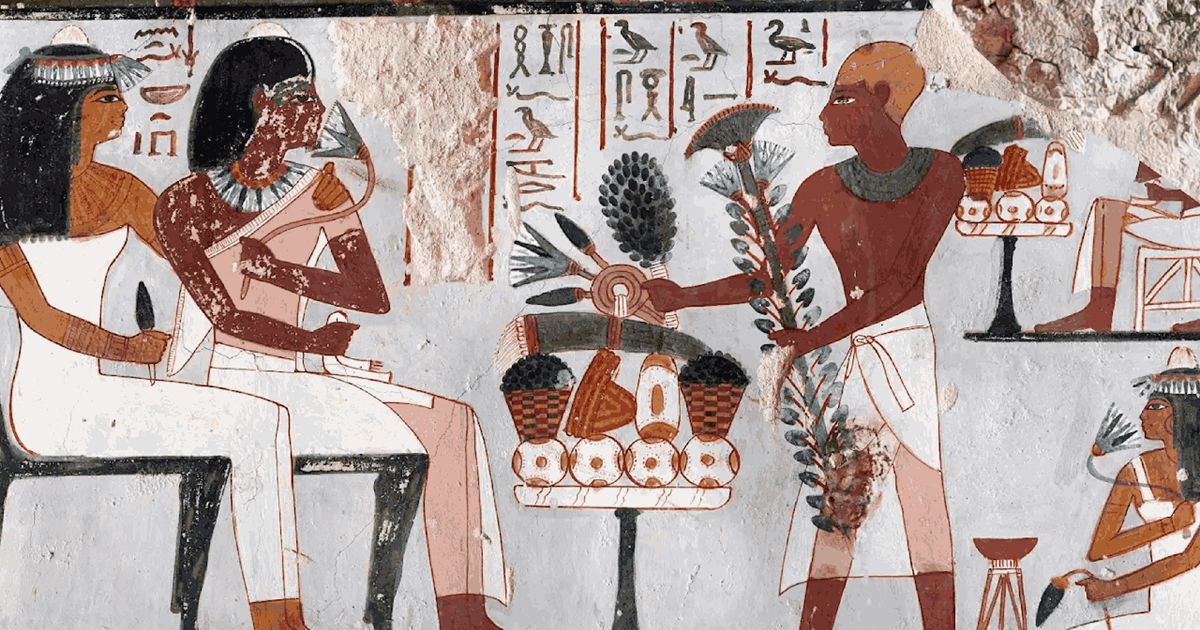
Tomb of Amenhotep Rabuia (TT 416) (Father) Tomb of Samut (TT 417) (Son) Eighteenth Dynasty
332 BC
Both tombs’ chapel areas have the standard T-shaped layout for this period consisting of a transverse hall that leads to a straight long hall. The transverse hall of each tomb is decorated with scenes from the owner’s life, while the long hall is decorated with funerary scenes.The two tombs were reused during the Late Period (664–332 BC), when rooms and funerary shafts were added.The transverse hall of the tomb of Amenhotep-Rabuia has beautiful scenes depicting agriculture, the harvesting of grains, their storage in granaries, breadmaking, and potters at work. It also boasts beautiful banqueting scenes as well as a false-door and what remains of a biographical text. The long hall shows representations of Amenhotep’s funeral procession, the Opening of the Mouth ritual, as well as a rare scene of the deceased making offerings to the agricultural fertility goddess Renenutet, who is depicted breastfeeding a royal child.The tomb of Samut was left unfinished, but it too features beautiful banqueting scenes and a false-door.Although the title shared by father and son appears to be of rather low rank, both chapels have been decorated with great skill and taste. Their tomb paintings can be placed among the masterpieces of ancient Egyptian painting. The two tombs date to the reigns of: Thutmose III (1481 – 1425 BCE) Thutmose IV (1400 – 1389 BCE)
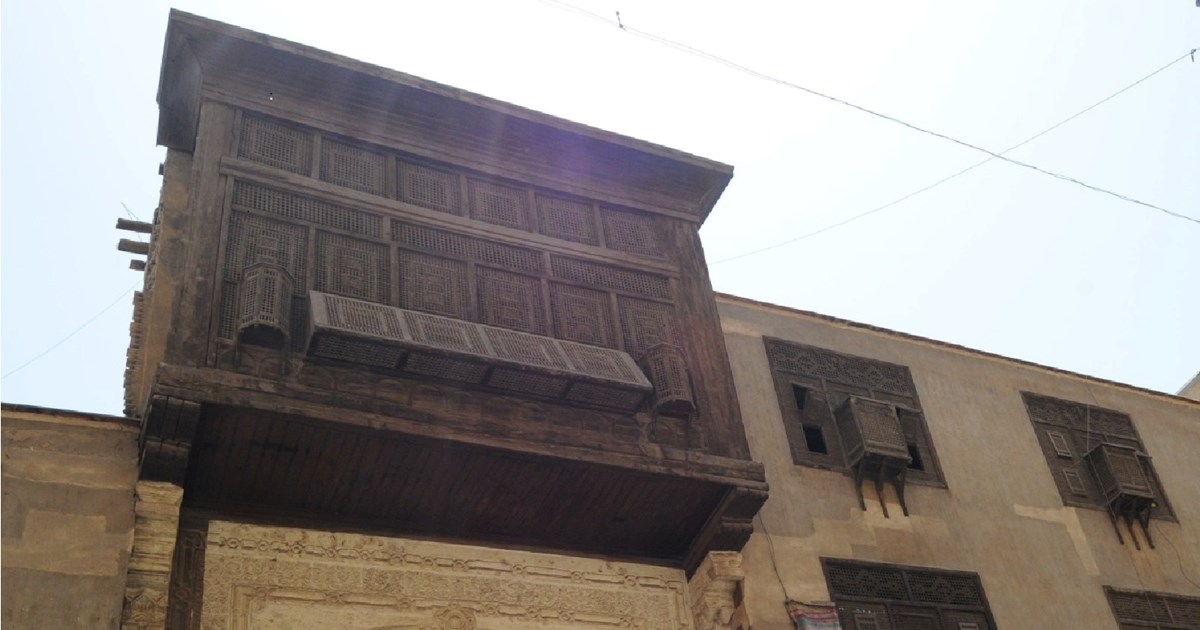
Wikala of Nafisa al-Bayda
1796 AD
Nafisa al-Bayda (she was called the white due to the colour of her skin) established this complex in 1211 AH / 1796 AD. She was the wife of the Mamluk Ali Bey al-Kabir, after his death she married Murad Bey, a Mamluk general and joint-ruler of Egypt along with Ibrahim Bey. This wikala was famed as wikala of Candles, due to the manufacturing and selling of candles inside. The main façade is overlooking al-Mu‘izz street, and divided into two sections. The right part of the façade contains dakakin (shops) surmounted with two floors each overlooking the street with mashrabiyyas. The left side, contains also dakakin (shops) on the lower floor surmounted with one floor with mashrabiyyas. The entrance lies in the middle of the façade and surmounted with mashrabiyya. It leads to several interior shops while the upper floors contains rooms dedicated to traveling merchants. On the corner of the street of the wikala is Nafisa al-Bayda’s elegant sabil-kuttab (public drinking fountain and Quranic school).
The Walls of Cairo
975 AD
Fatimid Cairo was surrounded by walls of mudbrick that had been commissioned by Gawhar al-Siqilli to protect the city during the reign of Caliph al-Mu‘izz li-Din Allah (358-365 AH / 969-975 AD). In 480 AH / 1087 AD, the vizier Badr al-Gamali ordered that the walls be expanded and rebuilt in stone. This coincided with the reign of Caliph al-Mustansir (427–487 AH / 1036–1094 AD). These Fatimid walls had huge eight gates. some of them have collapsed, while others still remain. Al-Futuh and al-Nasr lay on the northern side. On the southern walls were Zuwayla and al-Farag. Al-Qarratin and al-Barqiyya were on the east, and Sa‘ada and al-Qantara on the west. Sultan Salah al-Din (567-589 AH/1171-1193 AD) extended the gates farther in the Ayyubid Period to include all four capitals of Islamic Egypt: al-Fustat, al-‘Askar, al-Qatai‘, and al-Qahira. The defensive center of this large city was the citadel of Salah al-Din, today simply known as the Cairo Citadel.
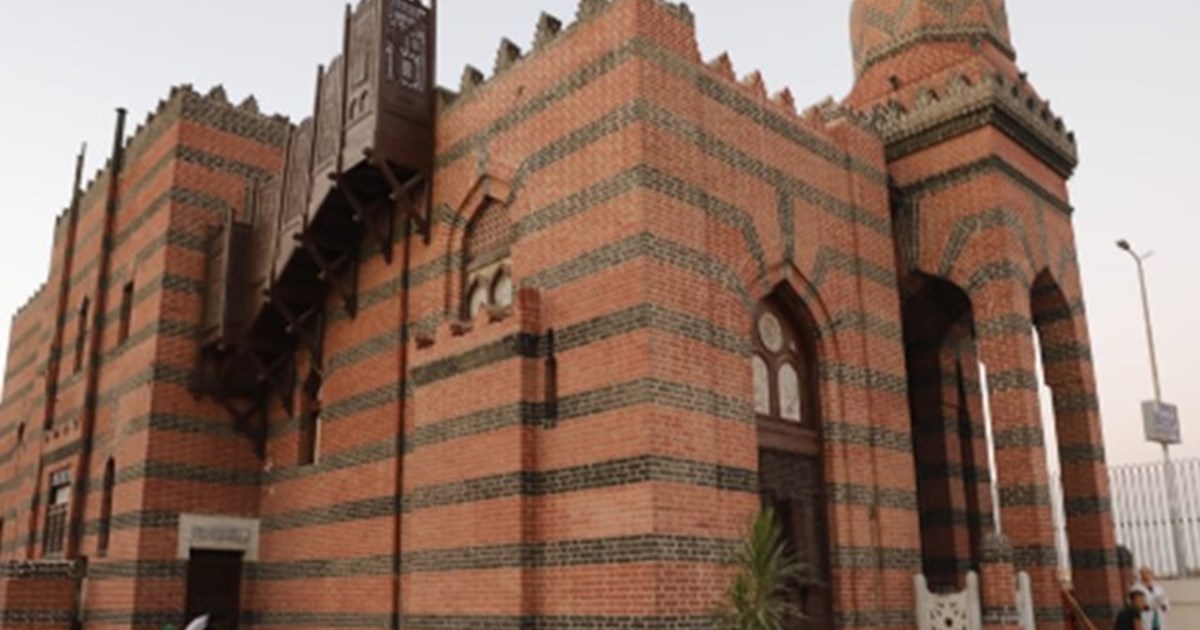
The Architectural Complex of Prince Youssef Kamal
1967 AD
The architectural complex of Prince Youssef Kamal (1882 - 1967 AD) in Nag Hammadi consists of several buildings inside a walled enclosure. it includes separate buildings for men (Salamlek) and women / family (Haramlek), a dining hall, a kitchen with annexes, a laundry, the pre-existing mausoleum of Sheikh Imran and its dependencies, the inspection office and residence of the overseer of Prince Youssef Kamal's estate, a fountain, and a public water dispensary (sabil). A garden of plants and ornamental trees surrounds these architectural elements. The architectural complex reflects prevalent taste in the design of royal palaces of the Muhammad Ali Pasha dynasty. The buildings are constructed of brick masonry, with alternating bands of black and red bricks called ‘ablaq’. They contain examples of fine workmanship in the Islamic style using various materials such as wood, marble, metal, stained glass, plaster, ceramic tile, and mosaic.
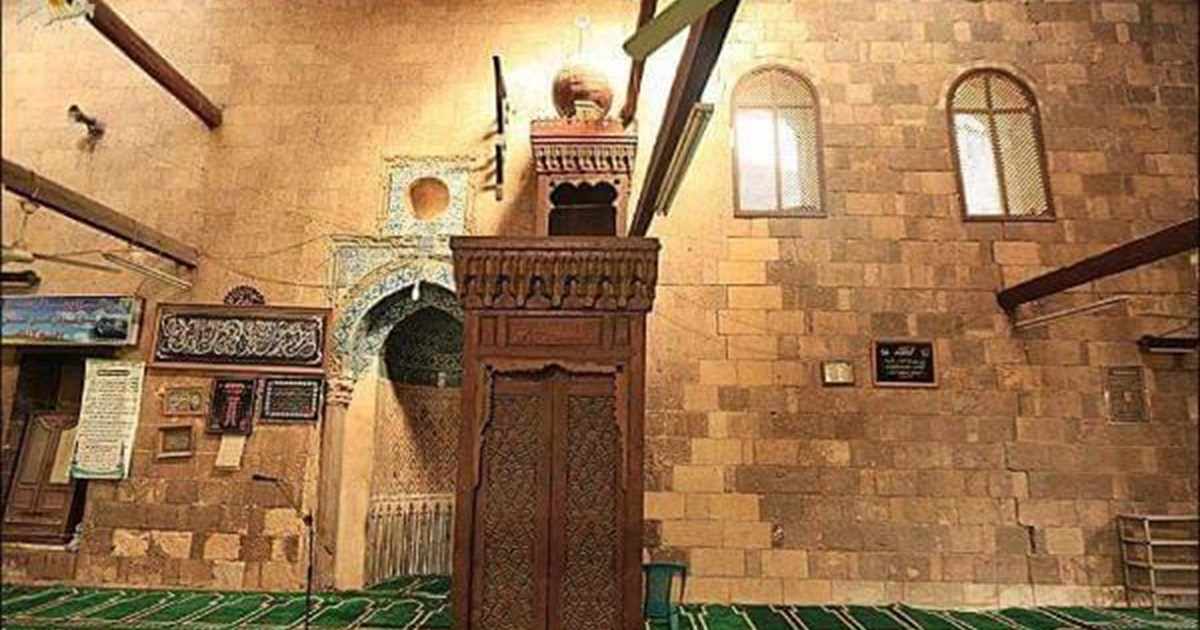
Mosque of al-Fakahani
1148 AD
Fatimid Caliph al-Zafir bi-Amr Allah built this mosque in 543 AH / 1148 AD, and was called al-Afkhar or al-Zafir Mosque. After a while, it was called al-Fakahani due to career of the Muhammad al-Anwar who restored the mosque in later period. Al-Fakahani’s beautiful wooden doors are all that remain of the original Fatimid building. The mosque was rebuilt in 1148 Ah\ 1735 AD by Prince Ahmad Katkhuda Mustahfizan al-Kharbutli, one of the Ottoman Period’s princes. With a series of shops underneath it, the mosque has become one of the suspended mosques. The income of these shops endowed for paying of salaries to whom were worked in the mosque. The mosque has four facades, the western is the main one and contains the main entrance. It consists of an open court surrounded by four riwaqs (arcades). With its conical top, the minaret is characteristic of Ottoman architecture. Besides a sabil (public drinking fountain) surmounted by a kuttab (Quranic school) adjoining the northern side of the mosque.
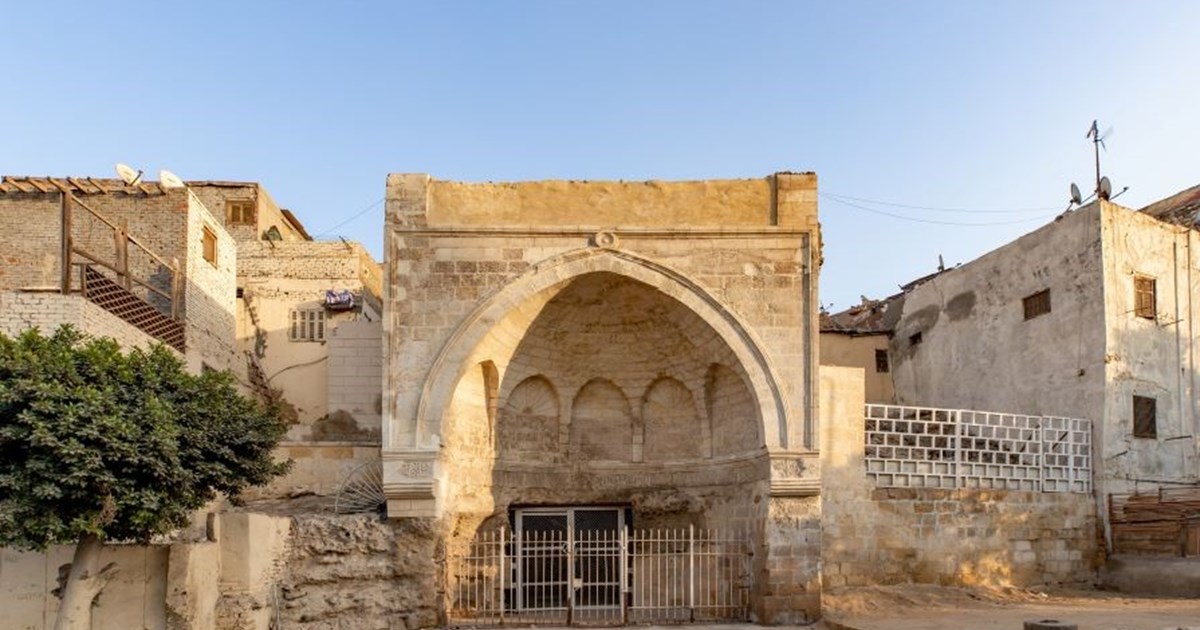
Sabil of al-Amir Shaykhu
1354 AD
📍 Cairo
This is one of the unique examples of the architecture of sabils of bahari mamluks era. The sabil is like a cave entirely carved into the rock, except for its facade which is covered with stone. It is also one of the oldest stand-alone sabils which is not attached to another facility, and its function was to provide water to passers-by. It was established in 755 AH/1354 AD by al-Amir (Prince) Sayf al-Din Shaykhu al-Nasiri (or Shaykhun as known to the public), one of the Mamluks of al-Nasir Muhammad ibn Qalawun. The sabil has a magnificent facade consisting of a prominent rectangular block with a central entrance topped by a knotted arch ornamented with five decorative arches. These arches feature vegetal motifs, inscriptions and ranks such as the rank (emblem) of the cupbearer, which is in the shape of a cup, and the inscriptional rank “Glory be to our Lord, Sultan, King al-Nasir.” Above the entrance, there is an inscriptional band containing the founding inscription of the sabil. The entrance leads to two rectangular halls; on the floor of each is a cistern cap. Water was offered to passers-by using designated jars for water distribution.
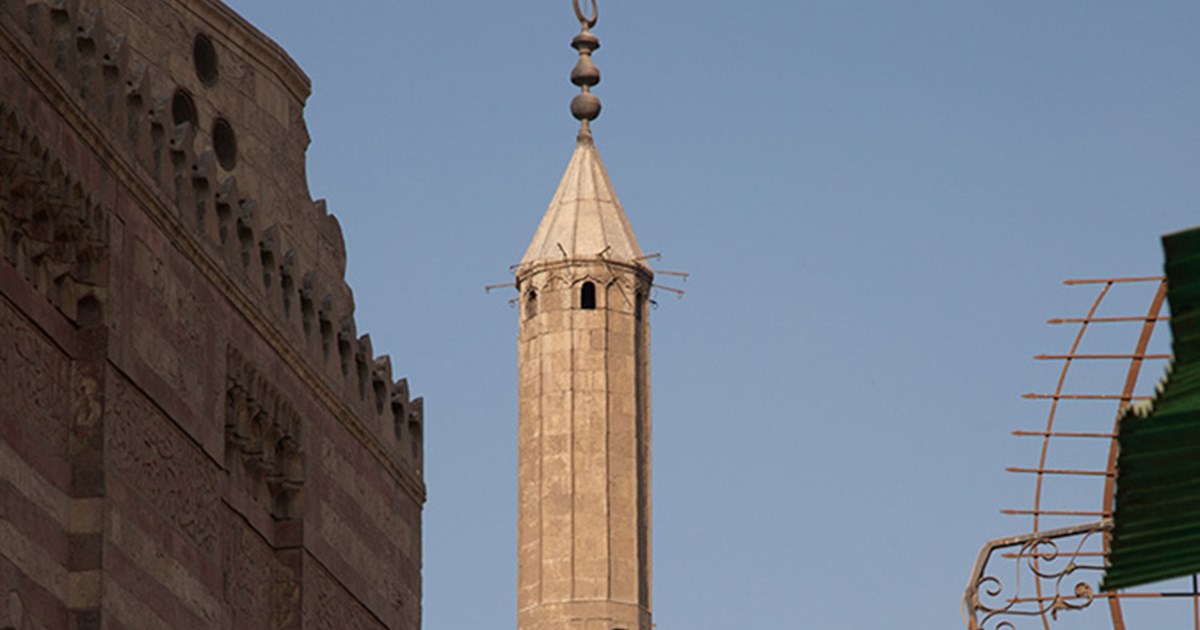
Mosque and Sabil-Kuttab of Shaykh Ali al-Mutahhar
1744 AD
The location of this mosque had previously been the site of the Suyufiyya Madrasa established by Sultan Salah al-Din al-Ayyubi (Saladin). Prince Abd al-Rahman Katkhuda established this structure in 1157 AH / 1744 AD as a complex including mosque, sabil and kuttab. It was known as mosque of al-Mutahhar due to the mausoleum inside which attributed to Shaykh Ali al-Mutahhar. The main façade of this structure overlooking al-Mu‘izz li-Din Allah Street and contains the main entrance. This façade is surmounted with an ottoman style minaret which crowned with conical top. The mosque consists of a rectangular prayer area divided into three riwaqs (arcades), the middle one is surmounted with shokhsikha (wooden dome) for lightening and ventilation. The mihrab (niche in the wall of a mosque marking the qibla, the direction of prayer) is decorated with marble mosaic. The wooden minbar (pulpit) is decorated with geometric decorations. The wooden wall lockers for books and the wooden tie beams between the columns are painted with botanical designs. On the western edge, there is a marble cenotaph of Abd al-Rahman Katkhuda’s mother. Next to it, a small funerary dome covers a wooden cenotaph that is attributed to Shaykh Ali al-Mutahhar. Attached to the mosque are, a sabil (public drinking fountain) and a kuttab (school). The façade of this sabil is similar to that of the other sabil built by Abd al-Rahman Katkhuda at al-Mu‘izz li-Din Allah street.

Maq'ad of Mamay al-Sayfi
1496 AD
It was established by Prince Mamay al-Sayfi in 901 AH/1496 AD; He is one of the Mamluk princes who lived through the rule of Sultan Qaitbay (872-901 AH/ 1467-1495 AD), and his son Al-Nasir Muhammad (901-903 AH / 1495-1497 AD). Mamay held the position of the gamadar, who was responsible for the sultan’s clothes, and then he assumed the position of cupbearer, as appeared in his special ranks or emblems (the bukja rank and the cup rank) on the arches of the façade and the main entrance to his famous maq’ad (loggia). It was also known as the maq’ad of the judge's house, as the judge and the legal court took it as a headquarter in the Ottoman era. We can infer from architectural evidence that the maq’ad was originally part of Prince Mamay's palace, but only the maq’ad remains, which grandeur and large size indicate the grandeur and breadth of the palace itself. Prince Mamay's maq’ad has a distinctive architectural design, where the main entrance is flanked on the right side by a storehouse which is an opening with a pointed arch, and on the left side we find three similar storehouses, this part is surmounted by a raw of five arches crowned by a wooden flap. The main entrance leads to a lobby leading to the main summer hall of the maq’ad, it is a rectangular hall with a beautiful wooden ceiling of wooden beams with gilded and colourful decorations, and below there is it a wooden frieze decorated with inscriptional motifs. The maq’ad of Mamay al-Sayfi underwent its first restoration between 1901 and 1909 AD by the Committee for the Conservation of Arab Monuments, which aimed to repair the cielings and roof of the maq’ad. The Supreme Council of Antiquities also restored the maq’ad once again during the opening of the al-Mu‘izz Street monuments in 2010 AD. In 2018 AD, maintenance and restoration work for the maq’ad was completed within the framework of the national campaign launched by the Ministry of Antiquities in 2015 AD to save 100 archaeological buildings in historic Cairo.
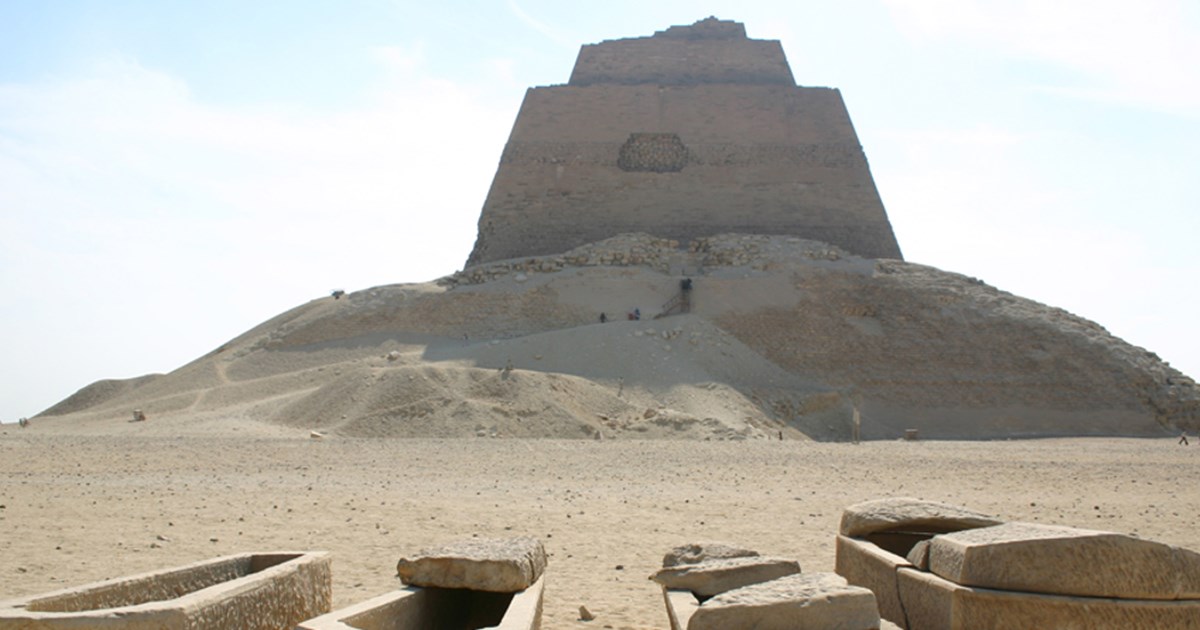
The Pyramid of Meidum
2589 BC
The first king of the 4th Dynasty, Sneferu (c. 2613–2589 BC), chose Meidum as the site of his royal tomb. What we see today bears little resemblance to the original monument, which was a step pyramid that was then transformed into a true pyramid with smooth sides. For this and several other reasons, Sneferu’s reign was a pivotal point of the Old Kingdom, and the site of Meidum is an integral part, representing the developments in pyramid-building know-how, technology, and techniques that would then lead to the building of some of Egypt’s most famous monuments. At Meidum, Sneferu began building a seven-step pyramid that would have been 65 metres high. This was then enlarged, possibly before completion, into an eight-step pyramid. These two phases are called E1 and E2 by Egyptologists. In a completed state, the E2 pyramid would have been 85 metres high with a base length of 120.75 metres. It was at this point that Sneferu built the massive Bent and Red Pyramids at Dahshur. He then transformed the eight-step E2 pyramid into a true pyramid (E3) which stood between 92 and 95 metres high, with a base length of 144 metres. Today, the pyramid has the appearance of a three-step structure emerging out of a massive mound of rubble and debris surrounding it. This tower is, in fact, most of the core of the pyramid. It was previously hypothesised that the rubble was the result of a sudden and catastrophic collapse that took place during the E3 construction phase. However, the debris consists of layers—strata—demonstrating that the erosion and destruction of the pyramid was, in fact, gradual. According to earlier scholarship, the Meidum pyramid was constructed by Sneferu’s predecessor, the last king of the 3rd Dynasty, Huni (c. 2637–2613 BC). This is no longer the consensus. Sneferu’s name appears in texts in Meidum, and the ancient name of this site was Djed Sneferu ‘Sneferu Endures.’ During the reign of Thutmose III (c. 1479–1425 BC) in the 18th Dynasty, the scribe Ankhkheperreseneb visited Meidum and wrote an inscription, saying that he had come ‘to see the marvellous temple of Horus Sneferu. He saw it, as if heaven were in it and in it the sun rose.’ The Interior of the Pyramid The entrance into the pyramid is in its north face, as was the standard, but it is unusually around 15 metres above the ground. A descending passage goes from the masonry of the pyramid down into the bedrock, turning into a horizontal corridor. Going past two niches, this leads to a vertical shaft that goes up to the burial chamber. Its corbelled ceiling distributed the tremendous weight of the masonry above, preventing it crushing the open spaces within the pyramid. It is for this same reason that the ancient Egyptians built corbelled weight-relieving spaces just above the two niches and the lower part of the descending passage. These were only discovered in 1998. It is here in Meidum that corbelling for a stone ceiling appears for the first time, a technique that would later be used to outstanding effect in the Grand Gallery and the burial chamber in Khufu’s tomb—the Great Pyramid.
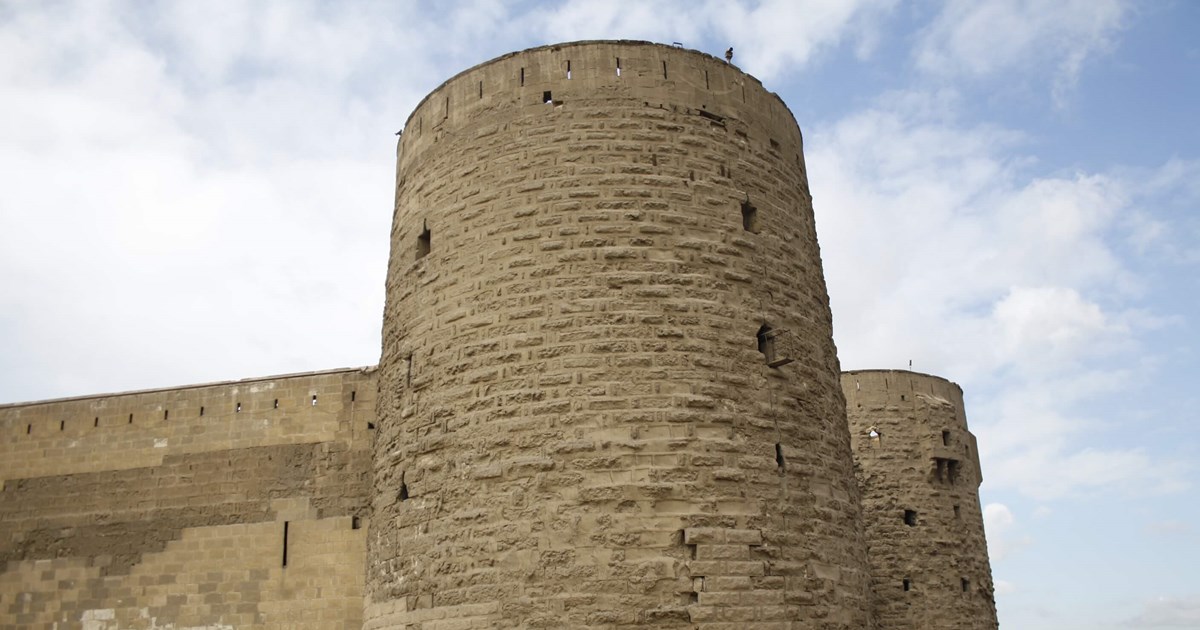
The towers Citadel of Salah al-Din Ayyubi
The Citadel of Sultan Salah al-Din Ayyub was constructed on a spur of the Muqattam mountain as a defence against any invasion. It is divided into two sections; northern enclosure, an area reserved for military activities. Salah al-Din commenced its construction in AH 572 / AD 1176 and work was continued by his brother and successor king al-Adil. The southern enclosure of the citadel, which had more ceremonial and residential functions was completed during the reign of Salah al-Din’s nephew, king al-Kamil. It consists of a cluster of buildings surrounded by walls that follow the irregular topography of the site with towers and doors. These massive walls and towers were constructed with limestone. Most of the towers of the Citadel of Salah al-Din are situated in its northern enclosure. 18 tower some of which built during the reign of Salah al-Din are distinguishable by their semicircular shape, often enlarged in their diameter by al-Adil. Towers built entirely during the reign of al-Adil are rectilinear in plan. Within the towers are rooms on multiple levels that lead to perimeter embrasures for discharging arrows upon potential beseigers. Among these towers are al-Muqattam tower, Burg al-Suffa ('Alignment' Tower), Kirkilian tower, al-Turfa tower, Burg al-Muballat (‘Paved’ Tower), Burg al-Muqusar (‘Pavilion' Tower), Burg al-Ramla (‘Sand’ Tower), Burg al-Haddad (Blacksmith’s Tower), Burg al-Matar (‘Flight’ Tower used for pigeons), Burg al-Alwa (‘View’ Tower) and the Burg al-Sahra (‘Desert’ Tower). In addition, two towers named al-Imam flank the Bab al-Qarafa (Cemetery Gate). Restorations and additions to the northern enclosure and its towers’ continued in later eras beginning with the Mamluk Sultanate, and ending in the reign of Muhammad Ali and his dynasty. Military use of the area continued during the British occupation of Egypt. By the 80th of the 20th century, that area was opened to the public and developed as an archaeological garden and venue for cultural events. Burg al-Haddad The Burg al-Haddad (Blacksmith’s Tower) is one of the most famous towers of Salah al-Din’s citadel (AH 567-589 / AD 1171-1193) and stands adjacent to al-Ramla Tower (‘Sand’ Tower), whose design it superficially resembles. The tower is built of limestone with a diameter of 22 metres and a height of 21.70 metres. It was originally built in a semicircular shape which was changed to a round-fronted design by an addition made by the Sultan al-Adil (AH 596-615 / AD 1200-1218). The tower has two floors and the original interior plan of Salah al-Din consisted of a central groin-vaulted space with three embrasures leading to arrow slits. These arrow slits were converted into doorways by Sultan al-Adil that led to a semi-circular curving corridor from which five further rectangular vaulted halls radiated to the exterior of the tower on both the ground and upper floors. The exterior walls have machicoulis - projecting windows from which liquids such as burning oil could be thrown on attackers from above. Burg al-Ramla Burg al-Ramla (the ‘Sand Tower’) is a corner tower located at the junction of the eastern and northern sides of the citadel’s enclosure wall. Baha al-Din Qaraqush supervised its construction during the reign of Sultan Salah al-Din Ayyub (AH 567-589 / AD1171-1193). The tower is 20.80 metres high, and is built of limestone to a circular plan eighteen metres in diameter. It has two floors, each floor consisting of a central hall with three radiating vaulted chambers extending to the perimeter. Each chamber has a splayed narrow window embrasure through which weapons could be discharged. During the reign of Sultan al-Adil (AH 596-615 / AD1200-1218) the tower was expanded, and the window embrasures of each of the three radiating chambers were converted into door openings leading to rectangular vaulted rooms that ended in arrow slits. A corridor within the curtain wall of the enclosure connects the Burg al-Ramla with its immediate neighbour, the Burg al-Haddad (the ‘Blacksmith’s Tower’).
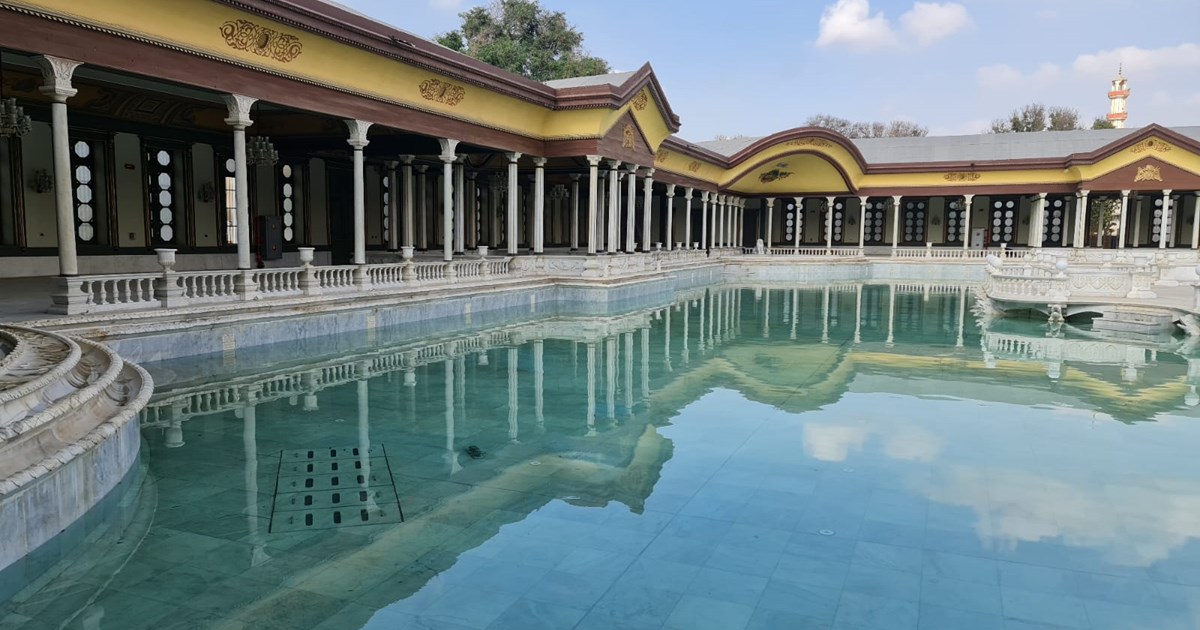
Muhammad Ali Palace in shubra
📍 Cairo
The Palace of Muhammad Ali Pasha (1220-1264 AH \ AD 1805-1848), founder of modern Egypt, is a rare masterpiece that brings together elements of nature, architecture and art. The palace combines elements of European aesthetics with Islamic architecture. Its construction began in 1223 AH / AD 1808, when Muhammad Ali decided to build Shubra Suburb, which was the northern promenade of Cairo. The palace was completed in 1237 AH / AD 1821, spanning a vast area of fifty acres across a suburb on the east bank of the Nile in Cairo. Today, this suburb is called Shubra al-Kheima and the Muhammad Ali Palace has become known as Paradise Palace or Shubra Palace.The architectural plan of the palace was centred within a massive garden that included clusters of buildings surrounded by a wall. Initially, the palace consisted of the Saraya al-Ekama (Residential Palace), Saray al-fasqiyya (Fountain Palace) and saray al-gabalaya. It also included a bird tower, boat harbour, Hydraulic wheel (Saqqyia) that provided the palace and its garden with water, and stables known as the Shubra Stables.The style employed in the palaces took on the character of 19th century Italian and French aesthetics. This was also the first building in Egypt to incorporate a modern lighting system, when Muhammad Ali Pasha commissioned the English engineer Galloway to install lighting fixtures in the palace.The palace underwent extensive restoration and was reopened in 2005, after which it witnessed several important events, providing a wonderful location for receiving official delegations. After 2011 it remained closed, but given its historical and artistic value, the Ministry of Tourism and Antiquities, in cooperation with the Armed Forces Engineering Authority resumed restoration and development plans in 2018. The restoration work included floors and walls, raising the efficiency of the picturesque lake, restoring and maintaining inscriptions and decorations, in addition to linking the palace to the Nile pier for ease of movement for visitors
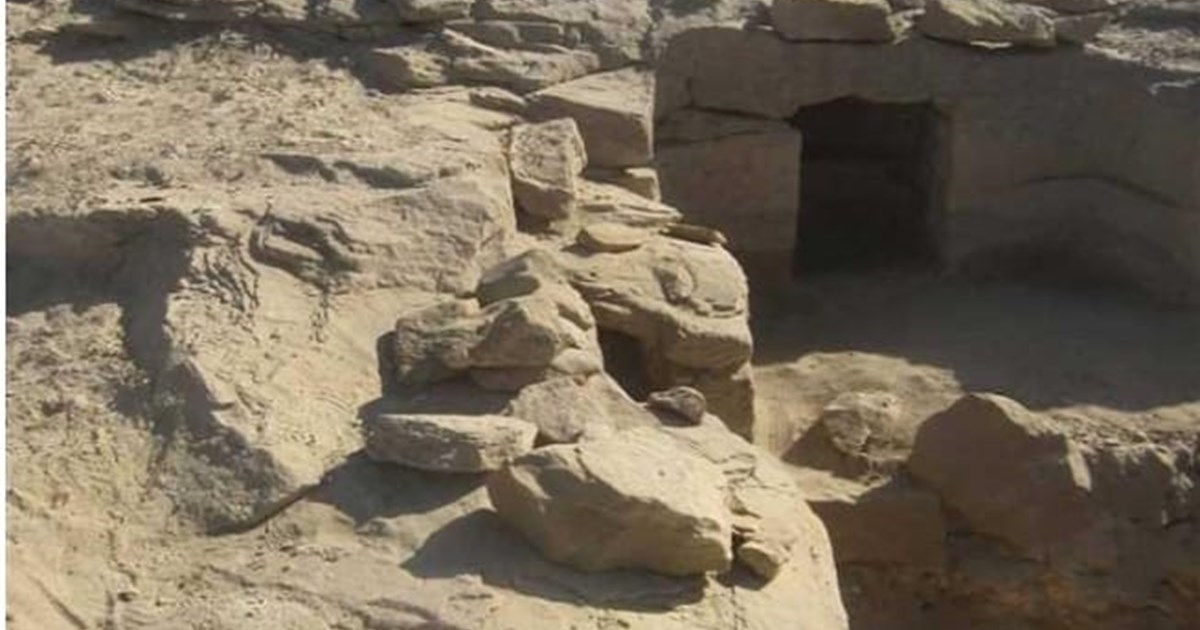
New Kingdom Cemetery in Gebel Al-Silsila
1069 BC
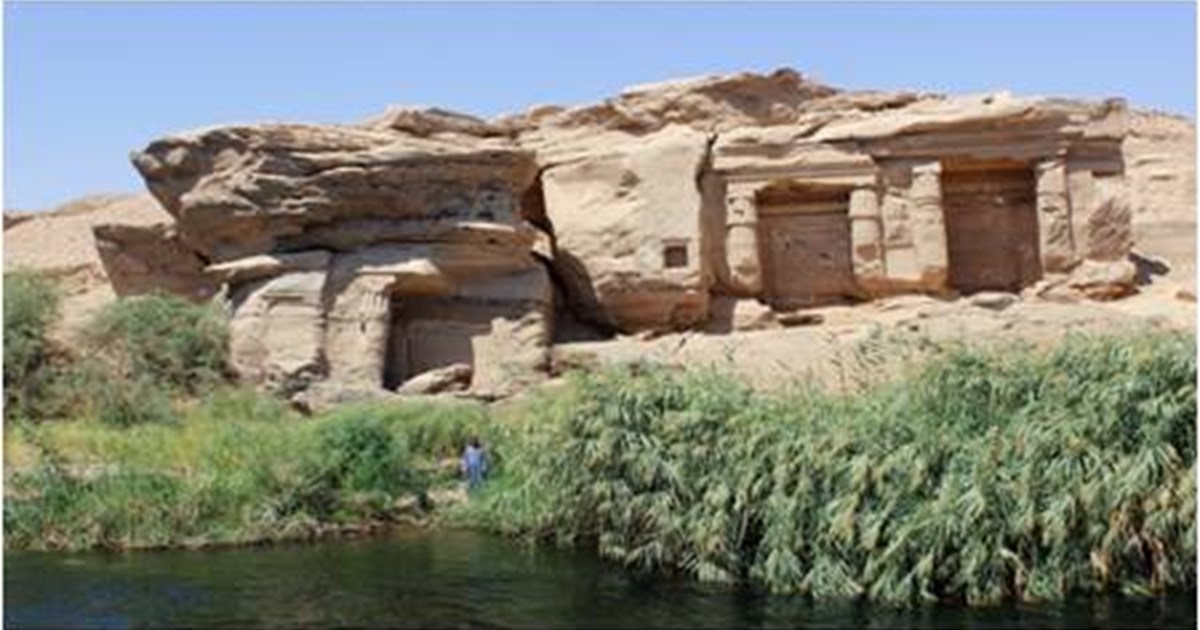
In 2015, a joint archaeological mission of the Supreme Council of Antiquities and Lund University of Sweden began on the eastern side of Gebel al-Silsila. The project revealed a group of 78 tombs from the New Kingdom (c. 1550–1069 BC) belonging to men, women, and children. Their genders and ages suggest that a settlement existed in the location of Gebel al-Silsila, rather than a temporary housing site for quarry workers as previously thought. These simple tombs are undecorated rock-cut chambers that contained vessels, beer jars, faience beads and scarab amulets, bronze bracelets, and animal bones. The tombs were covered by the accumulation of sand over centuries and their state of preservation is poor due to heavy erosion and the rising water table. The excavation, preservation, and study of these tombs and their contents is important for our understanding of this unique site.
Nile Stelae
1279 BC
Many kings of the 19th Dynasty carved and dedicated stelae into the cliff-face at Gebel al-Silsila. It was at this narrow stretch of the Nile that the swelling of the river during the inundation was most apparent and was therefore considered a sacred location. These so-called ‘Nile Stelae’ commemorate offerings that were made to Hapy, god of the annual inundation of the Nile. The 19th Dynasty tradition of carving Nile stelae at this spot began with Sety I (c. 1294–1279 BC). His son Rameses II (c. 1279–1213 BC) followed in his footsteps, and he, in turn, was followed by his own son Merenptah (c. 1213–1203 BC). Later, Rameses III (c. 1184–1153 BC) of the 20th Dynasty added his own stela. The texts record how these kings ask the god Hapy to provide a good and safe flood for Egypt that will bring a plentiful supply of fish and birds. Agriculture in ancient Egypt was only possible thanks to the fertile soil deposited during the flood, and the kings acknowledge how the inundation, addressed in the form of the god Hapy, brings life to the Egyptian people.
Royal Stelae
1143 BC
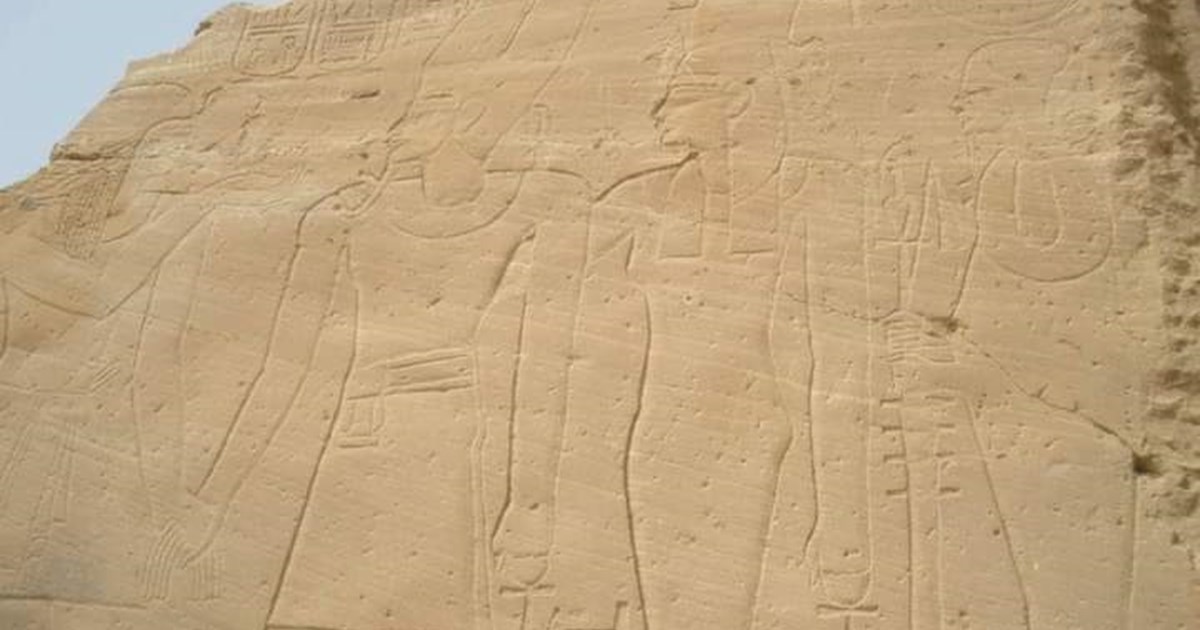
Three royal stelae are located on a high rock facing east, toward the river Nile. The most northerly stela, dedicated by King Rameses V (c. 1147–1143 BC), is decorated with a scene showing the king presenting his Throne Name to the god Amun-Ra, his wife Mut, their son Khonsu, and the crocodile god Sobek. The inscription below mentions the most important works of this king, framed by his many titles. The second stela was dedicated by the 22nd Dynasty king Sheshonq I (c. 945–924 BC). The goddess Mut leads the king to the gods Amun-Ra (her husband), Ra-Horakhty, and Ptah. Below, the hieroglyphic inscription indicates that the king opened this part of the Gebel al-Silsila quarries. The kneeling figure of the Overseer of Works of the Temple of Seshonq I in Thebes, can be seen at the base of this stela. The third royal stela was made by King Rameses III (c.1184 –1153 BC) of the 20th Dynasty. It depicts the king presenting a figure of Maat, the goddess of order and justice, to the Theban triad consisting of Amun-Ra, Mut, and Khonsu.
Speos of Horemheb
1295 BC
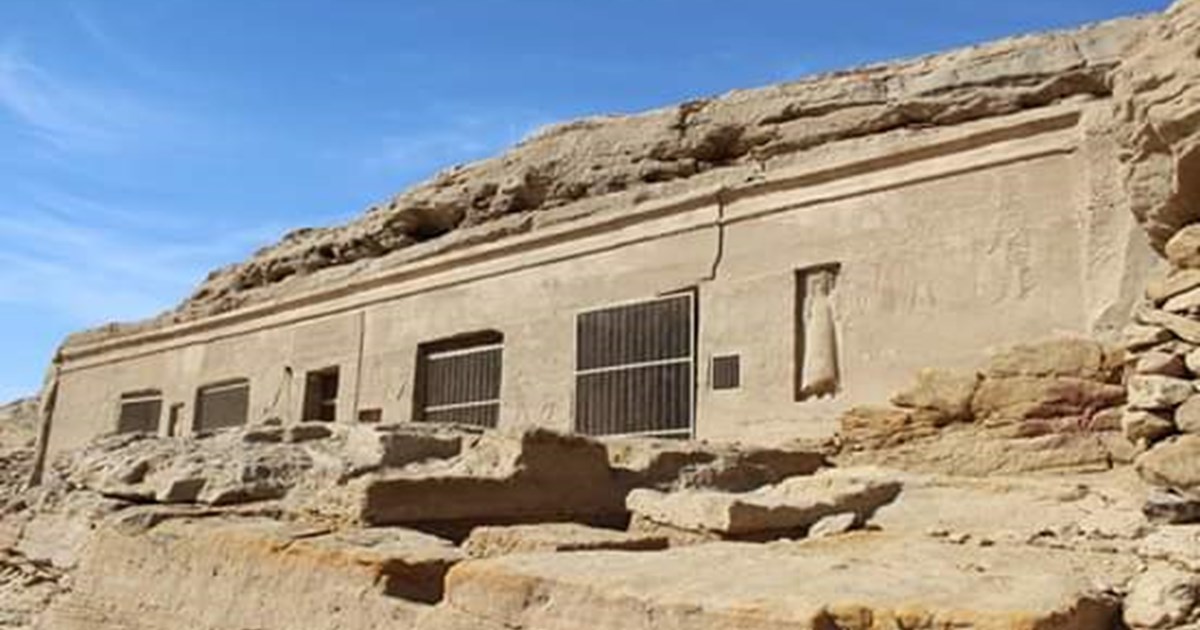
The Speos of Horemheb is a temple built in a cave, probably an old quarrying gallery, during the reign of Horemheb (c. 1323–1295 BC), the last king of the 18th Dynasty. The temple has five openings cut into the cliff that are separated by pillars. The middle opening served as an entrance, with the royal names of Horemheb engraved around it. The entrance leads to a hall that opens onto the sanctuary, which contains seated rock-cut statues of the temple’s seven gods: the crocodile god Sobek (Gebel al-Silsila’s local deity), the protective goddess Taweret, King Horemheb himself, the ibis-headed Thoth, and in the centre, the triad of Thebes consisting of Amun-Ra, his wife Mut, and their son Khonsu. Taweret can be seen suckling Horemheb on the west wall, and a fascinating scene near it, on the west wall, depicts Horemheb’s triumphal procession after his victory in Nubia. Ramesside kings and high-ranking officials later added scenes, stelae, and inscriptions to mark their visit to this sacred site, indicating that it functioned as more than a quarry throughout the New Kingdom. We know that the temple was later used as a Christian place of worship because of the crosses that were carved onto its walls.
The Monastery of Anba Simeon in Aswan
📍 Aswan
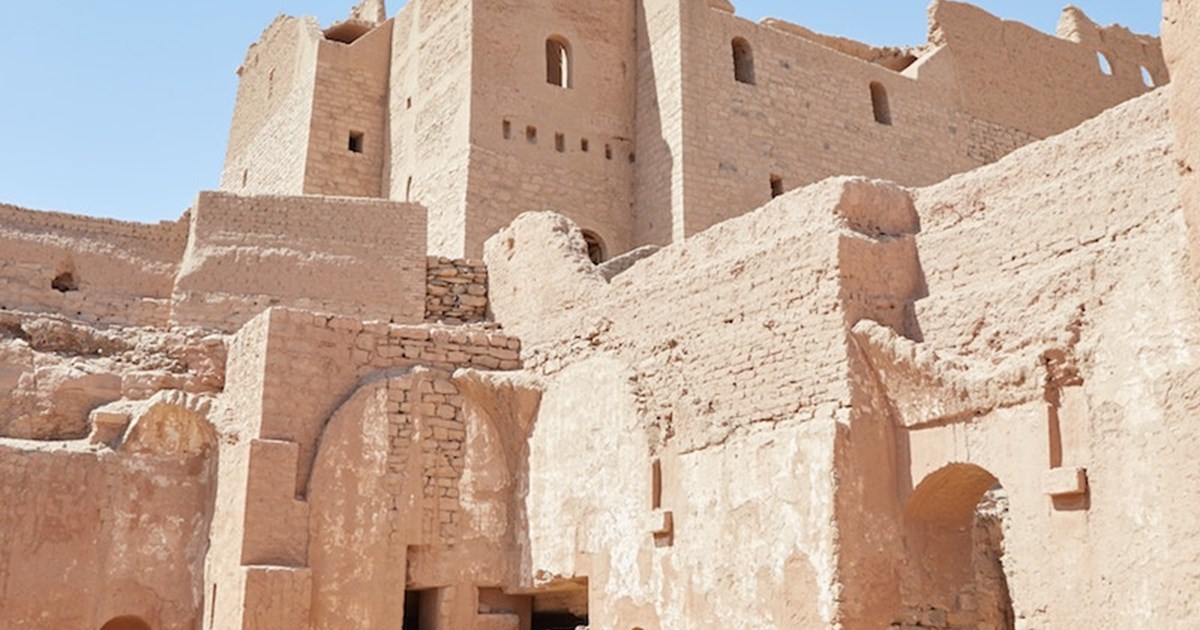
The Monastery (Dayr) of Anba (Saint) Hadra is named after a local saint (Coptic: ⲁⲡⲁ ϩⲁⲧⲣⲉ / Apa Hatre) who lived in the late of the 4th and the beginning of the 5th century AD—first as a monk, and finally as the Bishop of Syene (Aswan). Every year on the 21st of December (the 12th of Kiahk in the Coptic calendar), a religious festival is held at the site on the anniversary of Anba Hadra’s death. Although it is known as the Monastery of Saint Simeon, the identity of this saint and his association with the monastery remain unknown. The site is exceptional among historic monasteries in Egypt for the good state of preservation of its original structures built of stone and mud brick. Although the buildings slowly decayed after their gradual abandonment, the remaining architecture still gives a good idea of what a coenobitic monastery in Upper Egypt during the medieval era looked like. The evidence attests to religious activity here from the 6th to the beginning of 14th centuries.A high enclosure wall surrounding the monastery with two gates endows the monastery. The monastery extends over two levels—a lower and an upper terrace—divided by a rocky escarpment. On the lower terrace there is a church as well as a series of small cave-like spaces that were later used as a part of the monastery. The most prominent of these is the grotto that is attributed to Anba Hadra. The upper terrace is dominated by a two-storey residential building with communal cells characteristic of a coenobitic monastery, a refectory, areas for food storage, oil presses, and ovens and an extensive workshop area which allowed the monks to maintain their livelihood within the confines of the monastery. The church and the grotto are notable for the remains of the colourful wall paintings that still decorate some of their walls and ceilings. Some of the monks’ cells on the upper level, along with parts of the church walls, are notable for the Coptic and Arabic graffiti left by visitors and the monks of the monastery.
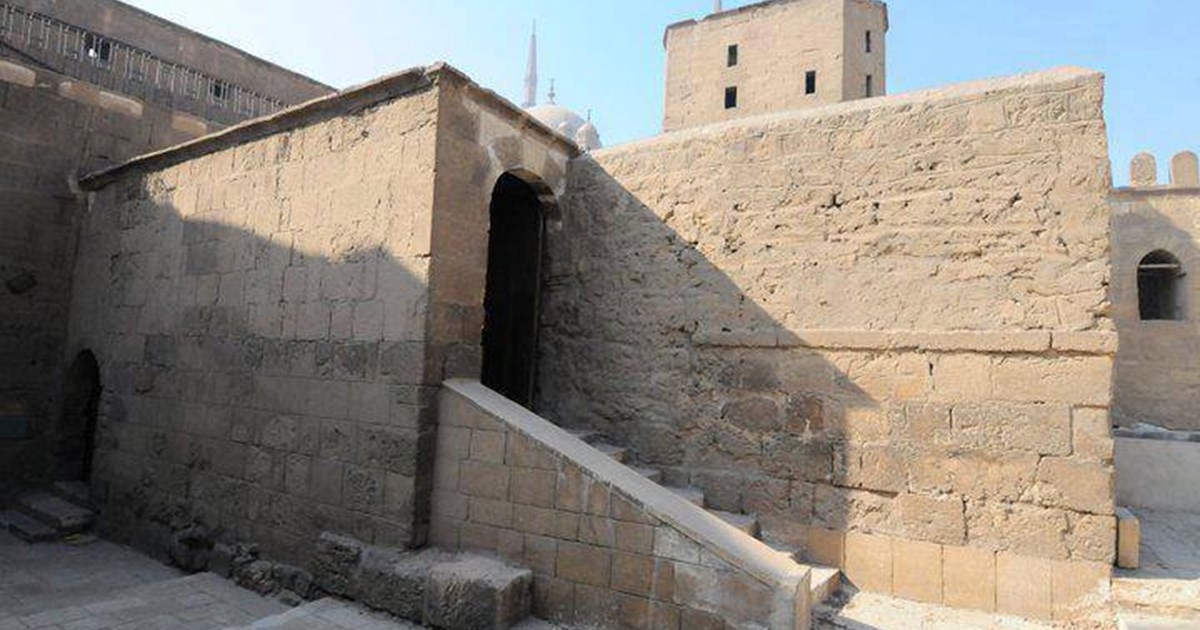
Joseph's Well
1193 AD
Sultan Salah al-Din al-Ayyubi commissioned his vizier, Baha al-Din Qaraqush, to build a well supplying the citadel with water in the southwestern side of al-Nasir Muhammad ibn Qalawun Mosque. The well was known as “Yusuf’s Well” after the name of Salah al-Din (Salah al-Din Yusuf ibn Ayyub). It was also known as "The Spiral Well" and "The Citadel’s Well". It was dug at the same time as the castle building 572-589 AH / 1176-1193 AD. The well is characterized by an architectural design with foreign influences. It was dug in the rock at a depth of about 90 m, and it consists of two floors, around which a spiral staircase, narrows at the bottom of it. On each floor, there is a water wheel that raises water by cattle, its walls contain apertures for lighting and ventilation. According to historians, the water that comes from the well was pure at the beginning, until Qaraqosh wanted to increase its water, so he expanded in digging the mountain, and a salty spring came out of it that changed its pureness. Hence, Salah al-Din al-Ayyubi constructed barrages to transport water from the Nile to the Citadel throughout the Ayyubid period to be continued in Mamluk period known as the Cairo Citadel Aqueduct.
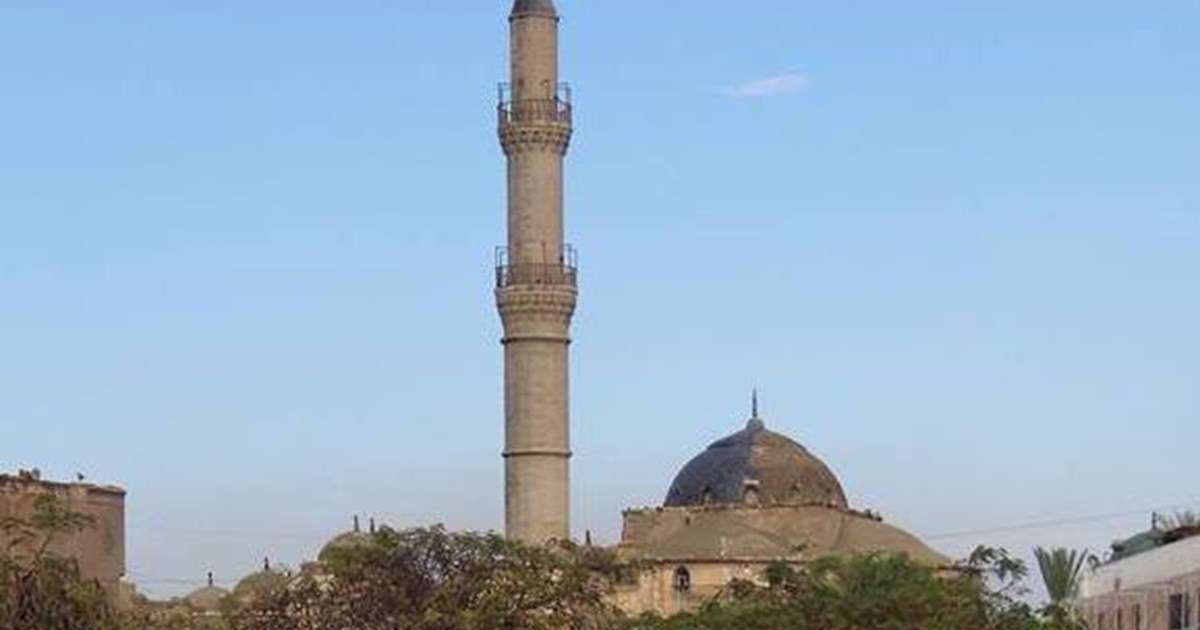
Mosque of Sulayman Pasha al-Khadim “Saraya al-Jabal mosque”
1528 AD
This mosque was named after its founder, Sulayman Pasha al-Khadim, governor of Egypt during the reign of Sultan Sulayman the Magnificent. The mosque was constructed in 935 AH/ 1528 AD on the ruins of a Fatimid mosque. Sulayman Pasha’s mosque was the first Ottoman-style mosque built in Egypt, as it is surrounded by a wall and is led up to by means of a staircase from two sides. Its minaret ends with a pointed conical top in the shape of a pencil, while the entrance leads to an open courtyard, preceded by a prayer house. The prayer house consists of a square area covered with a central dome, surrounded by three iwans covered with half-dome stone. The mosque’s marble pulpit is distinguished by exquisite floral and geometric decorations and a bench of the muezzin” dikkat al-mubaligh”. As for the courtyard, on the northwest side of the prayer house, it consists of an open court surrounded by four canopies covered with shallow domes, including a sundial. In the northwestern portico, there is the dome of a mausoleum in which "Abu Mansur Qasta", the founder of the old Fatimid mosque, in addition to several marble structures and tombstones of mausoleums for notable figures from the Ottoman era. Additions continued to the mosque during the era of Muhammad Ali Pasha, where he added the shed that precedes the western entrance. Furthermore, King Farouk I (1939-1952 AD) made renovations inside the mosque, and the Committee for the Preservation of Arab Antiquities restored the mosque in 1891 AD without prejudice to its original features.
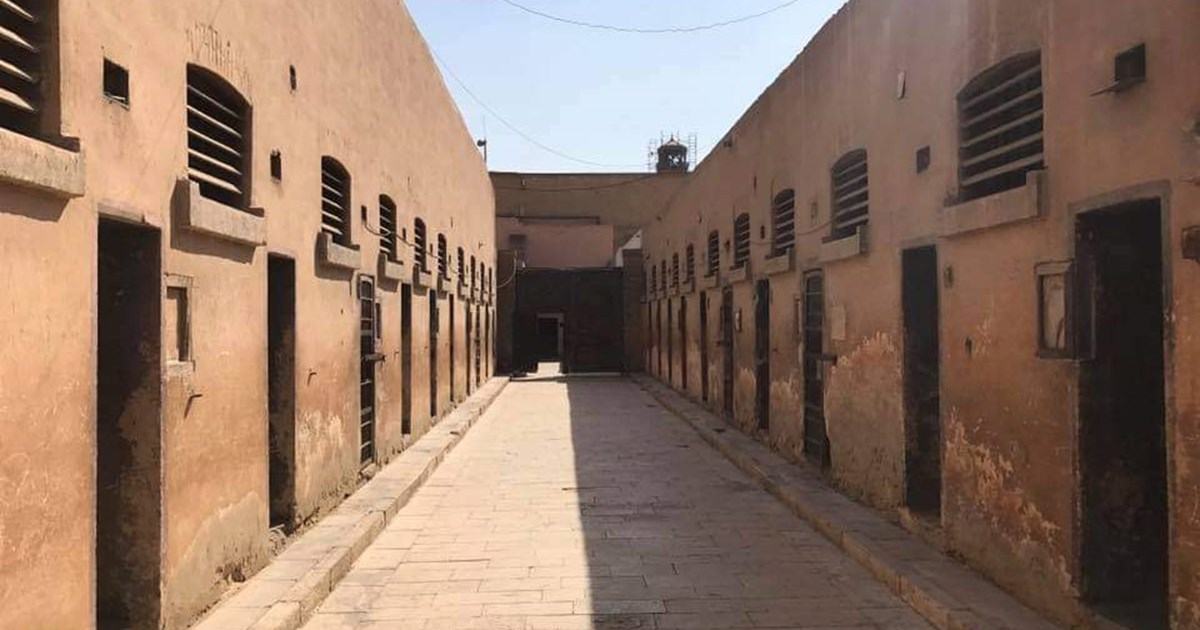
Citadel Prison
1874 AD
Prisons spread throughout the castle as a first-class military facility. Historians mentioned the existence of more than one prison in the citadel, such as "the great pit" (the pit is a deep hole under the surface of the earth similar to a well and is accessed by stairs and closed by a door). There was a prison located next to the Mosque of Sulayman Pasha al-Khadim on the northern side of the citadel. As for the current prison museum, it was established by Khedive Ismail after he transferred his government headquarters to Abdeen Palace in 1874 AD, to be expanded later by Khedive Tawfiq. The Military Police, the Military Police, took charge of prison affairs after the July 1952 Revolution. The Citadel Prison was famous for being the seat of the imprisonment of the most prominent public and political figures during the last century, which contributed later to its conversion into a museum and tourist attraction. It consists of a 50-meter passageway that contains a group of cells divided into two sectors, one east and the other west. In addition, a group of rooms was dedicated to torturing prisoners forcing them to confess, which was simulated through wax statues. One of the most famous torture chambers; The "Rings" room, designed by the French "Lemian" during the reign of King Fouad in 1932 AD, is modeled on a room similar to the famous French "Bastille prison".