New Kingdom Cemetery in Gebel Al-Silsila
1069 BC
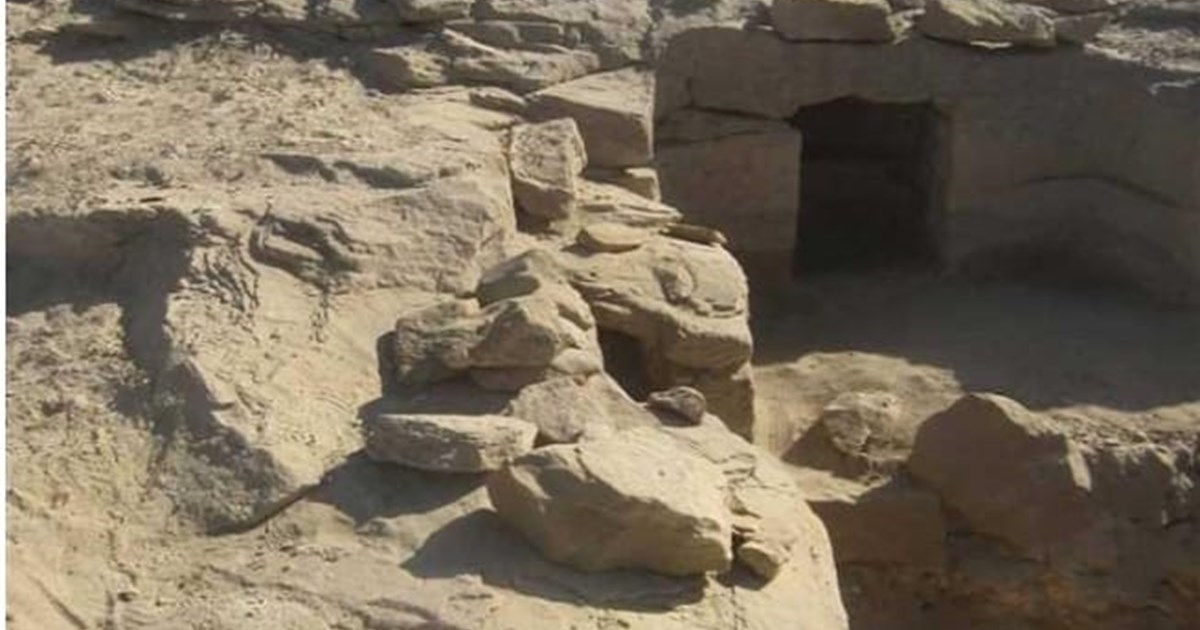
In 2015, a joint archaeological mission of the Supreme Council of Antiquities and Lund University of Sweden began on the eastern side of Gebel al-Silsila. The project revealed a group of 78 tombs from the New Kingdom (c. 1550–1069 BC) belonging to men, women, and children. Their genders and ages suggest that a settlement existed in the location of Gebel al-Silsila, rather than a temporary housing site for quarry workers as previously thought. These simple tombs are undecorated rock-cut chambers that contained vessels, beer jars, faience beads and scarab amulets, bronze bracelets, and animal bones. The tombs were covered by the accumulation of sand over centuries and their state of preservation is poor due to heavy erosion and the rising water table. The excavation, preservation, and study of these tombs and their contents is important for our understanding of this unique site.
Overview
Gebel al-Silsila
In 2015, a joint archaeological mission of the Supreme Council of Antiquities and Lund University of Sweden began on the eastern side of Gebel al-Silsila. The project revealed a group of 78 tombs from the New Kingdom (c. 1550–1069 BC) belonging to men, women, and children. Their genders and ages suggest that a settlement existed in the location of Gebel al-Silsila, rather than a temporary housing site for quarry workers as previously thought.
These simple tombs are undecorated rock-cut chambers that contained vessels, beer jars, faience beads and scarab amulets, bronze bracelets, and animal bones. The tombs were covered by the accumulation of sand over centuries and their state of preservation is poor due to heavy erosion and the rising water table. The excavation, preservation, and study of these tombs and their contents is important for our understanding of this unique site.