Sharm al-Sheikh Museum
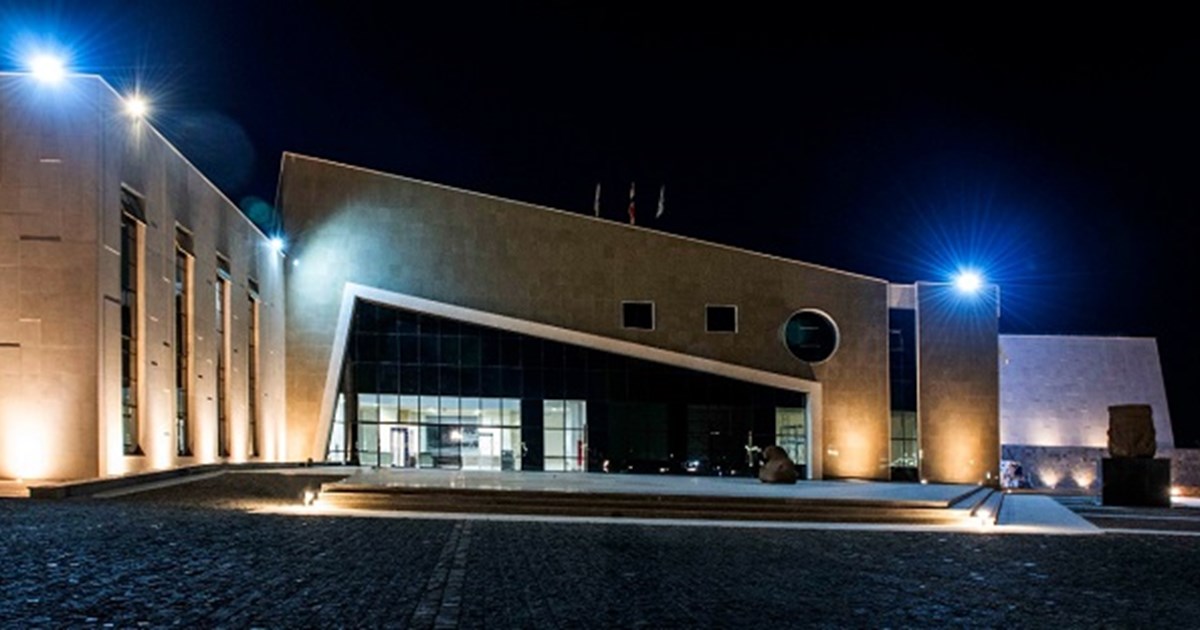
The idea for the museum was first suggested in 2006, and in 2017 construction was complete. The museum’s display scenario broadly reflects the different aspects of human civilization and culture in general, while shedding light specifically on ancient Egyptian civilization. This is done through a selection of historical objects that were carefully chosen from museum storage rooms. The museum’s Grand Hall presents a history of humans and wildlife in ancient Egypt, and highlights ancient Egyptian civilization’s preoccupation with science, mathematics, industry, crafts, family life, and love for animals to the point of reverence. To showcase this point, animal the Grand Hall is where animal mummies are displayed. In the Hall of Civilization are displayed the beautiful inner and outer coffins of Isetemheb, the wife of the high-priest of AmunPanedjem II, who was herself a priestess of Isis, Min, and Horus in Akhmim. Notable also are Isetemheb’scanopicjars,papyrus collection, cosmetics,and perfume vessels, the head of a statue of Hatshepsut, and tanagrafigurines depicting women wearing a variety of dresses, in addition to objects that display Sinai’s cultural heritage.
Overview
South Sinai
The idea for the museum was first suggested in 2006, and in 2017 construction was complete.
The museum’s display scenario broadly reflects the different aspects of human civilization and culture in general, while shedding light specifically on ancient Egyptian civilization. This is done through a selection of historical objects that were carefully chosen from museum storage rooms.
The museum’s Grand Hall presents a history of humans and wildlife in ancient Egypt, and highlights ancient Egyptian civilization’s preoccupation with science, mathematics, industry, crafts, family life, and love for animals to the point of reverence. To showcase this point, animal the Grand Hall is where animal mummies are displayed.
In the Hall of Civilization are displayed the beautiful inner and outer coffins of Isetemheb, the wife of the high-priest of AmunPanedjem II, who was herself a priestess of Isis, Min, and Horus in Akhmim. Notable also are Isetemheb’scanopicjars,papyrus collection, cosmetics,and perfume vessels, the head of a statue of Hatshepsut, and tanagrafigurines depicting women wearing a variety of dresses, in addition to objects that display Sinai’s cultural heritage.
With regards to the students of Art Faculties, please conduct yourself respectively in regards to the following: - The use of pens and pen markersare prohibited in all galleries: only pencils may be used in taking notes or sketching. - Sketchbooks exceeding 18 x 24 inches are not permitted. - Please do not hinder visitor traffic flow in the galleries by blocking visitors or walking paths.
Large bags, large backpacks, Luggage or parcels larger than 40x40cm are not permitted into the museum, but you will beallowed to store them in the cloakroom. Bags and backpacks may be subject to search at any time. Do not bring any sharp itemsor dangerous materials into the museum, such as knives, screwdrivers, scissors, and firearms. These items must be stored in the cloakroom. Do not bring umbrellas into the museum, please leave store them in the cloakroom. Do not bring folding seats or any other type of transportable seatinginside the galleriesbefore you obtain permission from the museum security. Animals or pets are not allowed to enter the museum. Musical instruments are not allowed inside the museum. Do not bring any advertising banners or carry placards or signs inside the museum unless you obtain approval from the concerned authorities.
Children must be accompanied by an adult inside the museum at all times. For the safety of your children and the exhibits, please ensure that children do not run, play, or bump into exhibits or visitors.
Museum Hours every day: 10:00 am – 12:00 pm (ticket window closes at 11:00 am) Evening Hours: 8:00 pm – 11:00 pm (ticket window closes at 10:00 pm)
Museum Hours every day: 10:00 am – 1:00 pm (ticket window closes at 12:00 pm) Evening Hours: 5:00 pm – 11:00 pm (ticket window closes at 10:00 pm)
1. Egyptians seniors aged 60 and over. 2- Egyptians special needs. 3- Orphaned children. 4- Public schools trips primary and preparatory school. 5- children below 6 years.
- Please do not touch any exhibits or showcases. - Food and drinks are not allowed within the galleries, except for small water bottles. - Smoking is prohibited throughout the museum. - Please refrain from disorderly, disruptive, and offensive language or actions. - Please be mindful of others, and be quiet when using your cell phone. - Audio players are not permitted throughout the museum. - For the safety of the exhibits, please do not use flashlights or laser pointers inside the museum. - Appropriate attire is requested. - Please do not lay down on seats or on the floor, and do not remove your shoes. - Please follow all posted signs and visitor instructions.
- Private photography is permitted inside the museum after paying ticketfees. - Please refrain from taking photographs of other visitors or staff as it may violate their personal rights. - Please refrain from taking video recordings (cell phone, cameras) in the galleries unless you have paid the appropriate ticket fees. - Taking photographs and video recordings for commercial use (TV, cinema, programmes, advertising, documentary clips, et) are permitted only after obtaining permissionfrom the concerned authority and paying the daily rate. - Please refrain from using flash photography. - Please refrain from using camera holder until after purchasing its ticket.
In times of emergency such as an earthquake or fire, please follow the instructions of museum staff. In the event of an earthquake, please move away from large sculptures, displaycases, and other objects that may fall down.
With regards to the students of Art Faculties, please conduct yourself respectively in regards to the following: - The use of pens and pen markersare prohibited in all galleries: only pencils may be used in taking notes or sketching. - Sketchbooks exceeding 18 x 24 inches are not permitted. - Please do not hinder visitor traffic flow in the galleries by blocking visitors or walking paths.
Large bags, large backpacks, Luggage or parcels larger than 40x40cm are not permitted into the museum, but you will beallowed to store them in the cloakroom. Bags and backpacks may be subject to search at any time. Do not bring any sharp itemsor dangerous materials into the museum, such as knives, screwdrivers, scissors, and firearms. These items must be stored in the cloakroom. Do not bring umbrellas into the museum, please leave store them in the cloakroom. Do not bring folding seats or any other type of transportable seatinginside the galleriesbefore you obtain permission from the museum security. Animals or pets are not allowed to enter the museum. Musical instruments are not allowed inside the museum. Do not bring any advertising banners or carry placards or signs inside the museum unless you obtain approval from the concerned authorities.
Children must be accompanied by an adult inside the museum at all times. For the safety of your children and the exhibits, please ensure that children do not run, play, or bump into exhibits or visitors.
Museum Hours every day: 10:00 am – 12:00 pm (ticket window closes at 11:00 am) Evening Hours: 8:00 pm – 11:00 pm (ticket window closes at 10:00 pm)
Museum Hours every day: 10:00 am – 1:00 pm (ticket window closes at 12:00 pm) Evening Hours: 5:00 pm – 11:00 pm (ticket window closes at 10:00 pm)
1. Egyptians seniors aged 60 and over. 2- Egyptians special needs. 3- Orphaned children. 4- Public schools trips primary and preparatory school. 5- children below 6 years.
- Please do not touch any exhibits or showcases. - Food and drinks are not allowed within the galleries, except for small water bottles. - Smoking is prohibited throughout the museum. - Please refrain from disorderly, disruptive, and offensive language or actions. - Please be mindful of others, and be quiet when using your cell phone. - Audio players are not permitted throughout the museum. - For the safety of the exhibits, please do not use flashlights or laser pointers inside the museum. - Appropriate attire is requested. - Please do not lay down on seats or on the floor, and do not remove your shoes. - Please follow all posted signs and visitor instructions.
- Private photography is permitted inside the museum after paying ticketfees. - Please refrain from taking photographs of other visitors or staff as it may violate their personal rights. - Please refrain from taking video recordings (cell phone, cameras) in the galleries unless you have paid the appropriate ticket fees. - Taking photographs and video recordings for commercial use (TV, cinema, programmes, advertising, documentary clips, et) are permitted only after obtaining permissionfrom the concerned authority and paying the daily rate. - Please refrain from using flash photography. - Please refrain from using camera holder until after purchasing its ticket.
In times of emergency such as an earthquake or fire, please follow the instructions of museum staff. In the event of an earthquake, please move away from large sculptures, displaycases, and other objects that may fall down.
With regards to the students of Art Faculties, please conduct yourself respectively in regards to the following: - The use of pens and pen markersare prohibited in all galleries: only pencils may be used in taking notes or sketching. - Sketchbooks exceeding 18 x 24 inches are not permitted. - Please do not hinder visitor traffic flow in the galleries by blocking visitors or walking paths.
Large bags, large backpacks, Luggage or parcels larger than 40x40cm are not permitted into the museum, but you will beallowed to store them in the cloakroom. Bags and backpacks may be subject to search at any time. Do not bring any sharp itemsor dangerous materials into the museum, such as knives, screwdrivers, scissors, and firearms. These items must be stored in the cloakroom. Do not bring umbrellas into the museum, please leave store them in the cloakroom. Do not bring folding seats or any other type of transportable seatinginside the galleriesbefore you obtain permission from the museum security. Animals or pets are not allowed to enter the museum. Musical instruments are not allowed inside the museum. Do not bring any advertising banners or carry placards or signs inside the museum unless you obtain approval from the concerned authorities.
Children must be accompanied by an adult inside the museum at all times. For the safety of your children and the exhibits, please ensure that children do not run, play, or bump into exhibits or visitors.
Museum Hours every day: 10:00 am – 12:00 pm (ticket window closes at 11:00 am) Evening Hours: 8:00 pm – 11:00 pm (ticket window closes at 10:00 pm)
- VIP hall - Open theater.
In response to the news that has been circulated alleging that Sharm El-Sheikh Museum and some of its artifacts were affected by flooding, Mr. Moamen Othman, Head of the Museums Sector at the Supreme Council of Antiquities, confirmed that they are.
The Egyptian Tourism Promotion Board of the Ministry of Tourism and Antiquities has organized visits and Fam trips for famous foreign, Egyptian and Arab social media influencers. In that respect ETPB organized a visit to South Sinai for a number o.
An excellently preserved limestone statue depicts a couple seated, wearing fine clothes and elaborate wigs whose intricate details are faithfully portrayed by the sculptor. Naya affectionately has her right hand on her husband Tiay's shoulder. On.
Mr. Abdel Fattah Al-Assi, Assistant Minister of Tourism and Antiquities to control hotel facilities, shops, and tourist activities, made an inspection visit to South Sinai, during which he held meetings with a number of owners of diving centers an.