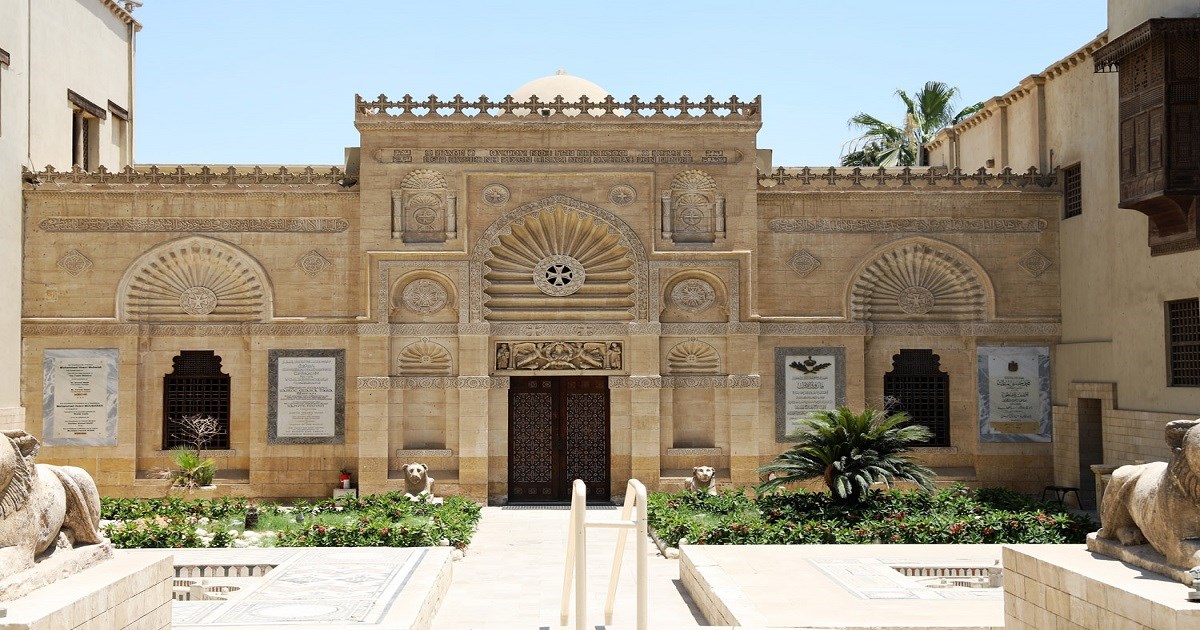
The Coptic Museum
641 AD
The Coptic Museum houses the largest collection of Coptic artifacts in the world and was inaugurated in 1910. The museum was established through the efforts of Marcus Simaika Pasha, a prominent Coptic figure who was vested in the preservation of Coptic heritage. Simaika Pasha bought and collected Coptic antiquities and various architectural elements from older churches that were undergoing renovation, and used them to built the museum and establish its collection. The collection represents Coptic history from its earliest beginnings in Egypt through to its rise as a leading center of Christianity in the world. Coptic Christianity traces its origins to a visit by Saint Mark in the city of Alexandria in the 1st Century A.D. The artifacts on display in the museum show the merge of Coptic art with the prevailing cultures including Pharaonic, Greek, Roman, Byzantine and Ottoman, and its evolution in developing its own character and identity. Magnificently decorated manuscripts, icons, delicately carved woodwork and elaborate frescos with religious scenes recovered from ancient monasteries and churches are among its extensive collection.
Overview
The Coptic Museum houses the largest collection of Coptic artifacts in the world and was inaugurated in 1910. The museum was established through the efforts of Marcus Simaika Pasha, a prominent Coptic figure who was vested in the preservation of Coptic heritage. Simaika Pasha bought and collected Coptic antiquities and various architectural elements from older churches that were undergoing renovation, and used them to built the museum and establish its collection.
The collection represents Coptic history from its earliest beginnings in Egypt through to its rise as a leading center of Christianity in the world. Coptic Christianity traces its origins to a visit by Saint Mark in the city of Alexandria in the 1st Century A.D. The artifacts on display in the museum show the merge of Coptic art with the prevailing cultures including Pharaonic, Greek, Roman, Byzantine and Ottoman, and its evolution in developing its own character and identity.
Magnificently decorated manuscripts, icons, delicately carved woodwork and elaborate frescos with religious scenes recovered from ancient monasteries and churches are among its extensive collection.
In times of emergency such as an earthquake or fire, please follow the instructions of museum staff. In the event of an earthquake, please move away from large sculptures, displaycases, and other objects that may fall down.
Large bags, large backpacks, Luggage or parcels larger than 40x40cm are not permitted into the museum, but you will beallowed to store them in the cloakroom. Bags and backpacks may be subject to search at any time. Do not bring any sharp itemsor dangerous materials into the museum, such as knives, screwdrivers, scissors, and firearms. These items must be stored in the cloakroom. Do not bring umbrellas into the museum, please leave store them in the cloakroom. Do not bring folding seats or any other type of transportable seatinginside the galleriesbefore you obtain permission from the museum security. Animals or pets are not allowed to enter the museum. Musical instruments are not allowed inside the museum. Do not bring any advertising banners or carry placards or signs inside the museum unless you obtain approval from the concerned authorities.
Children must be accompanied by an adult inside the museum at all times. For the safety of your children and the exhibits, please ensure that children do not run, play, or bump into exhibits or visitors.
09:00am – 03:00pm Last Ticket The tickets window closes at 2:00 PM
The tickets window closes at 4:00 PM
1. Egyptians seniors aged 60 and over. 2- Egyptians special needs. 3- Orphaned children. 4- Public schools trips primary and preparatory school. 5- children below 6 years.
With regards to the students of Art Faculties, please conduct yourself respectively in regards to the following: The use of pens and pen markersare prohibited in all galleries: only pencils may be used in taking notes or sketching. Sketchbooksexceeding 18 x 24 inches are not permitted. Please do not hinder visitor traffic flow in the galleries by blocking visitors or walking paths.
- Please do not touch any exhibits or showcases. - Food and drinks are not allowed within the galleries, except for small water bottles. - Smoking is prohibited throughout the museum. - Please refrain from disorderly, disruptive, and offensive language or actions. - Please be mindful of others, and be quiet when using your cell phone. - Audio players are not permitted throughout the museum. - For the safety of the exhibits, please do not use flashlights or laser pointers inside the museum. - Appropriate attire is requested. - Please do not lay down on seats or on the floor, and do not remove your shoes. - Please follow all posted signs and visitor instructions.
- Photography with mobile phone is free of charge. - Please refrain from taking photographs of other visitors or staff as it may violate their personal rights. - Please refrain from taking video recordings (cell phone, cameras) in the galleries unless you have paid the appropriate ticket fees. - Taking photographs and video recordings for commercial use (TV, cinema, programmes, advertising, documentary clips, et) are permitted only after obtaining permissionfrom the concerned authority and paying the daily rate. - Please refrain from using flash photography. - Please refrain from using tripods or monopods except for permitted commercial use
In times of emergency such as an earthquake or fire, please follow the instructions of museum staff. In the event of an earthquake, please move away from large sculptures, displaycases, and other objects that may fall down.
Large bags, large backpacks, Luggage or parcels larger than 40x40cm are not permitted into the museum, but you will beallowed to store them in the cloakroom. Bags and backpacks may be subject to search at any time. Do not bring any sharp itemsor dangerous materials into the museum, such as knives, screwdrivers, scissors, and firearms. These items must be stored in the cloakroom. Do not bring umbrellas into the museum, please leave store them in the cloakroom. Do not bring folding seats or any other type of transportable seatinginside the galleriesbefore you obtain permission from the museum security. Animals or pets are not allowed to enter the museum. Musical instruments are not allowed inside the museum. Do not bring any advertising banners or carry placards or signs inside the museum unless you obtain approval from the concerned authorities.
Children must be accompanied by an adult inside the museum at all times. For the safety of your children and the exhibits, please ensure that children do not run, play, or bump into exhibits or visitors.
09:00am – 03:00pm Last Ticket The tickets window closes at 2:00 PM
The tickets window closes at 4:00 PM
1. Egyptians seniors aged 60 and over. 2- Egyptians special needs. 3- Orphaned children. 4- Public schools trips primary and preparatory school. 5- children below 6 years.
With regards to the students of Art Faculties, please conduct yourself respectively in regards to the following: The use of pens and pen markersare prohibited in all galleries: only pencils may be used in taking notes or sketching. Sketchbooksexceeding 18 x 24 inches are not permitted. Please do not hinder visitor traffic flow in the galleries by blocking visitors or walking paths.
- Please do not touch any exhibits or showcases. - Food and drinks are not allowed within the galleries, except for small water bottles. - Smoking is prohibited throughout the museum. - Please refrain from disorderly, disruptive, and offensive language or actions. - Please be mindful of others, and be quiet when using your cell phone. - Audio players are not permitted throughout the museum. - For the safety of the exhibits, please do not use flashlights or laser pointers inside the museum. - Appropriate attire is requested. - Please do not lay down on seats or on the floor, and do not remove your shoes. - Please follow all posted signs and visitor instructions.
- Photography with mobile phone is free of charge. - Please refrain from taking photographs of other visitors or staff as it may violate their personal rights. - Please refrain from taking video recordings (cell phone, cameras) in the galleries unless you have paid the appropriate ticket fees. - Taking photographs and video recordings for commercial use (TV, cinema, programmes, advertising, documentary clips, et) are permitted only after obtaining permissionfrom the concerned authority and paying the daily rate. - Please refrain from using flash photography. - Please refrain from using tripods or monopods except for permitted commercial use
In times of emergency such as an earthquake or fire, please follow the instructions of museum staff. In the event of an earthquake, please move away from large sculptures, displaycases, and other objects that may fall down.
Large bags, large backpacks, Luggage or parcels larger than 40x40cm are not permitted into the museum, but you will beallowed to store them in the cloakroom. Bags and backpacks may be subject to search at any time. Do not bring any sharp itemsor dangerous materials into the museum, such as knives, screwdrivers, scissors, and firearms. These items must be stored in the cloakroom. Do not bring umbrellas into the museum, please leave store them in the cloakroom. Do not bring folding seats or any other type of transportable seatinginside the galleriesbefore you obtain permission from the museum security. Animals or pets are not allowed to enter the museum. Musical instruments are not allowed inside the museum. Do not bring any advertising banners or carry placards or signs inside the museum unless you obtain approval from the concerned authorities.
Children must be accompanied by an adult inside the museum at all times. For the safety of your children and the exhibits, please ensure that children do not run, play, or bump into exhibits or visitors.
09:00am – 03:00pm Last Ticket The tickets window closes at 2:00 PM
After the Arab conquest in 21 AH/641 AD, Caliph Umar ibn al-Khattab wanted a new capital for Egypt, refusing Alexandria, the former capital city during the Ptolemaic and Roman Periods. Fustat was founded by general ‘Amr ibn al-‘As, making it Egyp.
Under title “Strange Birth Story”, Coptic Museum is organizing temporary archaeological exhibition for a month, which includes unique collection of museum’s artfacts that the masterpieces of Coptic art, on occasion of the celebration of Christmas.
Enjoy a virtual tour inside the Coptic Museum, watch the Icon of the Holy Family’s flight into Egypt and the Lintel depicting Jesus Christ’s entry into Jerusalem among the unique collection of the Museum. https://mpembed.com/show/?m=yMMHWqMJZbY&am.
The ancient Egyptians excelled at pottery making since the dynastic period, as pottery was essential for carrying out daily necessities. Pottery was used for food preparation and for storage. It was also used for lighting. These oil lamps became k.